
The Bitcoin network’s computational power has reached a pivotal inflection point, halting two consecutive quarters of decline to close the third quarter of 2026 at approximately 941 EH/s, effectively mirroring the levels seen in the second quarter. While the headline figure of 941 EH/s suggests a period of stagnation, internal metrics reveal a dynamic transformation within the global mining landscape. This stabilization marks a departure from the persistent contraction observed earlier in the year, signaling that the network has shed its most inefficient legacy hardware while adjusting to a lower hashprice environment. Despite this surface-level stability, the underlying geography of the industry is undergoing a significant, rapid reconfiguration as mining operations pivot toward regions with structural advantages or migrate entirely to high-performance computing (HPC) and artificial intelligence infrastructure.
The Anatomy of the 2026 Hashrate Plateau
To understand the current state of the Bitcoin network, one must look past the aggregate numbers. Following a peak in November 2025, the network has endured a challenging year, currently operating roughly 15% below its all-time high. The 8.7% year-over-year decline from the 1,031 EH/s recorded in Q4 2025 highlights the attrition of older generation ASICs that could no longer sustain profitability following the 2024 halving events and subsequent market shifts.
The stabilization at 941 EH/s is largely attributed to the "difficulty adjustment" mechanism. As marginal miners exited the network, the difficulty level recalibrated, allowing the remaining, more efficient operators to improve their margins. This transition has essentially created a "floor" for the industry. However, this is not a recovery in the traditional sense; rather, it is a consolidation of power. Five major global jurisdictions saw shifts exceeding 4 EH/s this quarter, confirming that while the total hashrate remains flat, the physical infrastructure is being redistributed across borders at an unprecedented rate.
Geographic Shifts and the Rise of the Frontier
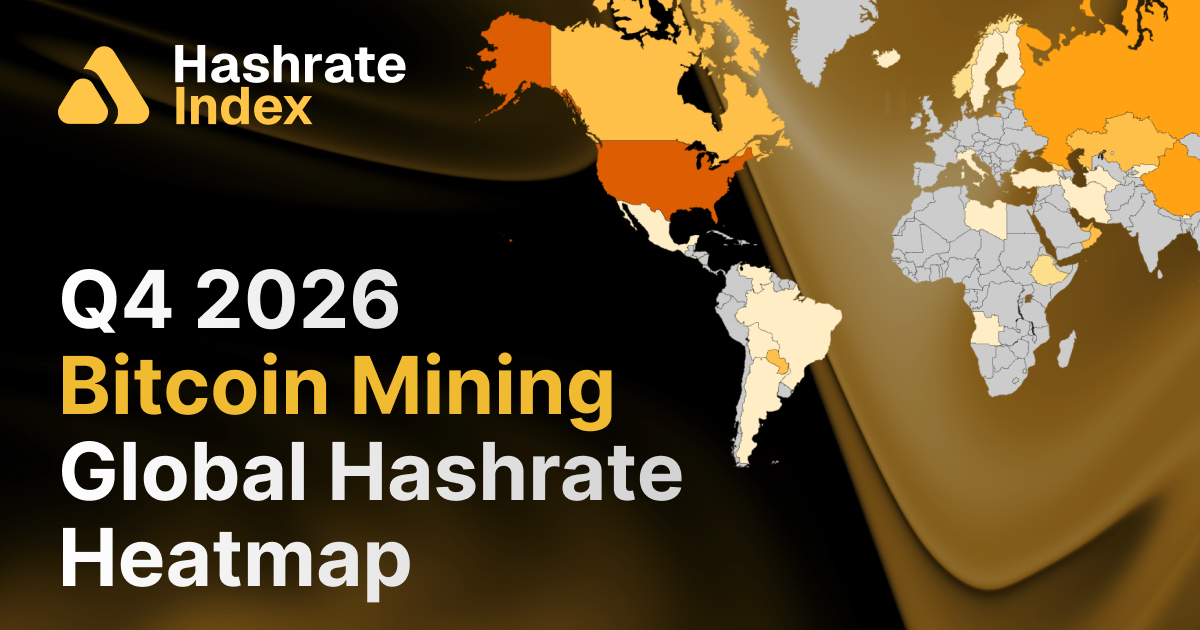
The global map of Bitcoin mining is currently defined by a "shrinking core and a growing frontier." Traditional powerhouses, particularly in North America, have ceded territory, while emerging markets have aggressively scaled their operations.
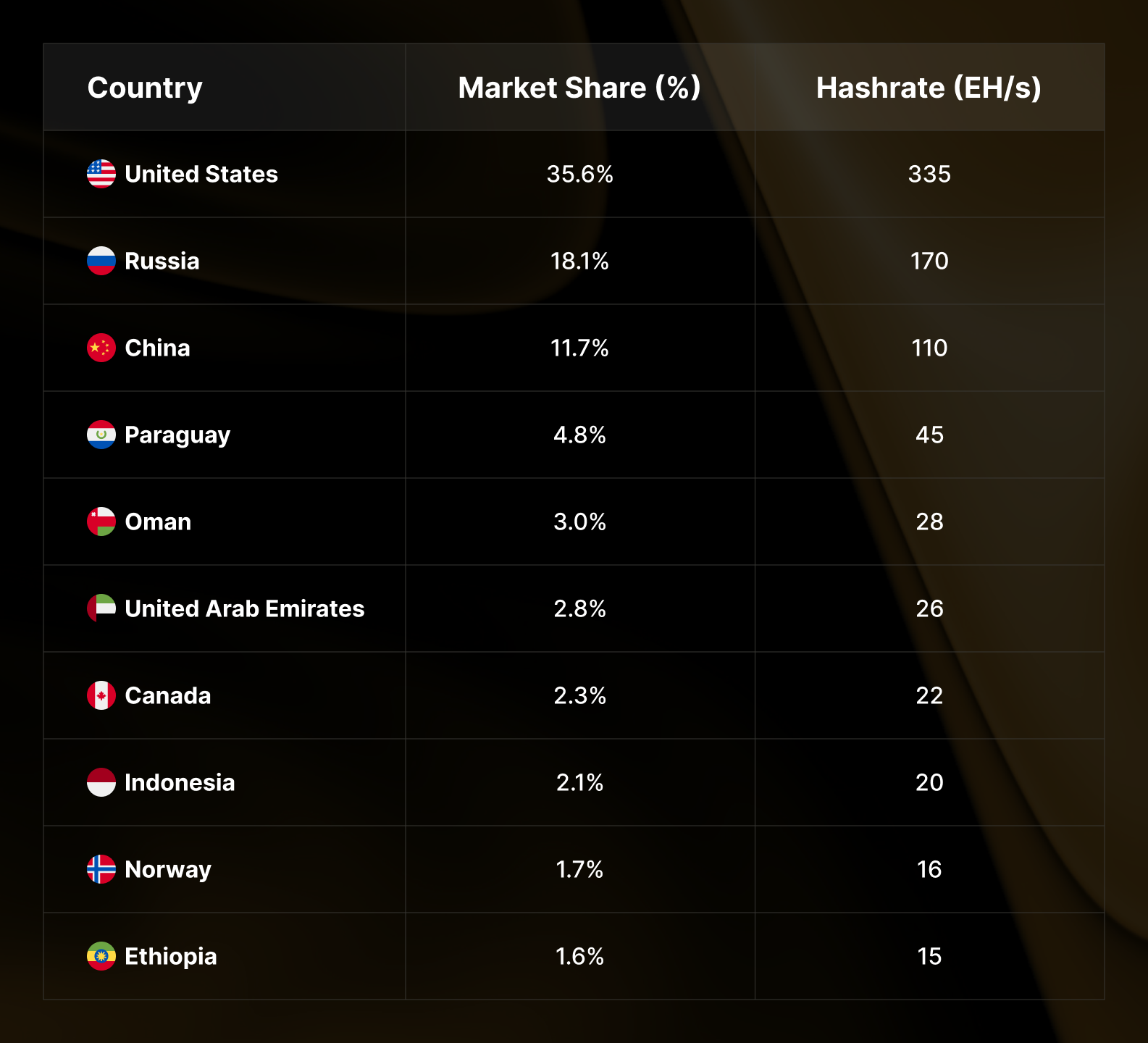
The United States, while still the dominant player, saw its influence wane for the third consecutive quarter, dropping 10 EH/s to a current level of approximately 335 EH/s. Canada experienced a similarly sharp decline, reflecting a broader trend where industrial mining operations are being repurposed. Conversely, Russia surged by 8 EH/s to reach 170 EH/s, solidifying its position as a major node in the network.
Perhaps most striking is the emergence of unconventional growth markets. Pakistan has tripled its capacity to 8 EH/s, while Venezuela has defied a challenging regulatory environment to cross the 10 EH/s threshold, marking a 122% year-over-year increase. These regions are capitalizing on stranded energy assets, creating a new economic model that prioritizes location-based energy efficiency over the capital-heavy, high-cost environments that defined the early 2020s.
The AI Pivot: A Strategic Departure
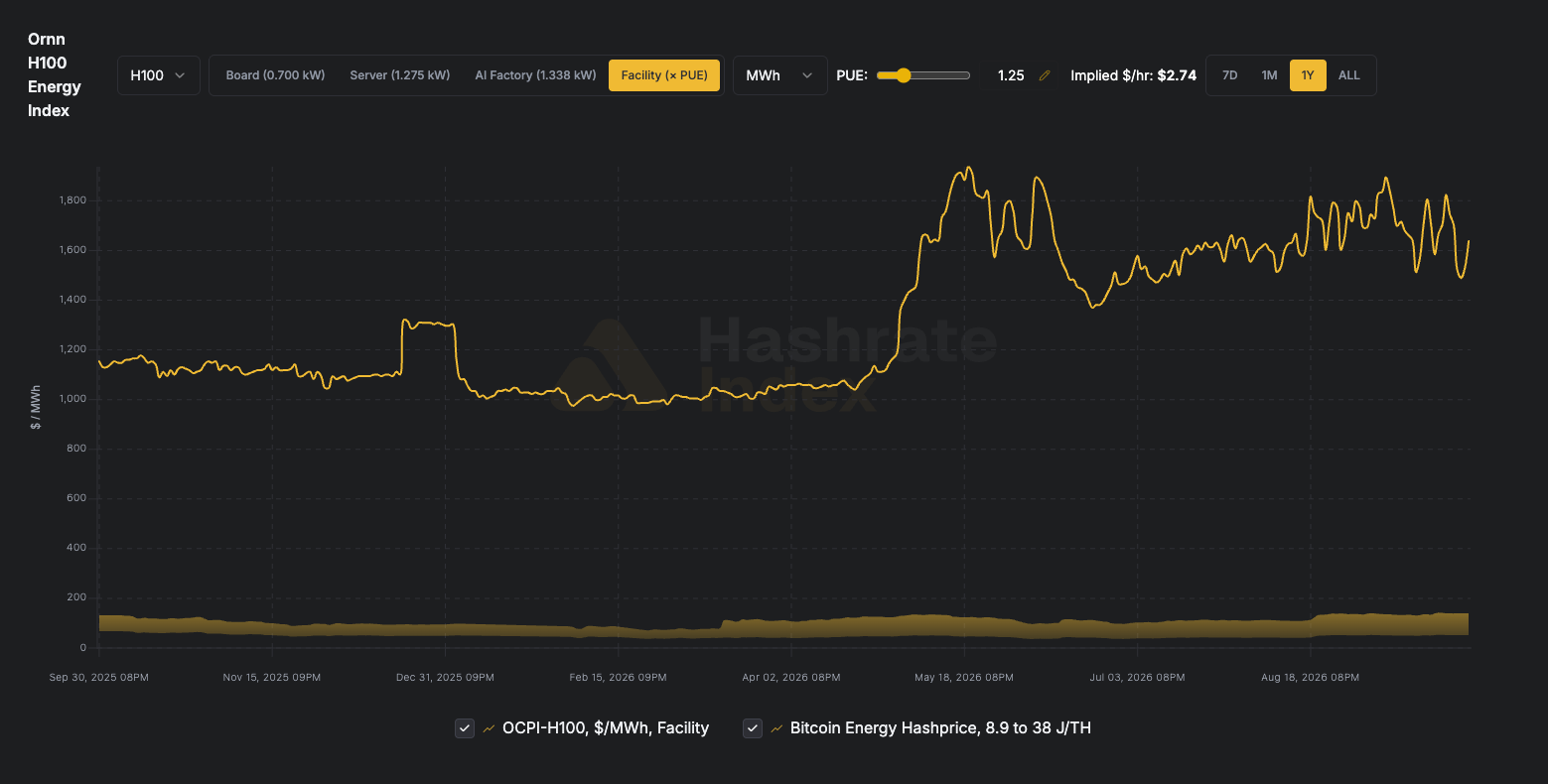
A critical factor contributing to the decline in developed markets like Canada and the United Arab Emirates is the "AI pivot." In 2026, the economic disparity between Bitcoin mining and AI/HPC compute has become too significant for many large-scale data center operators to ignore. Data suggests that AI-driven compute can generate between $1,500 and $3,500 per megawatt-hour, dwarfing the $50 to $150 potential revenue from Bitcoin mining.
This is not a temporary fluctuation; it is a structural reallocation of energy resources. Operators in regions with stable, high-capacity grids—such as those utilizing Canadian hydro or Middle Eastern gas and nuclear supply—are increasingly decommissioning Bitcoin mining rigs to make room for GPU clusters dedicated to training large language models. Once a facility is converted for AI and HPC usage, it rarely returns to Bitcoin mining, as these contracts are often multi-year, multi-gigawatt commitments that offer vastly superior risk-adjusted returns.
Ethiopia: A Case Study in Climate Vulnerability
The most significant volatility in the current cycle has occurred in Ethiopia, which saw a 35% decline in hashrate this quarter, falling from 23 EH/s to 15 EH/s. This contraction serves as a stark reminder of the industry’s dependence on regional climate conditions. On September 15, 2026, Ethiopian Electric Power (EEP) mandated a reduction in electricity supply to mining facilities to roughly 23% of contracted volumes.
The decision was forced by El Niño-driven dry conditions, which severely reduced reservoir inflows for the nation’s hydroelectric dams. Ethiopia’s rise as a mining hub was predicated on the assumption of cheap, abundant, and consistent renewable energy. When the water supply failed, the inherent vulnerability of this model was exposed. Industry analysts note that unless regional reservoir levels recover, further cuts are inevitable, potentially leading to a continued exodus of miners from the Horn of Africa.
Regional Dynamics and Market Concentration
The top three nations—the United States, Russia, and China—still control approximately 65.4% of the global network, though this concentration is slowly diluting.
- North America: The decline in the U.S. and Canada is persistent, driven by the shift toward AI and rising grid competition.
- Asia-Pacific: China continues its long-term bleed, falling to 110 EH/s. However, Indonesia and Malaysia have emerged as critical absorbers of regional mining activity, utilizing local hydroelectric diversification to maintain growth.
- Latin America: Paraguay has become a standout performer, leveraging the Itaipú hydroelectric dam to maintain a consistent growth trajectory, now holding a 45 EH/s footprint.
- Middle East: Oman has overtaken the UAE as a regional leader, signaling a reshuffling of priorities within the Gulf Cooperation Council states as they navigate energy export and domestic compute strategies.
Implications for Investors and Stakeholders
The current landscape presents a complex set of implications for the broader crypto-asset ecosystem. First, the decentralization of the network away from the "developed core" continues to enhance the network’s geopolitical resilience. As mining migrates toward smaller, more nimble jurisdictions, it becomes less susceptible to single-point regulatory or environmental shocks.
Second, the professionalization of the industry is accelerating. The "frontier" markets are no longer characterized by amateur setups but by state-sanctioned or large-scale industrial operations that are increasingly sophisticated in their energy procurement.
Finally, the relationship between energy markets and digital asset security has never been tighter. The "Ornn H100 Energy Index" and similar tracking metrics now serve as essential tools for investors to predict where compute will move next. If the energy price spread between AI and Bitcoin remains wide, the trend of converting Bitcoin mining facilities to AI data centers will likely continue to suppress total network hashrate in developed economies.
Future Outlook: Heading into 2027
As the industry looks toward Q1 2027, the focus remains on the "stickiness" of the current hashrate. Markets like Norway, which have held steady at 16 EH/s for four consecutive quarters, represent a new model of stability. These regions provide a template for sustainable, long-term mining operations that are not susceptible to the same pressures as the AI-adjacent hubs in North America or the climate-dependent projects in Africa.
The Bitcoin network is currently in a state of high-stakes transition. The era of unchecked growth has been replaced by an era of optimization. As the industry matures, the survivors will be those who can navigate the dual pressures of regulatory scrutiny in emerging markets and the relentless, higher-margin competition from the burgeoning AI sector. The total hashrate may be flat, but the industry is anything but. The coming year will likely determine which regions possess the energy infrastructure and political will to remain the bedrock of the global Bitcoin network, and which will be left to serve the competing demands of the next generation of global compute.
