
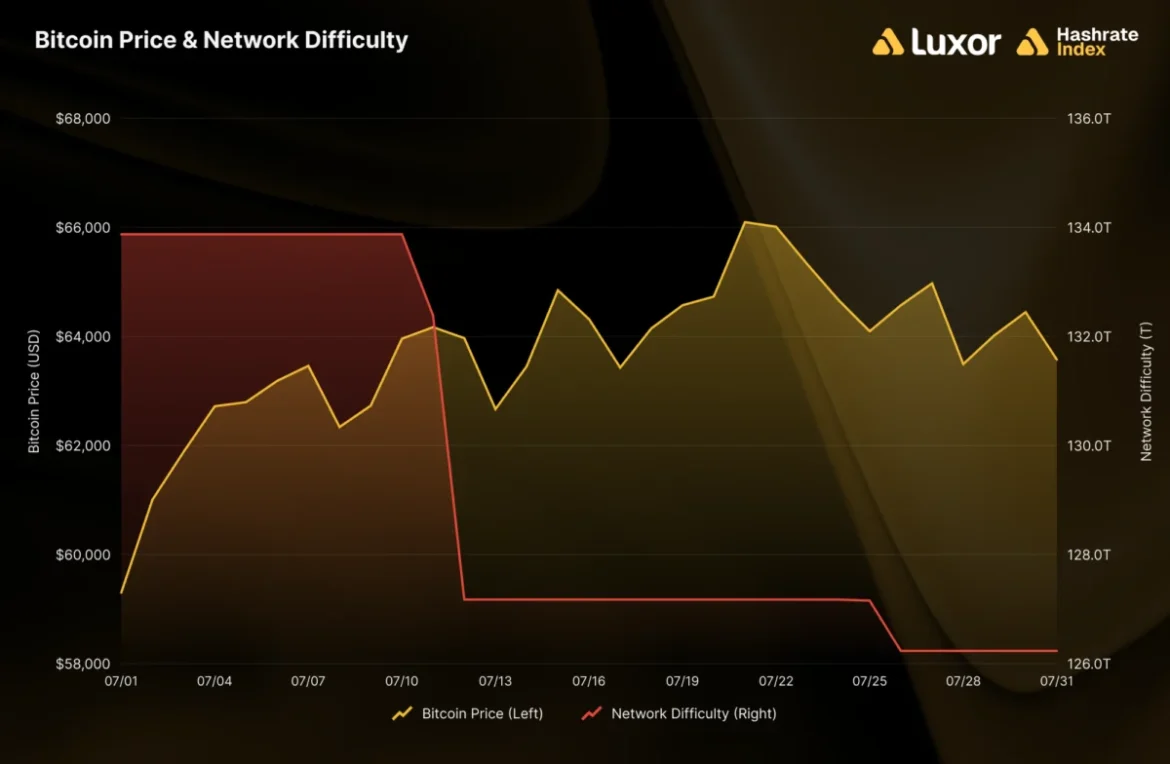
July 2026 served as a pivotal month of stabilization for the Bitcoin mining industry, offering a necessary respite after the severe market capitulation observed in June. While the network faced two consecutive downward difficulty adjustments, the month was characterized by a modest recovery in hashprice—the primary metric for miner revenue—and a shift in the broader macroeconomic and regulatory environment surrounding digital assets.

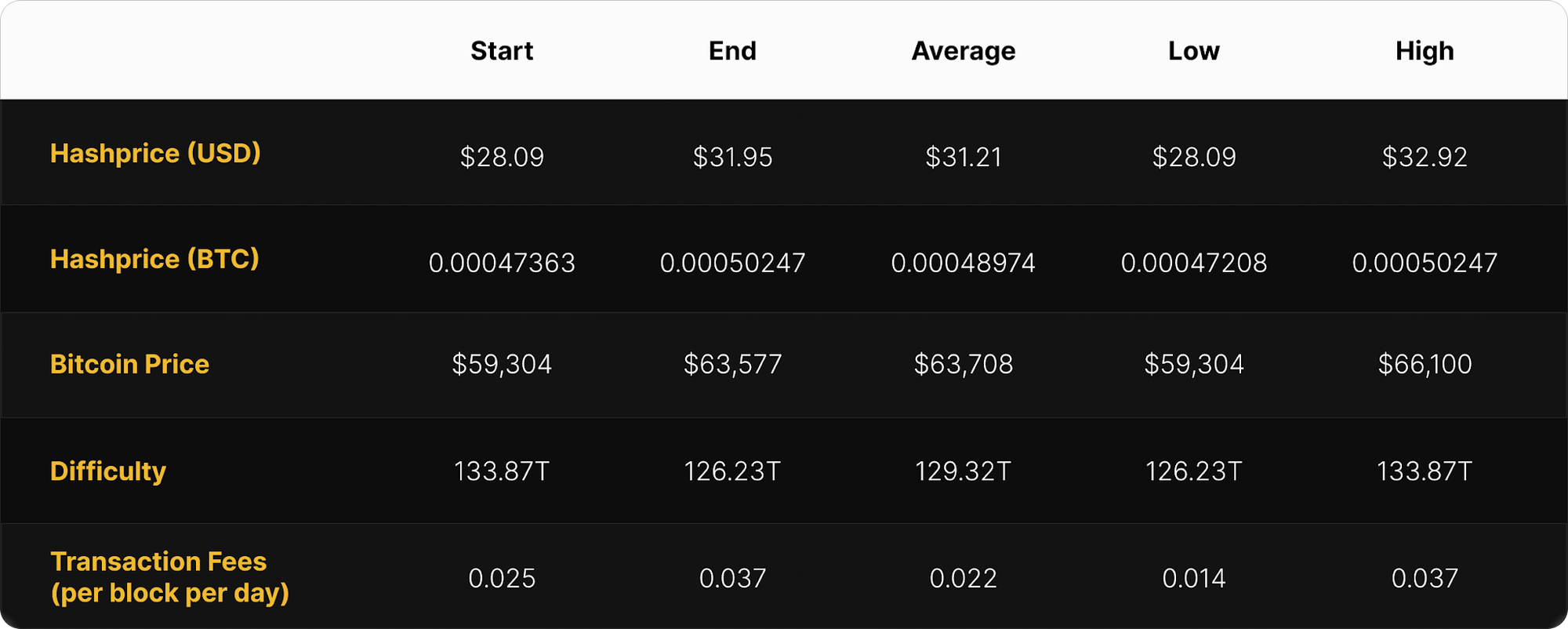
The month began with network difficulty at 133.87T, only to conclude at 126.23T, representing a net decline of 5.71%. This contraction was largely driven by seasonal energy patterns, particularly within the Electric Reliability Council of Texas (ERCOT) grid, where miners curtailed operations to participate in Four-Coincident-Peak (4CP) demand response programs. Unlike June, which saw miners forced off the network due to economic insolvency caused by record-low hashprices, July’s shutdowns were largely operational and strategic, reflecting a maturing industry that is learning to balance grid stability with mining profitability.
The Dynamics of Hashprice Recovery
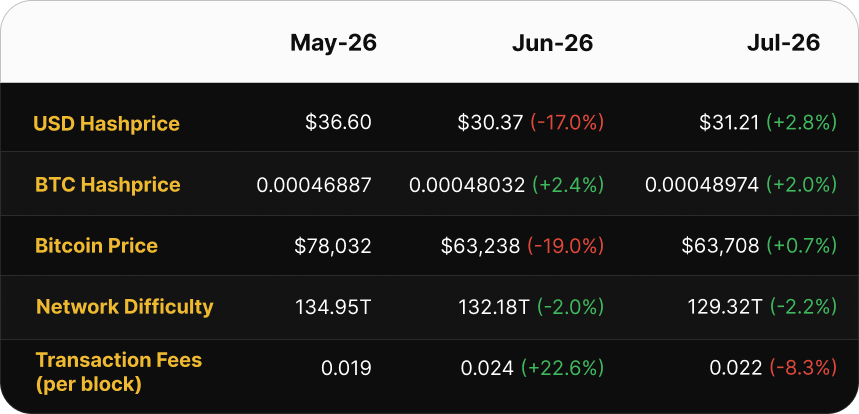
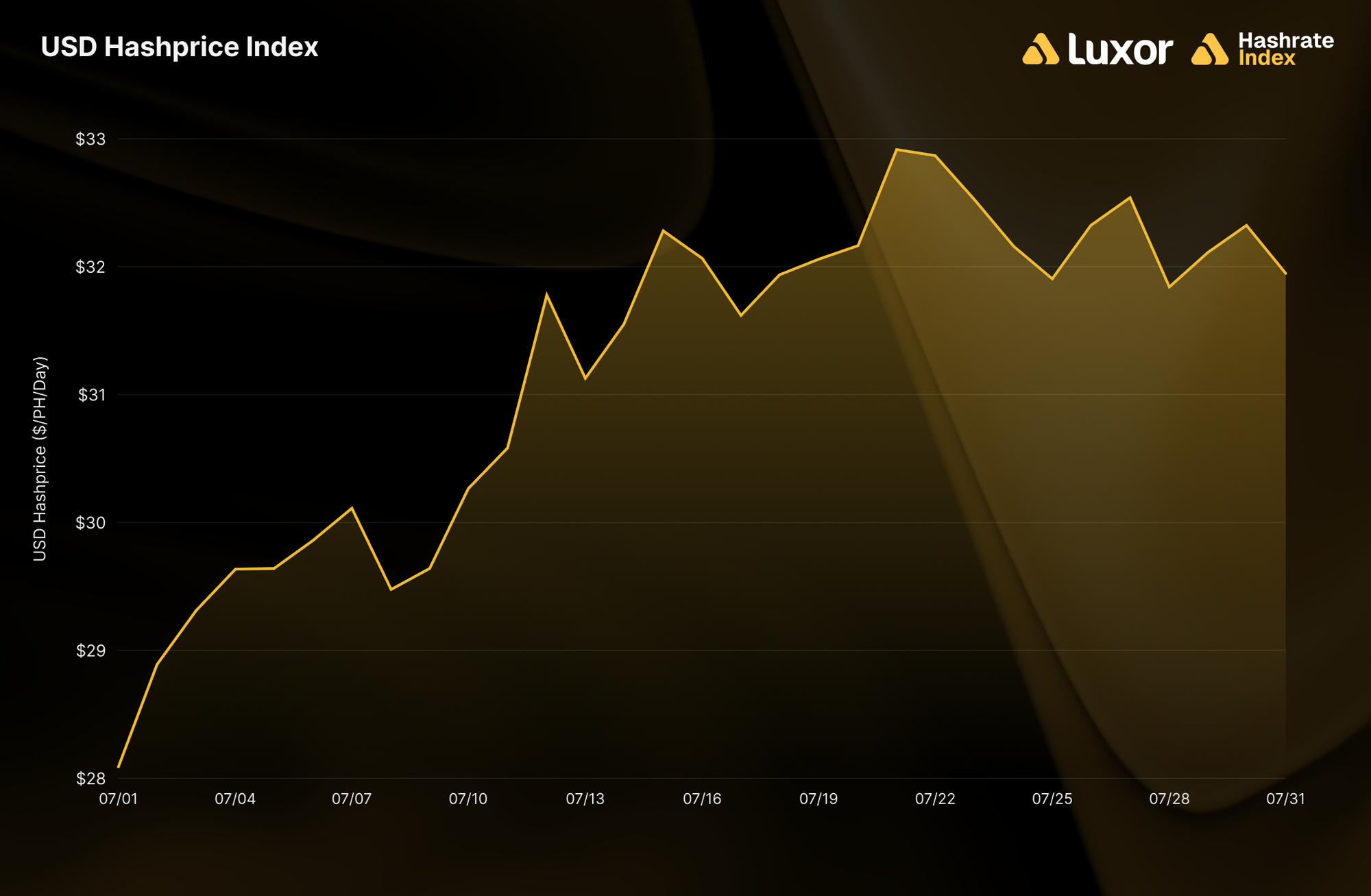
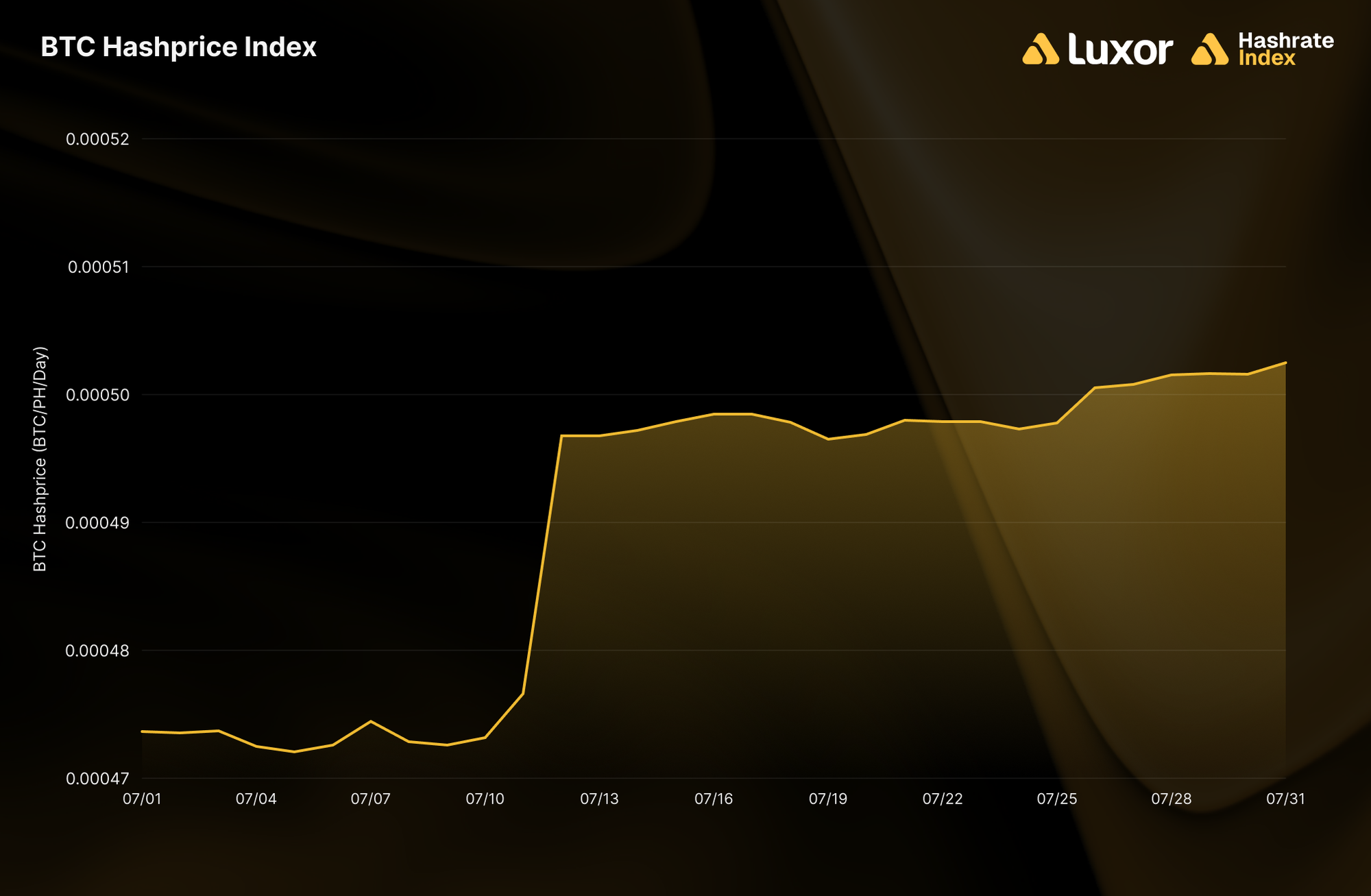
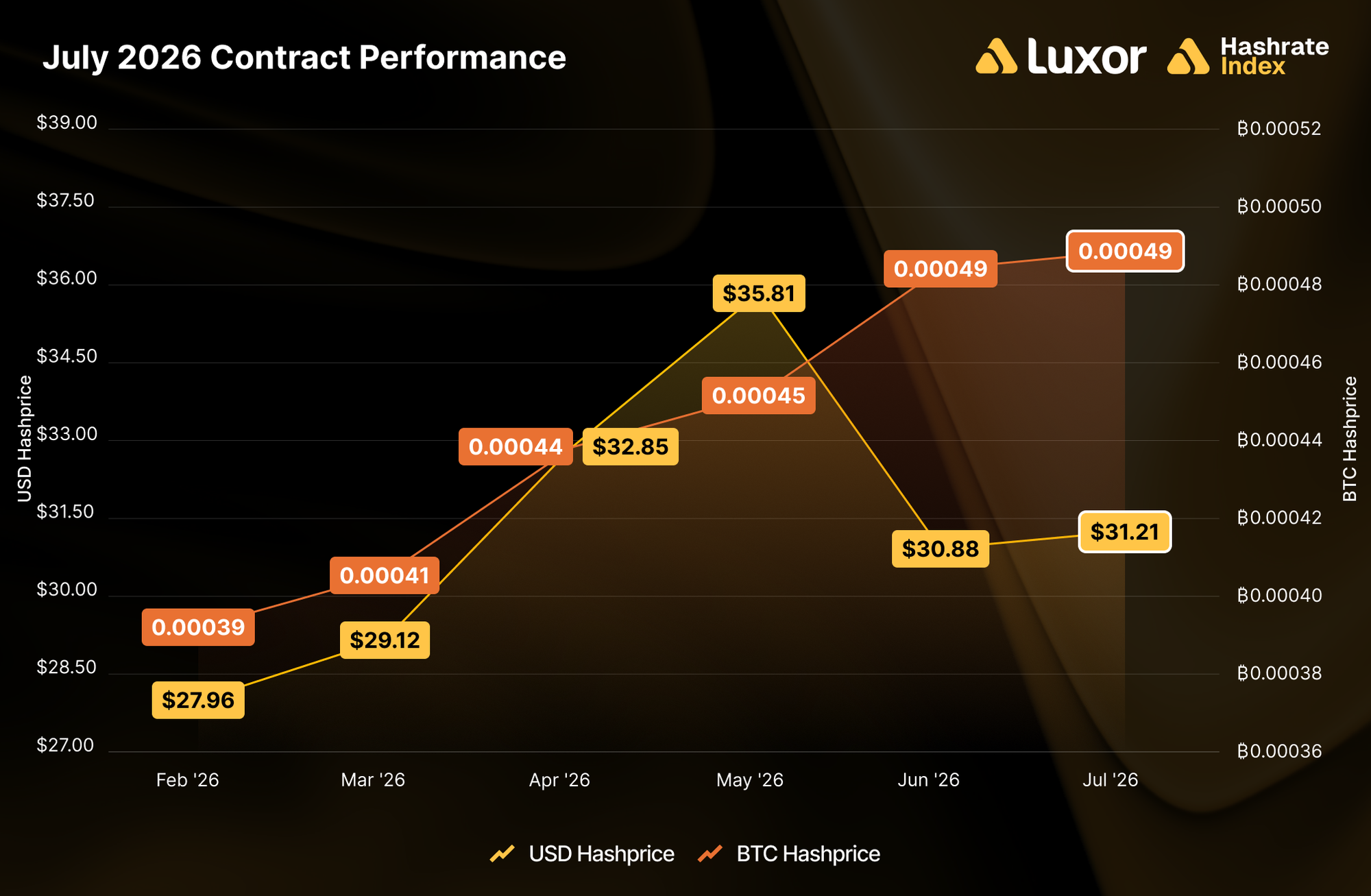
USD-denominated hashprice averaged $31.21 per PH/s/day throughout July, a 2.8% increase from the June average of $30.37. While this remains near historic lows, the slight upward trend indicates that the network is finding a floor. The recovery was fueled by a combination of a relatively stable Bitcoin price and the aforementioned reduction in network difficulty.
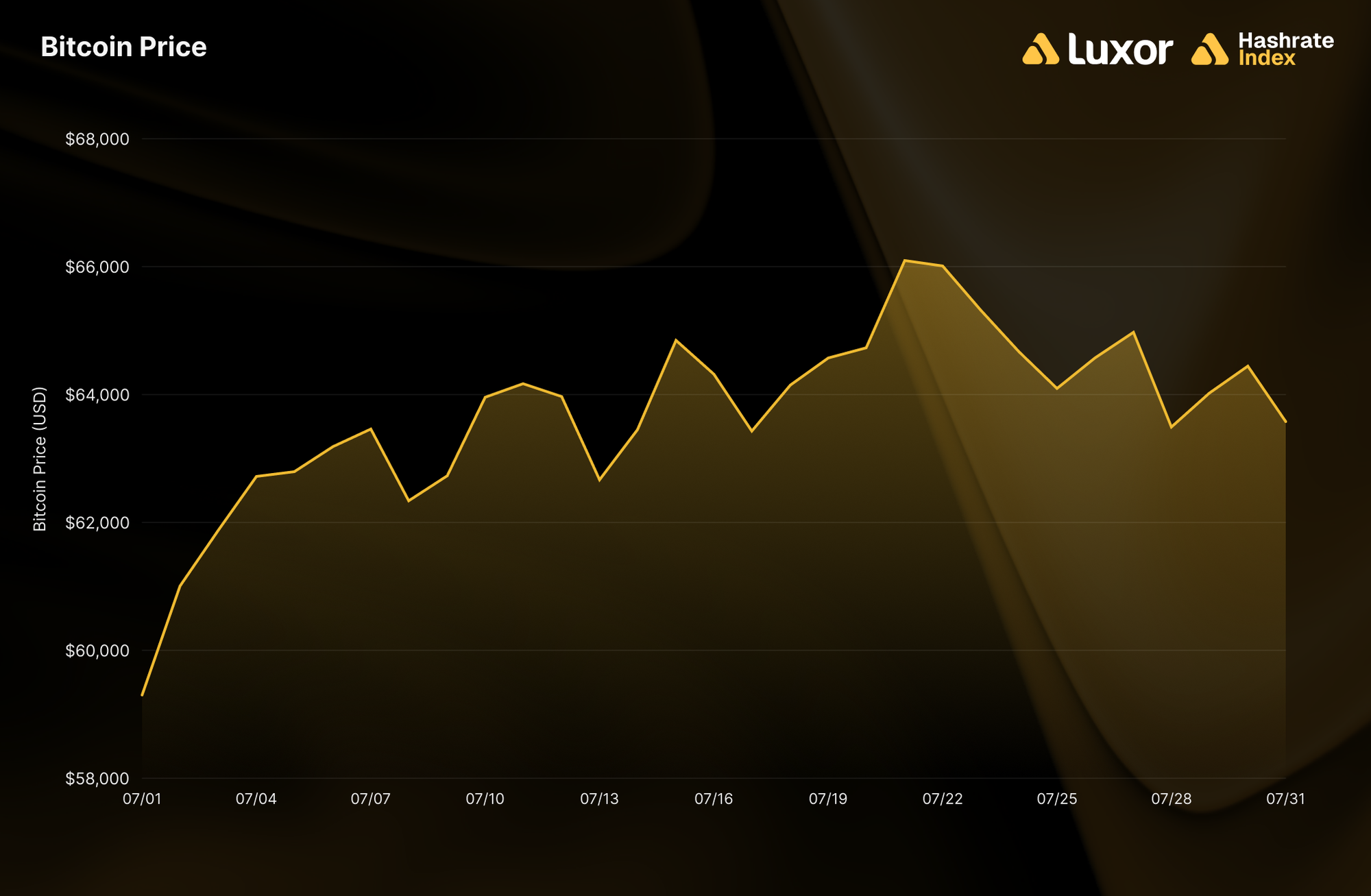
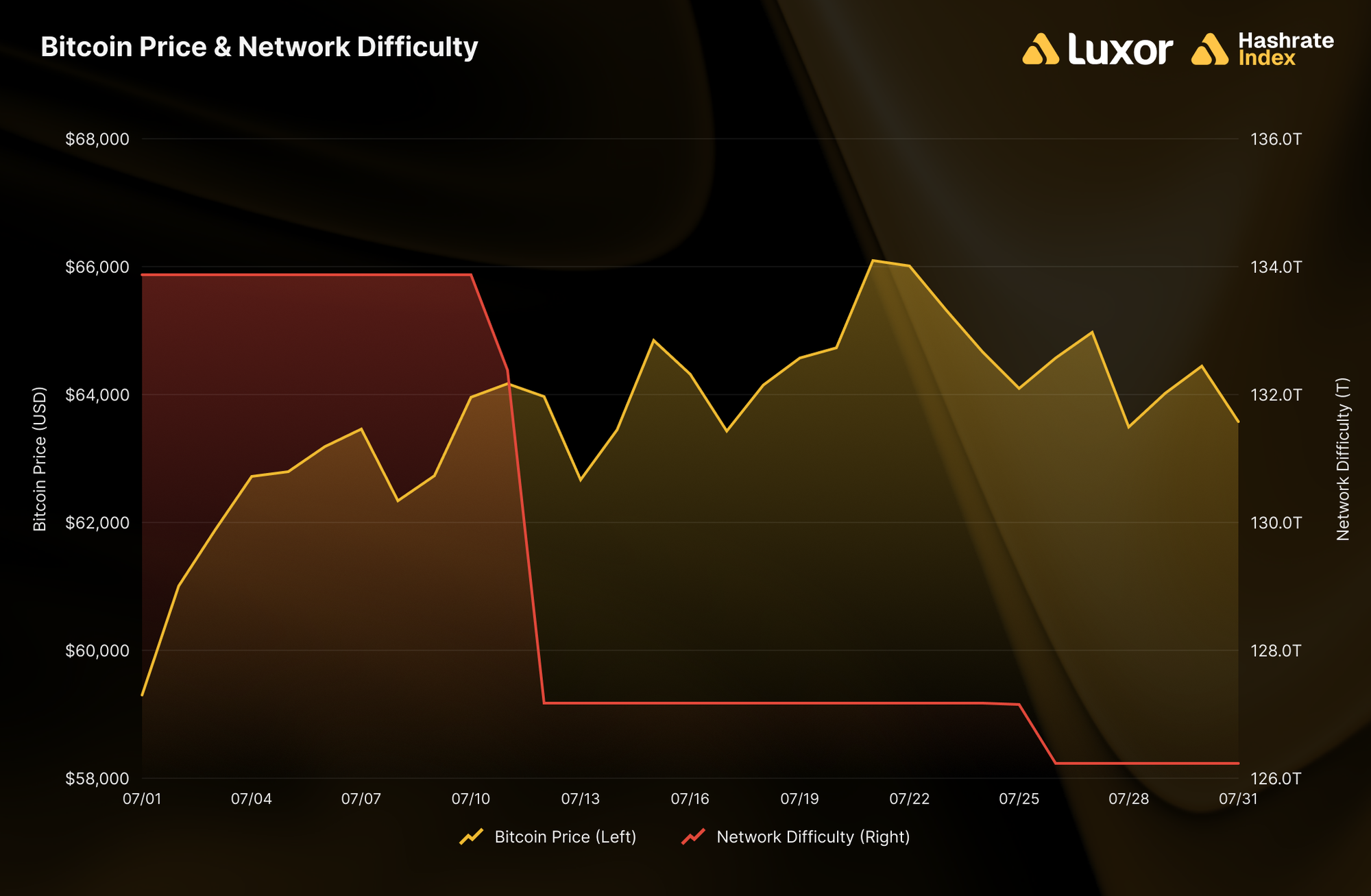
Bitcoin price action remained largely range-bound, averaging $63,708 for the month. After a tumultuous June that saw a 19% decline and massive outflows from U.S. spot Bitcoin ETFs, July provided a period of consolidation. The mid-month turnaround in ETF flows—highlighted by net inflows approaching $727 million over a single five-day period—provided the liquidity needed to lift Bitcoin from its monthly open of $59,304 to a close of $63,577.
This price movement, paired with a 5.00% difficulty adjustment on July 11, allowed hashprice to reach a peak of $32.92 on July 21. For mining operators, this shift was critical. The industry remains in the deepest sustained drawdown of the current cycle, with Bitcoin prices still trading nearly 49% below the October 2025 peak of $124,485. However, the ability of the network to maintain hashprice levels above the June lows suggests that the most inefficient hardware has already been purged from the ecosystem.
Network Difficulty and the ERCOT Influence
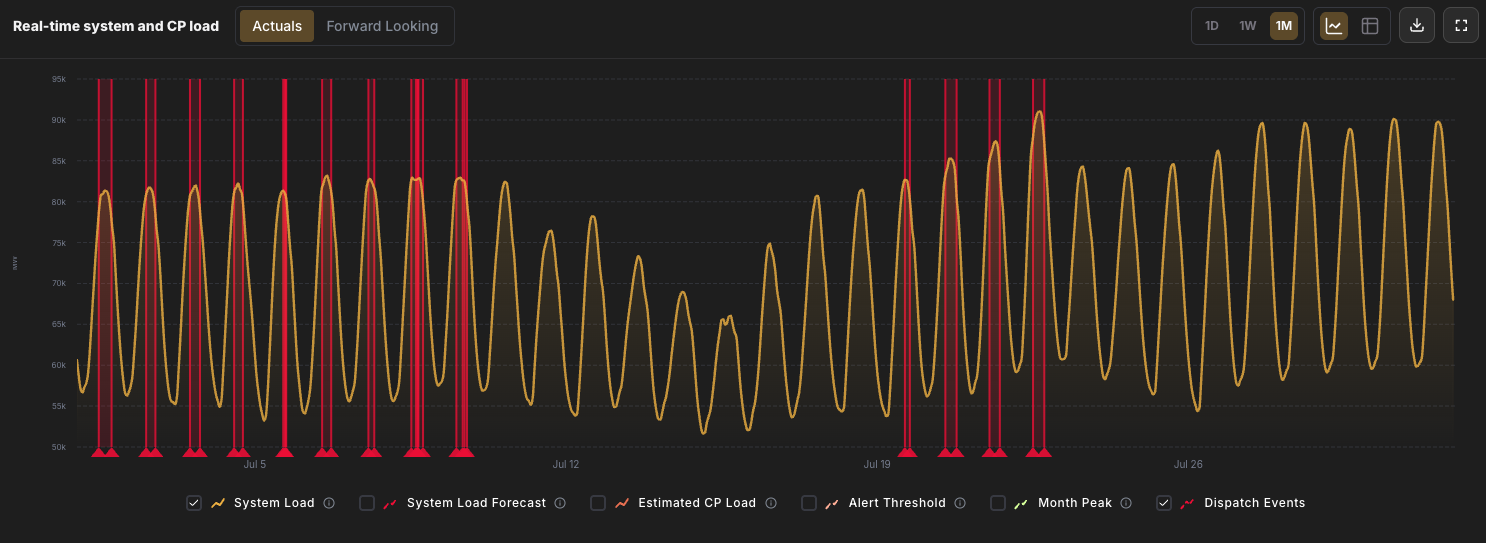
The Bitcoin network’s difficulty adjustments in July—a 5.00% drop on July 11 and a 0.74% drop on July 25—provide clear evidence of the seasonal influence of Texas energy markets. ERCOT’s 4CP mechanism incentivizes large-scale power consumers to curtail load during periods of peak grid stress. In July, these dispatch events were frequent, particularly during the first ten days of the month.
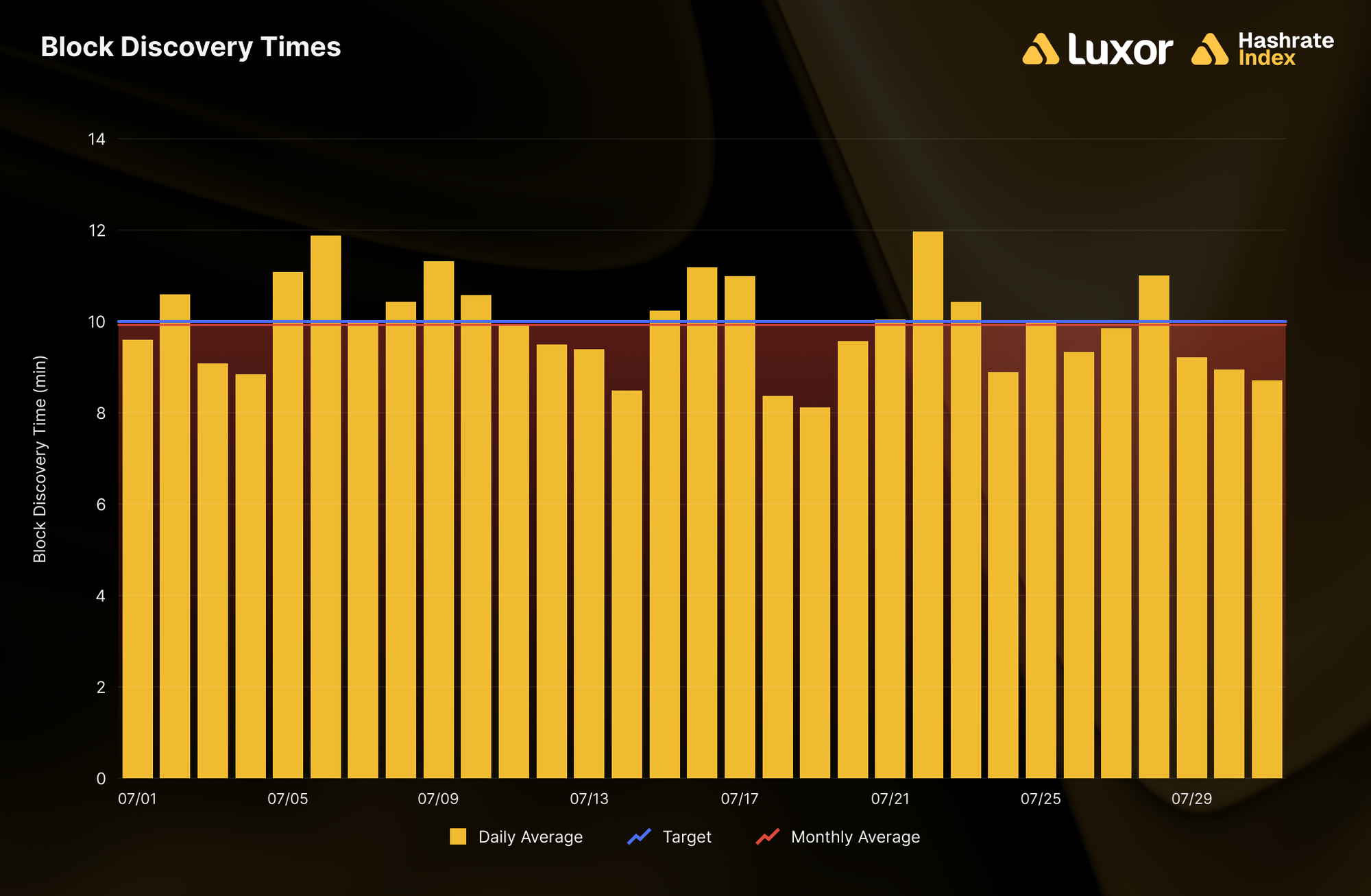
The correlation between curtailment and difficulty is profound. The epoch between June 26 and July 11 saw block discovery times drift significantly beyond the 10-minute target as miners idled their fleets to avoid high-cost energy periods. This resulted in the 5% difficulty drop. By the second half of the month, as dispatch events became less frequent, the network began to reach a new equilibrium.
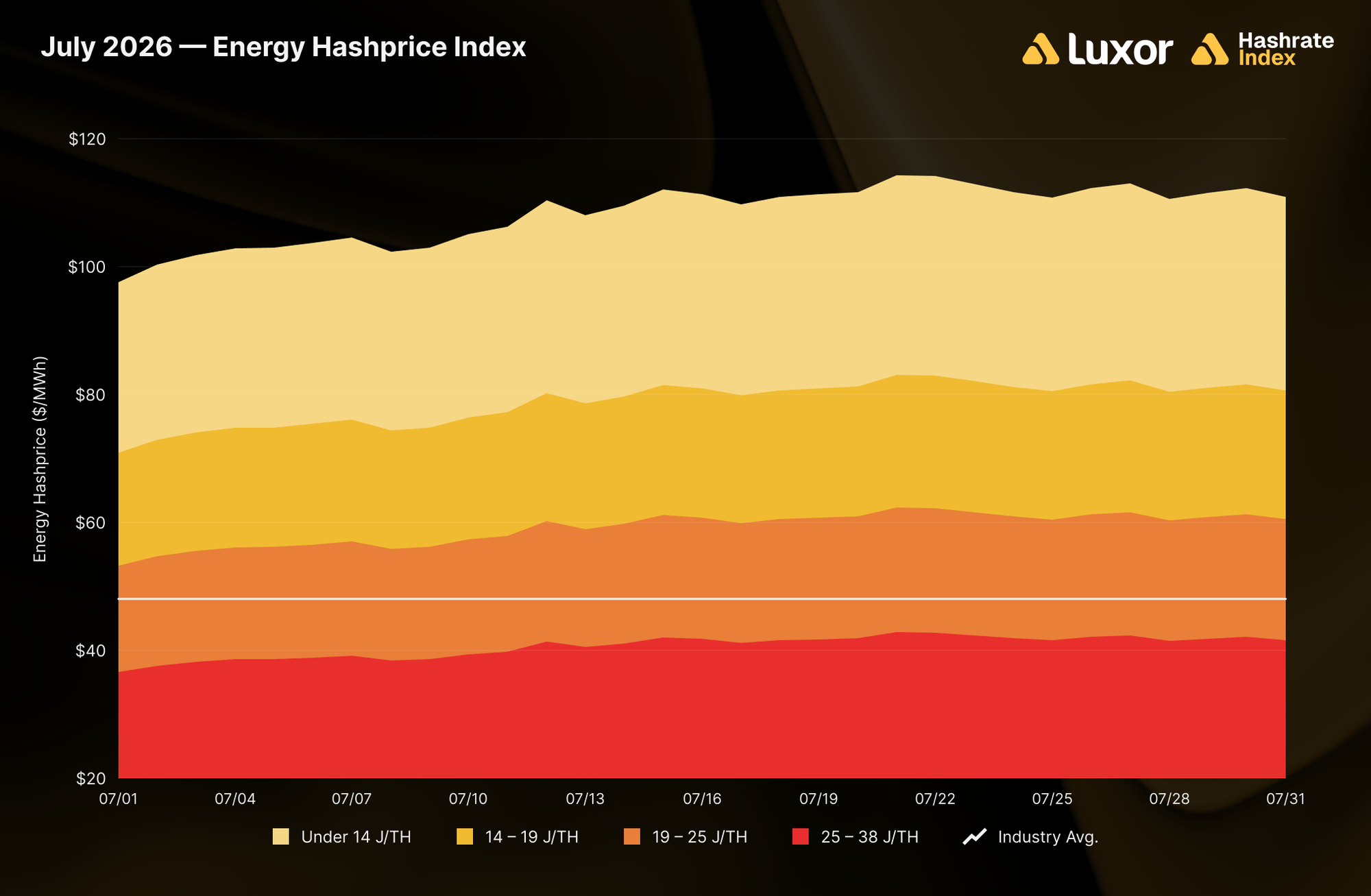
This "double drop" in difficulty is notable for its departure from the "economic shutdown" trend of June. In the previous month, hashprice was so low that even low-cost miners struggled to justify operating. In July, by contrast, the efficiency threshold for profitability remained stable. For fleets operating in the 25–38 J/TH range, the reality of the market remained difficult, as they continued to operate below the estimated network-average power cost of $48/MWh. This segment of the industry remains under significant pressure, likely awaiting further improvements in hashprice or the deployment of next-generation ASIC hardware to return to profitability.
The Coldcard Exploit and Fee Spikes
An anomalous spike in transaction fee collection occurred on July 31, which briefly decoupled fee revenue from organic network demand. Miners collected 0.03652691 BTC per block on that day, a 67% increase over the monthly average. Analysis reveals that this was the result of an urgent, large-scale consolidation of funds from compromised hardware wallets.
The security incident involved an exploit of a firmware error dating back to March 2021 in certain Coldcard hardware wallets. The vulnerability allowed attackers to brute-force private keys because the devices relied on a weak software random number generator rather than hardware entropy. Over the course of four days, approximately 1,816 BTC (valued at roughly $116 million) was swept from over 5,200 addresses.
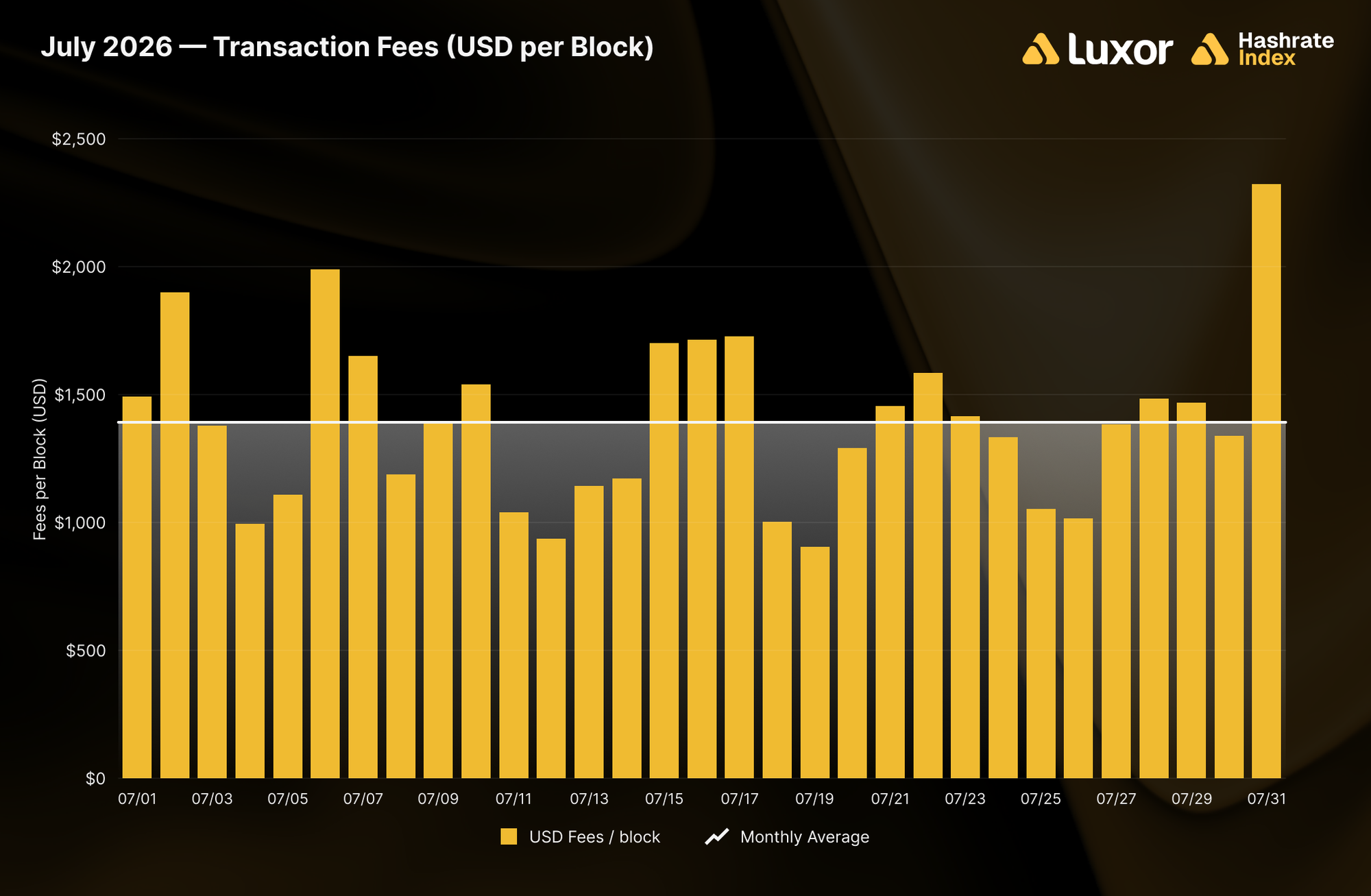
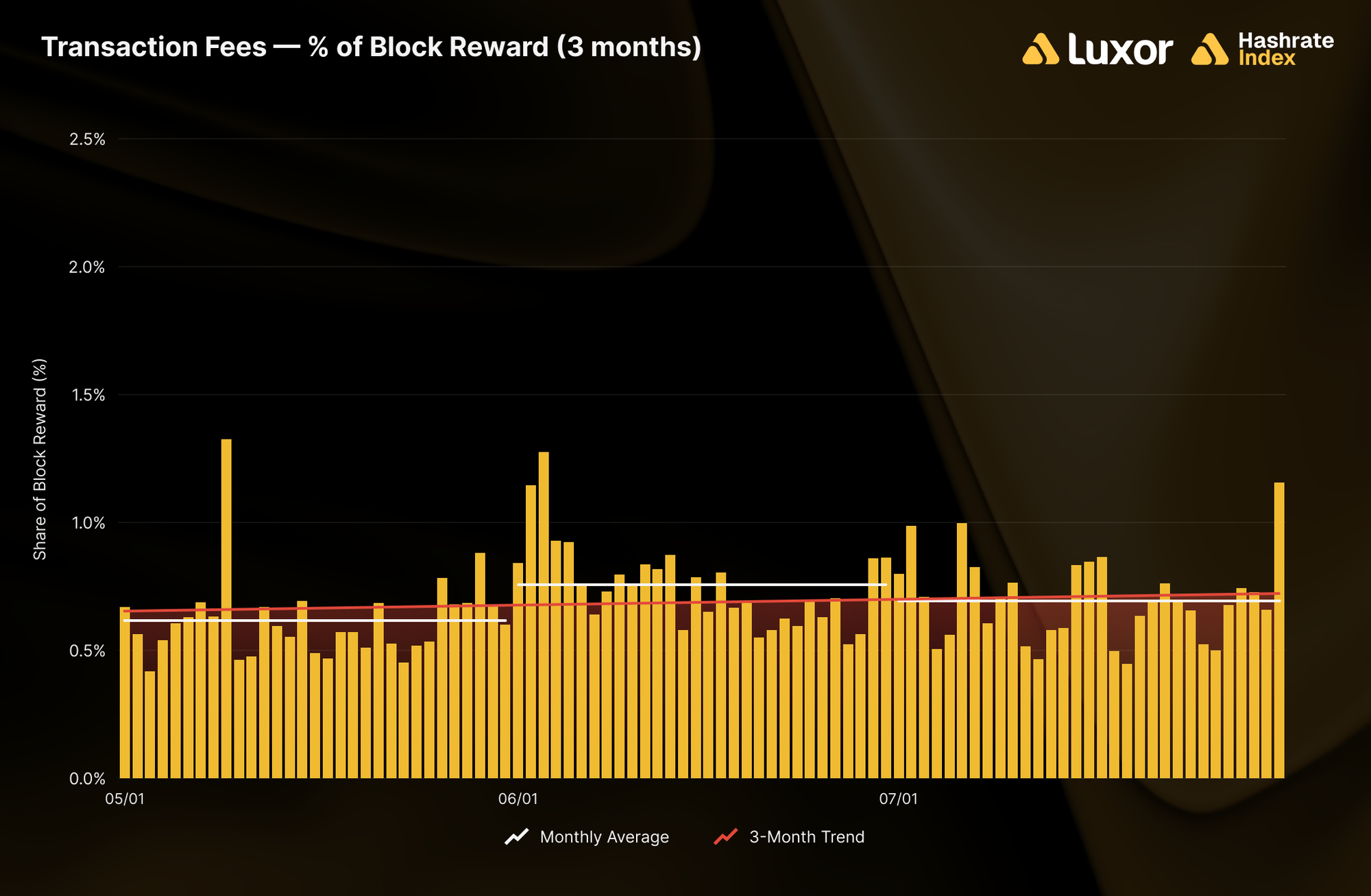
For the mining industry, this event served as a reminder of the volatility inherent in fee markets. The consolidation transactions were "input-heavy," meaning they occupied significant block space despite representing a small number of transactions. While miners benefited from the high fees associated with these urgent transfers, the broader trend for transaction fees remains subdued. Fees accounted for only 0.69% of total block rewards in July, marking the thirteenth consecutive month that fee revenue has remained below the 1% threshold.
Forward Market Sentiment and Hedging Strategies
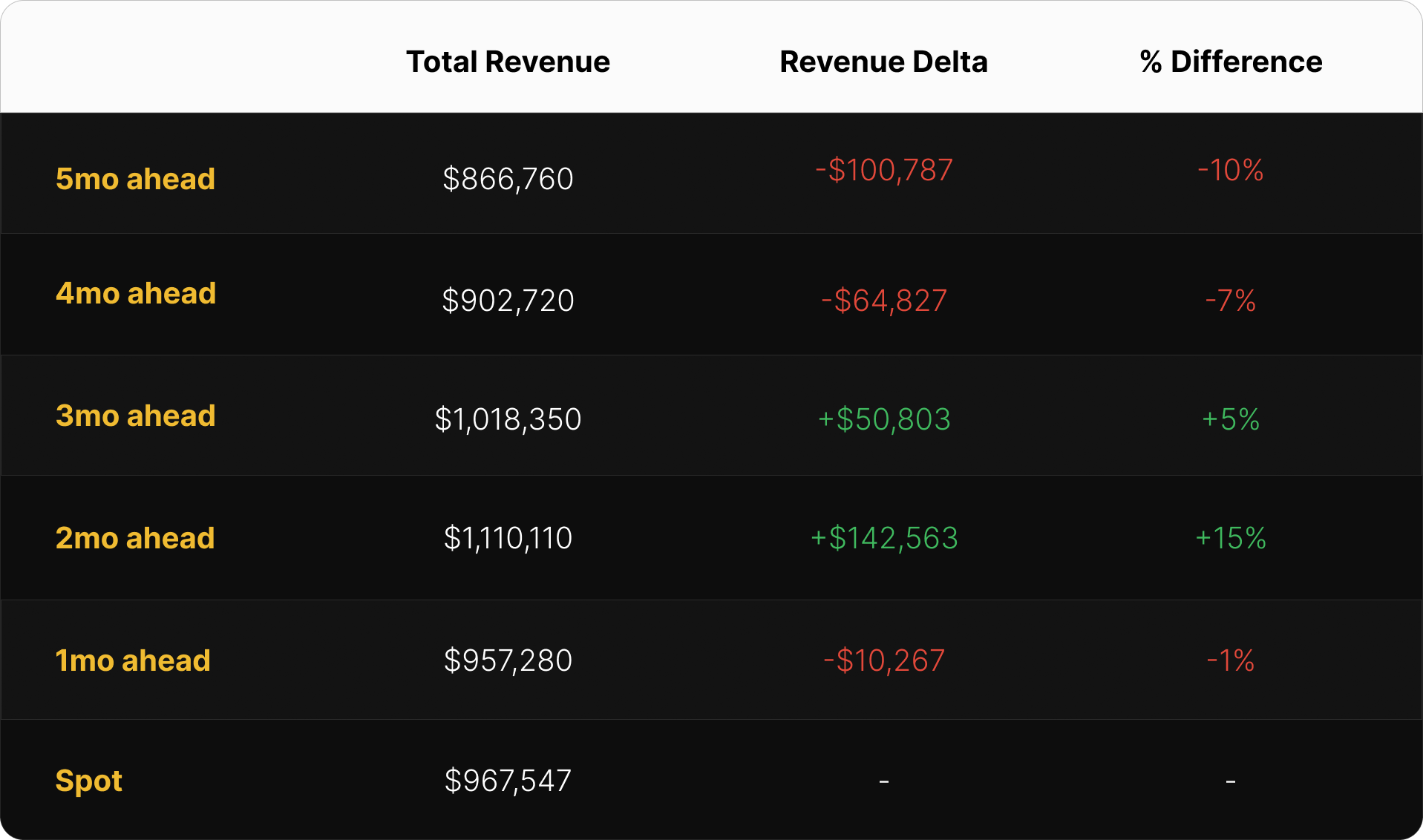
The market for hashrate derivatives in July reflected a cautious but increasingly optimistic outlook for the autumn. In the USD-denominated forward market, lock-in rates for contracts spanning August through December 2026 rose by 8.1% on average. This outpaced the 6.1% gain in spot hashprice, suggesting that institutional participants and miners are pricing in an expectation of higher revenue as we move into the fourth quarter.
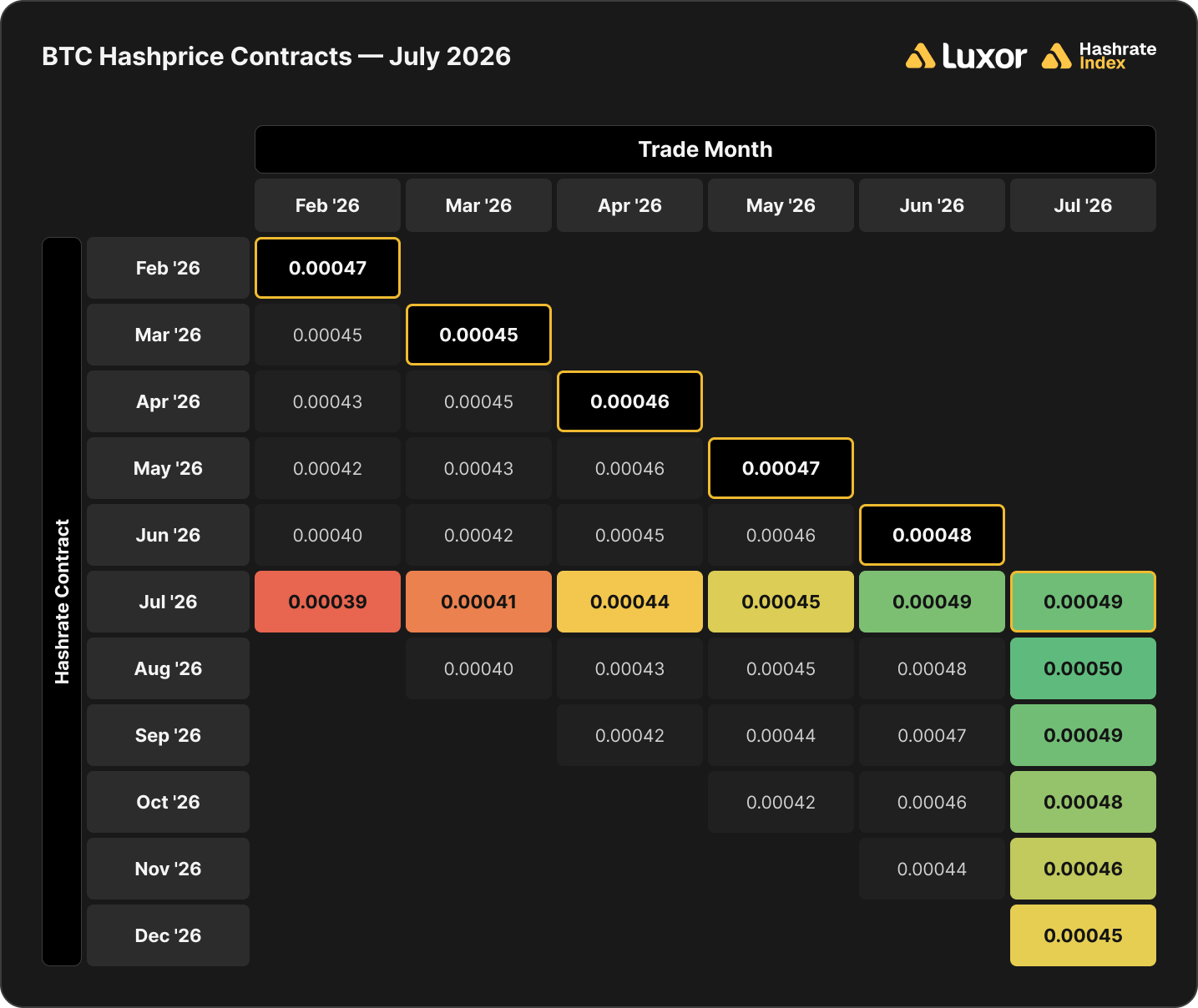
The BTC-denominated forward curve also shifted upward, rising 6.4% over the month. This adjustment represents a concession by the market that the summer-long hashrate contraction was more persistent than initially modeled. The implied difficulty for the end of the year has been revised downward to reflect this, with the market signaling that the "summer bottom" in difficulty will likely lead to a robust recovery in Q4, historically the strongest period for Bitcoin network growth.
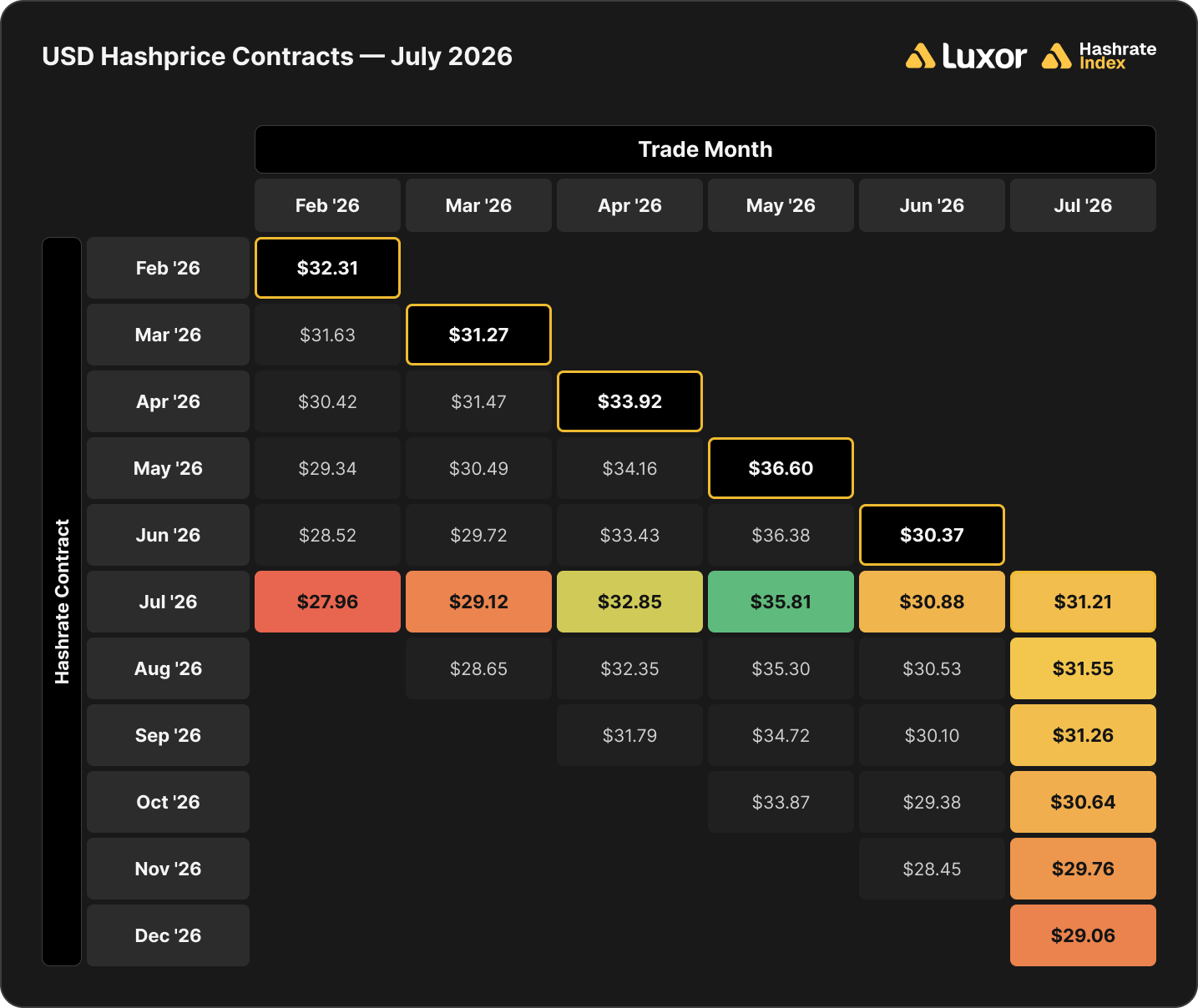
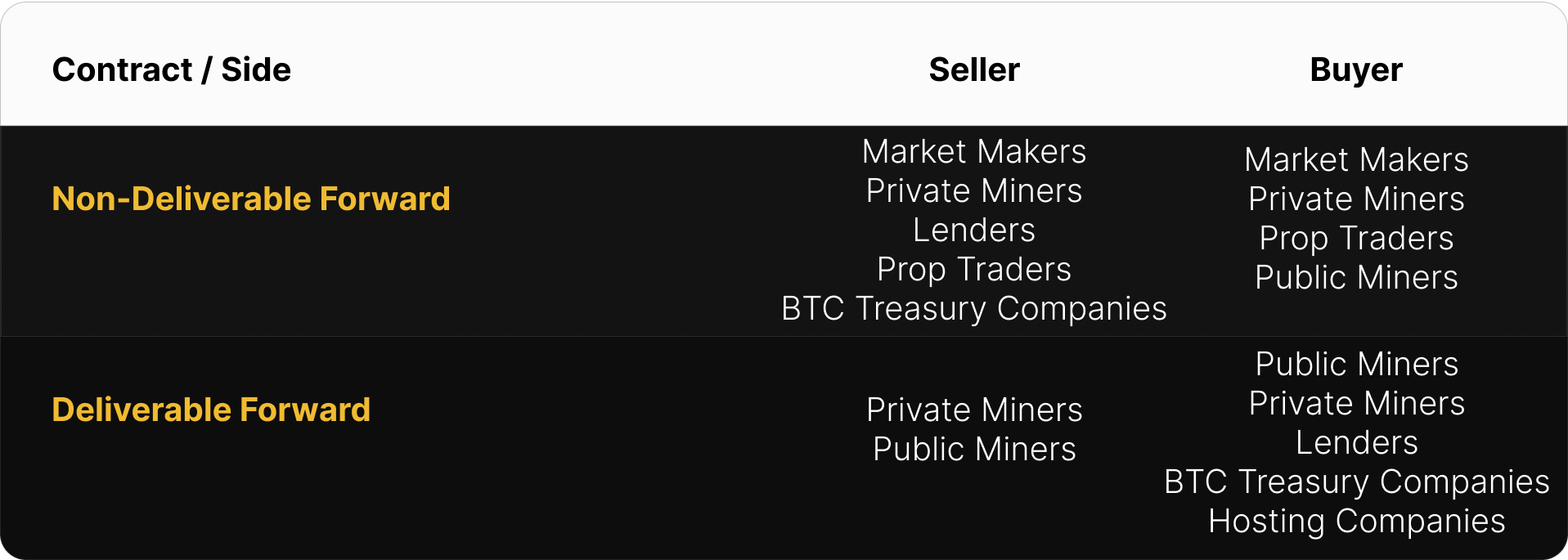
For miners, the utility of these forward contracts has become a core component of risk management. By selling hashrate forward, operators can secure non-dilutive financing to upgrade their fleets. The prevalence of these strategies among public and private miners during July underscores the industry’s shift from speculative mining to capital-intensive, utility-like operations.
Broader Economic Implications
The legislative landscape continued to influence investor sentiment throughout the month. On July 22, the release of revised text for the Digital Asset Market Clarity Act by Senate Republicans provided a potential roadmap for regulatory certainty. Although the bill has yet to receive a floor vote in the Senate, its progression through committees has been a key variable in the broader cryptocurrency market’s valuation.
The Federal Reserve’s decision to hold interest rates steady at the July 28–29 meeting also played a role in stabilizing the macro environment. After the Federal Reserve’s June projections caused market volatility by suggesting a potential rate hike, the July pause was interpreted as a signal that the economy is cooling in a controlled manner, which historically benefits risk-on assets like Bitcoin.
Looking ahead to August and September, the mining industry faces a familiar challenge: balancing the high-performance requirements of modern ASIC fleets with the reality of energy costs and network difficulty. With total net ASIC capacity estimated at approximately 1,153 EH and active hashrate near 926 EH/s, there remains a surplus of roughly 227 EH of capacity that is currently idle or in transit. This idle capacity represents the industry’s "reserve" that will likely be deployed as hashprice continues its slow, steady climb.
As the industry moves into the latter half of the year, the focus will remain on the breakeven efficiency of these fleets. At a Bitcoin price level of $60,000 to $66,000, the market has found a sustainable baseline. However, should the market experience further downside, the threshold for profitability will shift, necessitating further consolidation among smaller, less efficient operators. For now, the narrative is one of survival and strategic positioning, as the network prepares for the traditionally high-difficulty environment of the year’s end.
