
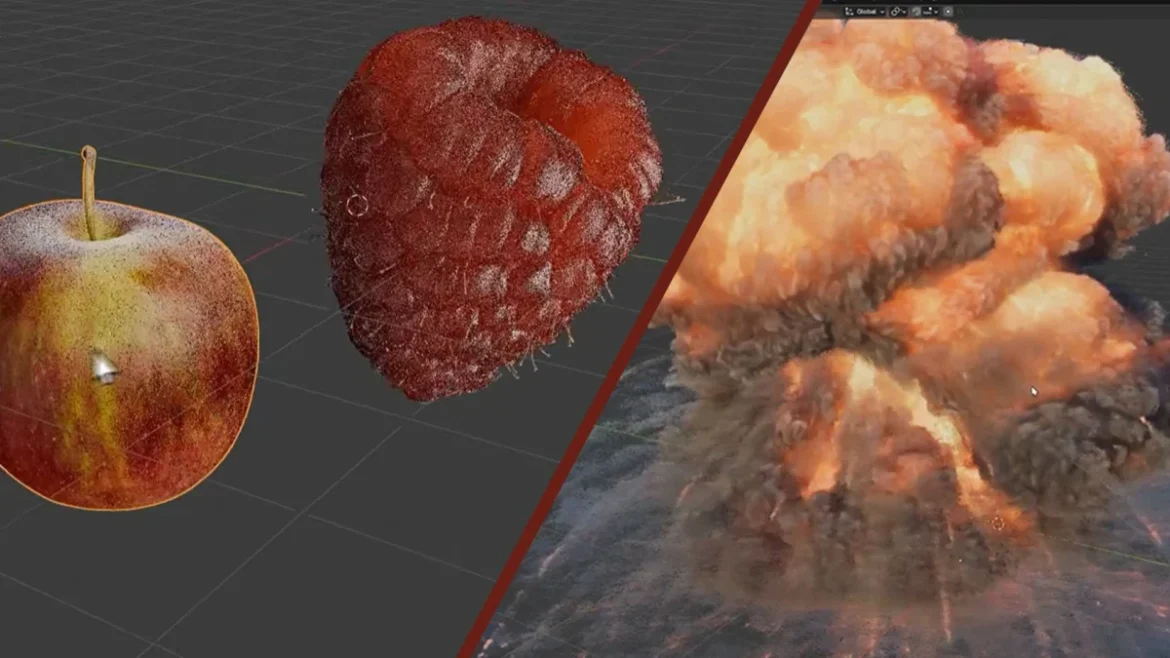
The upcoming release of Blender 5.3 marks a significant technological milestone for open-source 3D content creation, introducing native support for 3D Gaussian splatting directly into the software’s core pipeline. Currently available in its alpha testing phase and slated for a full public rollout in November, this feature bridges the gap between traditional polygon-based modeling and photorealistic neural rendering. By allowing artists to import and render 3D Gaussian splats natively via standard formats, Blender continues to cement its status as a cornerstone application for visual effects studios, independent animators, and digital designers alike.
The Integration of Gaussian Splatting in Modern 3D Pipelines
Gaussian splatting has rapidly evolved from an academic computer vision concept into an industry-standard technique for capturing and rendering real-world environments. Unlike traditional 3D assets constructed from rigid geometric polygons, meshes, and vertices, a Gaussian splat is composed of millions of overlapping, volumetric 3D colored blobs. These elements independently store crucial spatial and visual data, including precise 3D coordinates, scaling metrics, rotational orientations, color spectra, and transparency values.
Historically, capturing physical spaces required painstaking photogrammetry or expensive LiDAR scanning equipment, followed by complex processing in dedicated external software applications such as COLMAP or Brush. Once processed, artists had to rely on specialized, often cumbersome third-party add-ons to bridge external .ply files into Blender. The inclusion of native import capabilities in Blender 5.3 eliminates these friction points, streamlining how digital creators incorporate neural radiance fields and scanned real-world data into their digital scenes.
Chronology of the Development and Release Roadmap
The integration of Gaussian splatting into Blender follows a deliberate, multi-year evolution of the software’s rendering and data management architectures.
- Early 2023: Academic researchers introduce 3D Gaussian splatting as a breakthrough real-time radiance field rendering method, sparking widespread adoption across the computer graphics community.
- Late 2023 to 2024: The Blender developer community begins experimenting with third-party Python scripts and community-led add-ons to parse .ply files containing splat data, though performance remains limited by the lack of core engine support.
- Mid-2025: Blender Foundation developers initiate core architectural updates to handle volumetric cloud and point-cloud data structures more efficiently, laying the groundwork for native splat integration.
- September 2025: Blender 5.3 enters its alpha testing phase, officially unveiling native import support for PLY and SPZ file formats, alongside rendering compatibility across Workbench, EEVEE, and Cycles.
- November 2025 (Expected): The official stable release of Blender 5.3 is scheduled to deploy to the public, offering refined performance optimizations and stability fixes for production environments.
Technical Capabilities and Current Limitations in the Alpha Phase
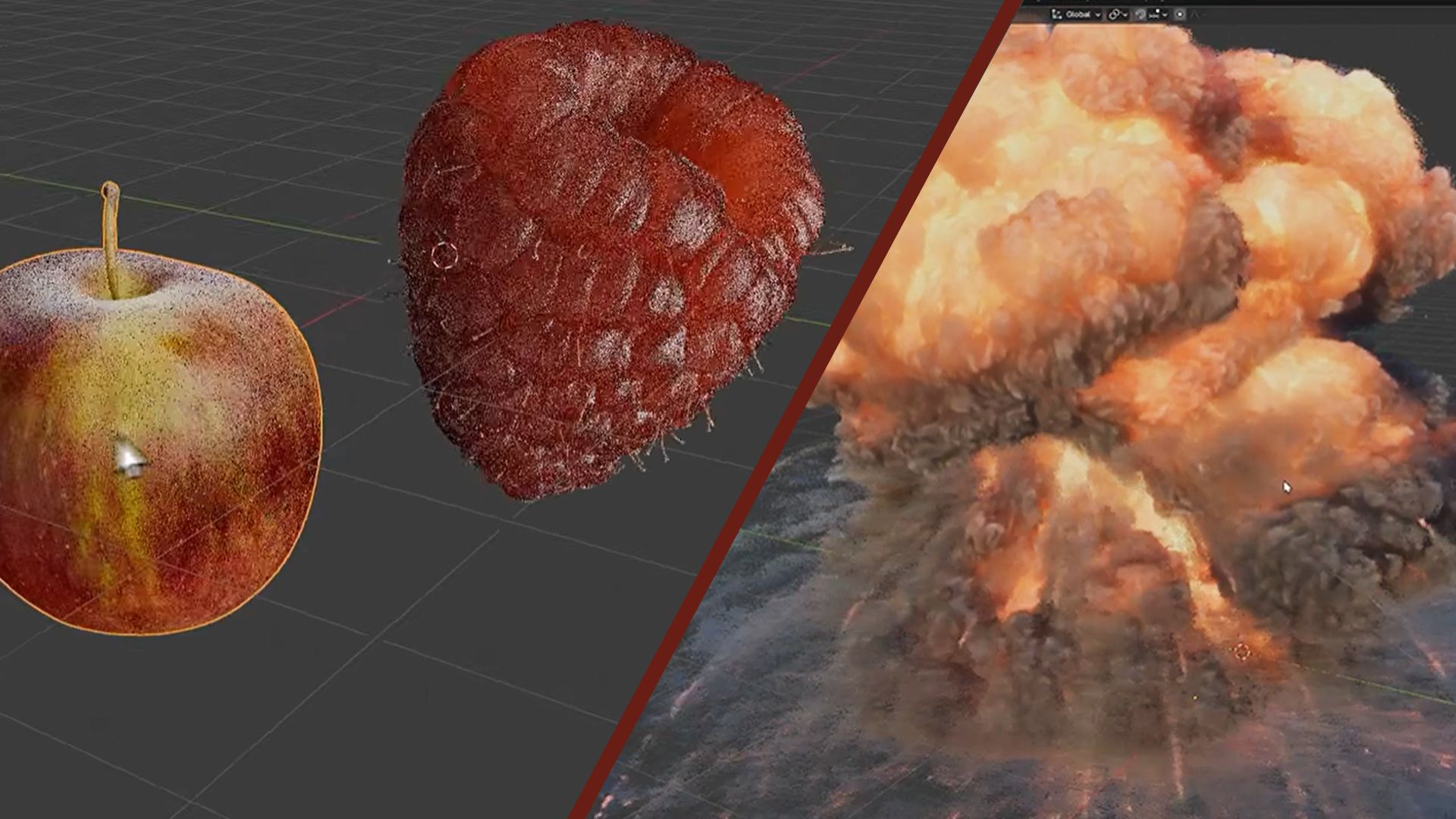
While the introduction of native support has garnered substantial enthusiasm across technical forums and social media platforms, early adopters testing the alpha build note several technical constraints outlined in the official developer release notes.
Currently, Blender 5.3 supports the direct import of PLY and SPZ file formats, allowing users to visualize and render complex neural captures. However, export capabilities are not yet included in this iteration, meaning artists must still rely on external pipelines if they intend to export modified splats back out to other applications.
Furthermore, rendering performance during the alpha phase does not yet match the blazing-fast speeds seen in specialized, closed-source real-time splat viewers. Rendering pipelines currently assume an sRGB color space by default. Because Blender’s advanced render engines, Cycles and EEVEE, operate fundamentally within a linear color space, areas characterized by low opacity or high radiance can occasionally yield visual artifacts or incorrect light calculations. Additionally, applying transformations (such as Scale, Rotation, or translation) to a Gaussian splat object can yield unexpected results, as the underlying transformation matrix does not yet fully account for complex attributes like spherical harmonics and directional scaling.
Industry Implications and Competitive Landscape
The addition of native Gaussian splat support places Blender at the forefront of a broader industry shift toward hybrid workflows that combine traditional computer graphics with captured real-world data. Visual effects pipelines increasingly rely on scanned assets to construct digital doubles, virtual production sets, and complex environmental backdrops with unprecedented speed and photorealism.
Competitors across the digital content creation software market have raced to solve the inherent challenges of working with neural assets. For instance, rendering firms like Chaos have introduced proprietary solutions aimed at overcoming historical limitations such as relighting static Gaussian splats—a persistent hurdle given that splats inherently bake lighting data into their color attributes. By incorporating native support, Blender ensures that independent artists and boutique studios have free, democratic access to technologies previously locked behind expensive, enterprise-grade software ecosystems.
As the November release date approaches, developer focus will likely center on resolving color space discrepancies, optimizing performance bottlenecks, and expanding transformation handling. For the millions of artists who rely on Blender for animation, motion design, and architectural visualization, version 5.3 represents a vital evolutionary step toward a unified, future-proof digital workspace.
