
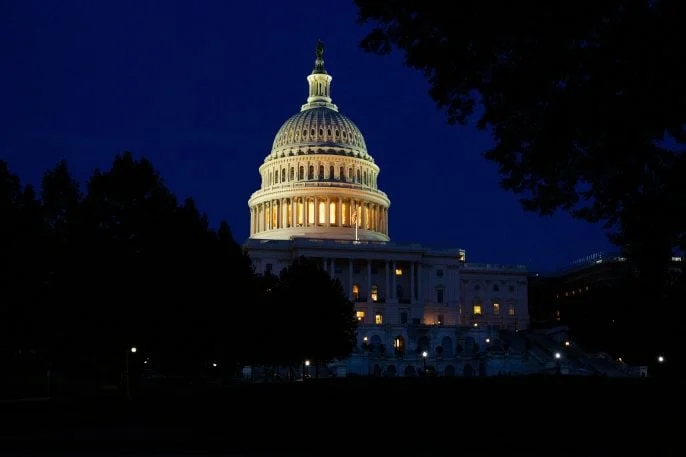
The United States Senate’s momentum toward establishing a comprehensive regulatory framework for digital assets has encountered a significant setback as deep-seated disagreements over ethics provisions have stalled the advancement of the Clarity Act. The impasse, characterized by a sharp rejection from Senate Democrats of language supported by the White House, has forced a return to the negotiating table, leaving the future of the landmark legislation uncertain. Reports emerged on Thursday indicating that a proposal intended to mitigate potential conflicts of interest regarding President Donald Trump’s involvement in the cryptocurrency sector failed to garner the necessary bipartisan support, prompting key lawmakers to seek a revised alternative.
The central point of contention revolves around how federal ethics laws should apply to senior officials, including the President, who maintain private interests in the rapidly evolving digital asset market. As the crypto industry continues to seek legitimacy and regulatory certainty within the United States, the legislative gridlock highlights the complex intersection of financial innovation, executive branch accountability, and partisan oversight.
The Core of the Legislative Dispute
The Clarity Act, a centerpiece of current congressional efforts to regulate the digital economy, underwent a significant update on Wednesday with the inclusion of specific ethics provisions. These measures were designed to address long-standing concerns regarding the potential for high-ranking federal officials to benefit financially from policy decisions affecting the crypto market. Specifically, the proposed language would prohibit the President and other senior federal officials from issuing or sponsoring digital assets while serving in office.
However, the mechanism for enforcing these rules has become the primary obstacle to a deal. The White House-backed proposal sought to grant the Department of Justice (DOJ) exclusive authority to enforce these ethics standards. Democrats immediately pushed back against this concentration of power, arguing that a single point of enforcement under the executive branch’s purview lacks the necessary checks and balances to ensure transparency and accountability.
Senator Ruben Gallego has emerged as a vocal critic of the current proposal, describing the language as inadequate and unreflective of months of bipartisan cooperation. Gallego expressed frustration that the final draft appeared to deviate from the consensus reached during earlier negotiations between Democratic and Republican staffers. The breakdown in communication has led to a fractured legislative front, with Gallego now spearheading an effort to draft a counterproposal that would likely broaden enforcement powers beyond the DOJ.
The Role of Executive Crypto Ventures
The urgency surrounding the ethics provisions is inextricably linked to President Trump’s high-profile entry into the cryptocurrency space. Unlike previous administrations, where presidential assets were typically moved into blind trusts or liquidated to avoid the appearance of conflict, the current administration has seen the President maintain an active interest in various digital ventures. This includes his association with projects like World Liberty Financial and the promotion of non-fungible tokens (NFTs).
Critics argue that without robust, independent enforcement of ethics rules, the President could influence regulatory agencies—such as the Securities and Exchange Commission (SEC) or the Commodity Futures Trading Commission (CFTC)—to create favorable conditions for his personal holdings. The Clarity Act was seen as the primary vehicle to codify restrictions on such activities, but the debate over who monitors the monitor has paralyzed progress.
Senator Cynthia Lummis, a long-time advocate for the crypto industry, defended the White House-backed proposal, characterizing it as a historic step forward. Lummis argued that by voluntarily embracing these standards, the President was submitting to the toughest ethics rules ever applied to the presidency. Alongside Senator Bernie Moreno, Lummis has been a key architect of the Republican-led effort to integrate these ethics clauses into the broader Clarity Act.
Chronology of the Clarity Act Negotiations
To understand the current stalemate, it is essential to trace the development of the Clarity Act over the past several months:
- Early 2026: Bipartisan working groups in the Senate Banking and Finance committees begin drafting a comprehensive framework to define the roles of the SEC and CFTC in the digital asset space.
- April 2026: Preliminary drafts of the Clarity Act gain traction, with industry leaders expressing cautious optimism that the U.S. will finally move away from "regulation by enforcement."
- June 2026: Discussions shift toward the "Presidential Ethics Clause" as news of the President’s expanding crypto portfolio draws scrutiny from ethics watchdogs and congressional Democrats.
- July 22, 2026: The updated Clarity Act is released, featuring the DOJ-exclusive enforcement language.
- July 23, 2026: Senate Democrats formally reject the ethics language. Senator Gallego characterizes the proposal in harsh terms, signaling a total breakdown in the current negotiation track.
- Current Status: Senator Thom Tillis and Senator Gallego begin working on a bipartisan counter-offer, while Senate leadership signals that a vote before the August recess is unlikely.
The Enforcement Dilemma: DOJ vs. State Attorneys General
The most technical aspect of the disagreement involves the role of state-level law enforcement. Senator Gallego and his allies have argued that state attorneys general should maintain the authority to enforce ethics and consumer protection laws related to digital assets, even when they involve federal officials. This "dual enforcement" model is common in many areas of American law, providing a safeguard in the event that federal authorities are perceived as being politically compromised or overly lenient.
Republican negotiators, however, have expressed concerns that allowing state attorneys general to pursue cases against the President or senior federal officials could lead to a patchwork of politically motivated prosecutions. They argue that the DOJ, as the primary federal law enforcement agency, is the only appropriate body to handle such sensitive matters of national governance.
Senator Thom Tillis, while acknowledging the White House proposal as a "positive starting point," admitted that the current version is unlikely to survive the Senate’s 60-vote threshold. Tillis has positioned himself as a bridge-builder, working with Gallego to find a middle ground that might include limited state-level oversight or the involvement of an independent ethics commission.
Market Implications and Regulatory Uncertainty
The legislative delay has significant implications for the broader cryptocurrency market. According to recent data, the total market capitalization of digital assets fluctuates between $2.2 trillion and $2.8 trillion, with institutional adoption reaching record highs. However, the lack of a clear federal framework has left many firms in a state of legal limbo, often facing conflicting guidance from different regulatory bodies.
The Clarity Act was intended to provide:
- Definitions for Stablecoins: Clear rules on reserves and issuance for fiat-backed digital currencies.
- Market Structure Clarity: Distinctions between digital assets treated as securities and those treated as commodities.
- Consumer Protection: Mandatory disclosures and insurance requirements for centralized exchanges.
Without the passage of the Act, the industry remains vulnerable to sudden shifts in regulatory policy. Market analysts suggest that the ongoing ethics debate, while politically necessary, is distracting from the fundamental economic goals of the bill. If the Senate fails to act before the August recess, the window for passing significant legislation before the mid-term election cycle begins to close rapidly.
Official Responses and Political Fallout
The reaction to the stalled negotiations has been swift across the political spectrum. Senate Majority Leader John Thune expressed disappointment on Thursday, noting that the legislative calendar is becoming increasingly crowded. "While we had hoped to advance the Clarity Act this month, it is clear that more work remains to be done on the ethics front," Thune stated. He indicated that while a full vote is off the table for now, he hopes to at least initiate a formal debate on the Senate floor to put lawmakers’ positions on the record.
Industry trade groups, such as the Blockchain Association and the Crypto Council for Innovation, have urged lawmakers to resolve their differences. In a joint statement, several industry representatives noted, "The United States cannot afford to fall behind other jurisdictions, such as the European Union and the UK, which have already implemented comprehensive crypto frameworks. We urge the Senate to prioritize the core regulatory components of the Clarity Act while seeking a fair and transparent resolution to the ethics debate."
On the other side, government oversight groups have lauded the Democratic holdout. "The idea that the Department of Justice, which reports to the President, should be the sole arbiter of the President’s own ethics is a non-starter for anyone concerned with the rule of law," said a spokesperson for a leading non-partisan ethics organization.
The Path to 60 Votes
For the Clarity Act to become law, it must overcome the filibuster, requiring at least 60 votes in the Senate. This means that even a unified Republican caucus would need significant Democratic support. The current rift suggests that the bill is nowhere near that threshold.
Senator Tillis emphasized that the next step involves a "reality check" with the White House. Negotiators must determine whether President Trump is willing to accept a version of the bill that grants more enforcement power to independent bodies or state officials. If the White House remains firm on DOJ-only enforcement, the Clarity Act may remain stalled indefinitely, or it may be stripped of its ethics provisions—a move that would almost certainly alienate the Democratic votes needed for passage.
As the Senate prepares for its summer adjournment, the "counterproposal" being drafted by Tillis and Gallego represents the last best hope for a compromise in 2026. The outcome of these discussions will not only shape the future of the American crypto industry but will also serve as a precedent for how the U.S. government navigates the personal financial interests of its highest-ranking leaders in the digital age.
Analysis of Broader Impacts
The standoff over the Clarity Act reflects a larger trend in American politics where emerging technologies become the newest battlefield for long-standing constitutional disputes. The debate is no longer just about "what" is being regulated—be it Bitcoin, Ethereum, or stablecoins—but "who" has the power to oversee the regulators themselves.
If a compromise is reached, it could provide a blueprint for future ethics legislation involving other high-stakes industries, such as artificial intelligence or green energy, where federal officials may hold private interests. Conversely, if the bill fails, it will likely embolden the SEC to continue its "regulation by enforcement" strategy, a prospect that many in the crypto industry fear will drive innovation and capital away from the United States.
For now, the digital asset market remains in a state of watchful waiting. The volatility of the legislative process mirrors the volatility of the assets themselves, with the only certainty being that the path to "clarity" remains fraught with political peril. As lawmakers head toward the August recess, the eyes of the financial world remain fixed on the Senate, waiting to see if a bipartisan bridge can be built over the chasm of executive ethics.
