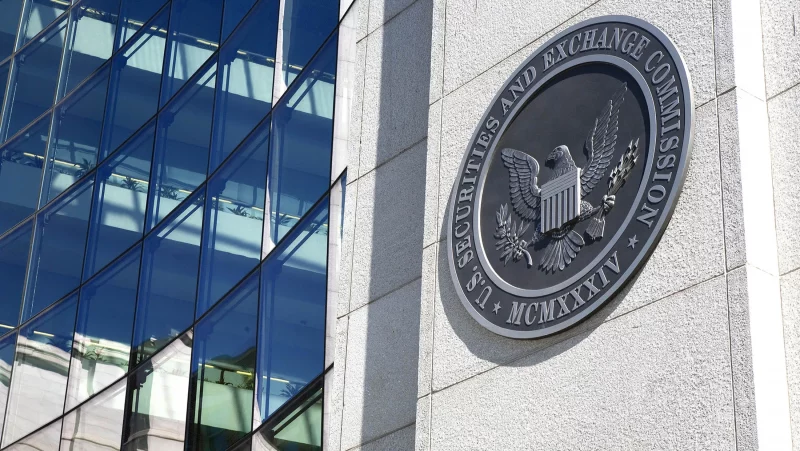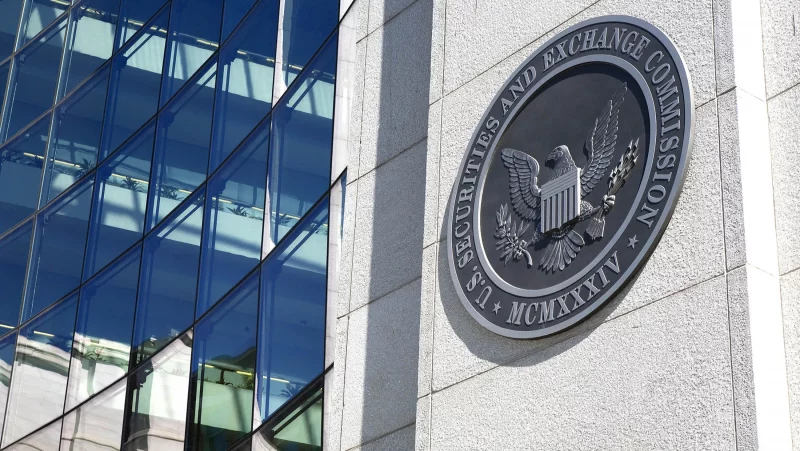
The United States Securities and Exchange Commission (SEC) Division of Corporation Finance released a comprehensive set of Frequently Asked Questions (FAQs) this past Friday, marking a significant development in the ongoing regulatory dialogue surrounding the digital asset ecosystem. This new guidance serves as an interpretative framework, offering market participants deeper insights into how the agency’s staff evaluates specific activities—such as token buybacks, liquid staking, and ongoing protocol development—within the scope of federal securities laws. While these FAQs do not hold the weight of formal rulemaking or commission-sanctioned policy, they represent a critical signal regarding the SEC’s evolving approach to decentralized networks.
The Evolution of SEC Crypto Oversight
To understand the weight of this latest guidance, one must look at the regulatory trajectory of the SEC under the leadership of Chair Gary Gensler. Since 2021, the Commission has consistently maintained that the majority of crypto assets fall under the definition of securities, citing the 1946 Supreme Court decision in SEC v. W.J. Howey Co. The Howey test, which dictates that an investment contract exists when there is an investment of money in a common enterprise with a reasonable expectation of profit derived from the efforts of others, remains the primary lens through which the SEC views digital assets.
In March of this year, the Commission issued preliminary interpretations that set the stage for these Friday FAQs. By refining the definitions and criteria, the SEC aims to move away from a "regulation by enforcement" perception and toward a more nuanced, albeit still rigorous, oversight regime. This shift is seen by many legal experts as a response to growing pressure from Congress and the judiciary to provide clearer "rules of the road" for the burgeoning blockchain industry.
Clarifying Token Buybacks and the Howey Test
One of the most consequential aspects of the new guidance concerns the practice of token buybacks. In the traditional financial world, buybacks are a common mechanism for returning value to shareholders. In the crypto sector, however, buybacks have often been scrutinized as potential evidence that a project is reliant on "essential managerial efforts"—a key component of the Howey test.
The SEC staff has now clarified that when a crypto network is already functional and decentralized, the mere announcement or execution of a buyback for a non-security asset does not inherently constitute a promise of future managerial success. This distinction is vital for developers who seek to manage the tokenomics of their ecosystems without triggering securities registration requirements.
However, the guidance imposes a critical caveat: if a network is not yet functional, or if the buyback mechanism is marketed as a way to generate specific yields or financial returns for holders, the analysis flips. In such instances, the buyback program could be interpreted as an integral part of an investment contract. This distinction forces developers to carefully scrutinize the timing and marketing language surrounding their treasury management strategies.
Liquid Staking and the Digital Tool Framework
The FAQs also address the growing complexity of liquid staking—a process where users deposit assets into a protocol and receive a "receipt token" in return. This receipt token allows users to retain liquidity while their underlying assets remain staked.
The SEC staff suggests that a staking receipt token representing a digital commodity that is not itself subject to an investment contract may be viewed as a "digital tool." In this context, the receipt acts merely as an accounting mechanism or a digital claim for the underlying asset, rather than an independent security.
Furthermore, the staff indicated that if a staking receipt token’s value is tied directly to the operation of a functional, market-driven crypto system—rather than the management or efforts of a centralized entity—it may be classified as a digital commodity. This provides a clearer pathway for decentralized finance (DeFi) protocols that utilize liquid staking, provided they can demonstrate that their operations are truly decentralized and market-driven rather than reliant on a core team to deliver profits.
Developer Autonomy and Network Utility
A recurring concern within the blockchain development community has been the fear that any form of network maintenance or improvement could be construed as the "essential managerial efforts" required to label a token as a security. The new guidance provides a degree of breathing room.
The staff explicitly stated that developers can continue to maintain, secure, and update a functional network without those activities necessarily falling under the Howey test’s definition of managerial effort. This is a significant acknowledgment of the technical reality that blockchains require ongoing security patches, protocol upgrades, and ecosystem maintenance to remain viable.
Additionally, the SEC clarified that promoting a network’s current utility or capabilities does not, in isolation, constitute a promise of future profit. Aspirational statements regarding future features are also afforded more leeway, provided they do not explicitly frame the network’s development as a path to potential investment returns. This clarification effectively separates "technical roadmap communication" from "investment solicitation," a distinction that has been a frequent point of contention in past SEC enforcement actions.
Secondary Market Operations and Promotion
The final major pillar of the Friday guidance concerns secondary market platforms. The SEC has clarified that the mere operation of a secondary market for a crypto asset does not automatically categorize a trading platform as a "promoter."
To be classified as a promoter under Securities Act Rule 405, a platform must be actively involved in the distribution or marketing of the securities in a way that suggests a deeper relationship with the issuer. By narrowing the scope of what constitutes a "promoter," the SEC is acknowledging the role of decentralized exchanges and secondary market facilitators in the broader crypto economy, though platforms must still exercise caution to ensure they do not cross the line into acting as unregistered securities exchanges.
Implications and Industry Reactions
The immediate impact of this guidance is a higher level of transparency for legal counsel representing crypto projects. While the SEC has not relinquished its stance that most digital assets are securities, the new FAQs provide a framework for "safe harbor-adjacent" activities.
From a broader market perspective, this move is likely to encourage more disciplined tokenomics. Projects will likely move toward more conservative marketing strategies, ensuring that their communications emphasize the utility of the protocol rather than the potential for price appreciation.
Legal analysts have noted that while the guidance is helpful, it remains a set of staff interpretations. "This is not the same as a formal SEC vote or a rule change," noted a partner at a prominent D.C.-based law firm specializing in digital assets. "While it gives us a better idea of what the Division of Corporation Finance is looking for, the Commission still retains the authority to bring enforcement actions that may test the boundaries of these interpretations."
Chronology of SEC Regulatory Action
- 1946: The SEC v. W.J. Howey Co. Supreme Court case establishes the "Howey Test," the cornerstone of US securities analysis.
- 2017: The SEC releases the "DAO Report," signaling that tokens issued through Initial Coin Offerings (ICOs) are likely securities.
- 2021: Chair Gary Gensler begins a tenure marked by aggressive enforcement actions against crypto exchanges and lending platforms.
- March 2024: The SEC publishes preliminary interpretive guidance on crypto assets, setting the foundation for the current FAQ release.
- October 2024: The SEC staff issues the expanded FAQ guidance, providing specific clarifications on buybacks, staking, and development activities.
Analysis: What Lies Ahead
The crypto industry continues to operate in a high-stakes regulatory environment. The SEC’s latest guidance reflects a shift toward defining the circumstances under which activities become regulated, rather than broadly categorizing all activity as illicit.
For developers, the burden of proof remains high. Projects must be able to document that their networks are functional, that their buyback mechanisms are not linked to promises of profit, and that their marketing focuses on utility. As the industry matures, these distinctions will likely become the standard for "compliance-first" development.
Ultimately, this guidance does not resolve the fundamental question of which specific tokens are or are not securities. That remains a case-by-case determination. However, by clarifying the activities that are generally considered "neutral" or "permissible," the SEC has provided a modest but meaningful blueprint for innovation within the confines of existing federal law. Moving forward, the industry will likely monitor how the Commission applies these new interpretations to active litigation and ongoing investigations, which will serve as the true test of this guidance’s utility.