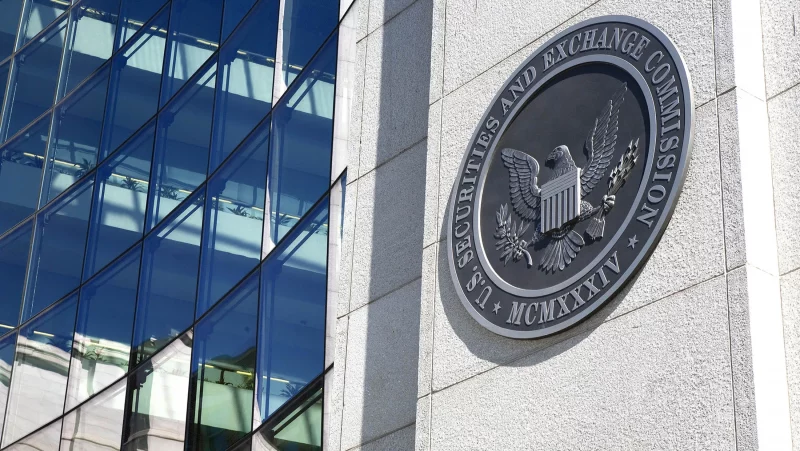
The United States Securities and Exchange Commission (SEC) Division of Corporation Finance issued a fresh set of Frequently Asked Questions (FAQs) this past Friday, providing much-needed, albeit non-binding, clarity on the application of federal securities laws to various activities within the digital asset ecosystem. This latest guidance addresses the long-standing ambiguity surrounding token buybacks, liquid staking receipt tokens, and the ongoing development of decentralized blockchain networks. While the staff explicitly noted that these FAQs do not carry the force of law and have not been formally approved or disapproved by the Commission itself, the release serves as a significant signal regarding the regulatory agency’s current enforcement philosophy and analytical framework.
The Regulatory Landscape and the Howey Test
At the center of this guidance is the persistent application of the Howey Test—a legal standard derived from the 1946 Supreme Court case SEC v. W.J. Howey Co. Under this test, an investment contract exists if there is an investment of money in a common enterprise with a reasonable expectation of profits to be derived from the efforts of others. For years, the crypto industry has struggled to reconcile the decentralized nature of blockchain networks with the “efforts of others” prong of the Howey Test.
The SEC’s latest communication seeks to refine how that prong is interpreted in the context of mature, functional networks versus those still in the developmental phase. By distinguishing between different lifecycle stages of a crypto project, the staff is acknowledging that the regulatory treatment of a token may evolve as the underlying technology achieves functional independence.
Token Buybacks: Utility Versus Investment Contracts
One of the most consequential clarifications in the new guidance involves token buyback programs. Historically, buybacks in the traditional equity markets are viewed as a return of capital to shareholders, often signaling confidence from management. In the crypto sector, however, regulators have frequently scrutinized buybacks, fearing they could be interpreted as a mechanism to artificially inflate token prices, thereby creating an expectation of profit based on managerial effort.
The SEC staff clarified that when a network is already fully functional, the mere announcement of a buyback for a non-security crypto asset does not, in and of itself, constitute a promise to perform essential managerial efforts. This distinction is vital for decentralized autonomous organizations (DAOs) and project teams that utilize treasury funds to support ecosystem stability.
However, the analysis shifts significantly when the network is not yet functional. If a buyback program is marketed as a method for generating yield or as a way to provide returns to token holders in a pre-operational network, the staff suggests that such activities could indeed contribute to the formation of an investment contract. This bifurcated approach provides a clearer path for projects that have achieved sufficient decentralization to engage in treasury management without automatically triggering securities registration requirements.
Staking Receipt Tokens: A New Classification
The rise of liquid staking, popularized by protocols like Lido and Rocket Pool, has introduced a new layer of complexity to securities regulation. When a user deposits assets into a staking protocol, they typically receive a "staking receipt token"—a derivative asset representing their stake in the underlying network.
The SEC guidance introduces the concept of the "digital tool." If a staking receipt token represents a digital commodity that is not itself subject to an investment contract, it may be viewed as a mere receipt for the underlying asset. In these instances, the receipt serves a functional purpose rather than an investment purpose.
Furthermore, the staff noted that in certain configurations, a staking receipt token issued by a protocol-based liquid staking provider could be classified as a digital commodity, provided its value is primarily tied to the operation of a functional crypto system and governed by market supply and demand dynamics. This is a critical development, as it suggests that the SEC is beginning to categorize certain DeFi (Decentralized Finance) primitives as commodities rather than securities, potentially offering a more permissive regulatory environment for liquid staking providers.
Ongoing Network Development and Promotional Activities
The guidance also addresses the "essential managerial efforts" prong regarding the continued development of blockchain networks. Many developers have operated under a cloud of uncertainty, fearing that any maintenance, security patches, or software updates could be cited by the SEC as evidence that the network is still reliant on the "efforts of others."
The SEC staff provided a degree of comfort by stating that developers can continue to maintain, secure, and improve a functional network without those activities necessarily constituting an investment contract. Additionally, the guidance clarifies that promoting a network’s current utility or capabilities does not automatically equate to a promise of managerial effort. Even aspirational statements regarding future features may fall outside the scope of securities analysis, provided those statements do not explicitly promote potential profits or rely on a promise of managerial success.
Secondary Markets and the Promoter Definition
The role of secondary market trading platforms has also been addressed. The SEC staff clarified that simply operating a secondary market for a crypto asset does not automatically categorize a trading platform as a "promoter" under Securities Act Rule 405. To be classified as a promoter, a platform must meet specific criteria regarding its involvement in the founding, organization, or financial restructuring of the asset issuer. This clarification is particularly relevant for centralized and decentralized exchanges that have faced ongoing litigation regarding the listing of tokens that the SEC has previously labeled as securities.
Chronology of SEC Crypto Enforcement
To understand the significance of this guidance, one must look at the timeline of the SEC’s involvement in digital assets:
- 2017: The SEC releases the DAO Report, asserting that tokens sold in the DAO ICO were securities.
- 2019: The Division of Corporation Finance issues a "Framework for ‘Investment Contract’ Analysis of Digital Assets."
- 2023: The SEC increases its enforcement actions, suing major exchanges like Coinbase and Binance, alleging the sale of unregistered securities.
- March 2024: The Commission issues a broad interpretation of digital asset securities, which the current FAQs explicitly build upon.
- October 2024: The latest guidance is published, offering the most detailed granular look at specific blockchain activities to date.
Implications for the Industry
The immediate implication of this guidance is a move toward a "functional maturity" standard. By acknowledging that a network’s regulatory profile can shift from "security" to "commodity" as it matures, the SEC is implicitly inviting projects to prove their decentralization and operational autonomy.
However, industry analysts warn that while this guidance provides a roadmap, it does not provide legal immunity. The fact that the guidance is not Commission-approved means that individual enforcement divisions could still take a different stance in court. Legal experts suggest that companies should document their operational maturity carefully, ensuring that their communications and treasury activities align with the principles outlined in the FAQs.
For market participants, the clarification on staking receipt tokens is perhaps the most positive development. As the industry shifts toward Proof-of-Stake (PoS) consensus mechanisms, the ability to engage in liquid staking without the immediate threat of a securities designation is a massive boon for institutional adoption and retail participation alike.
Looking Ahead
The broader impact of this document remains to be seen. While the crypto industry has long demanded formal rulemaking via the Administrative Procedure Act, the SEC has preferred a "regulation by enforcement" approach. These FAQs represent a middle ground—an informal but highly influential communication from the staff that shapes market behavior without the rigidity of a formal regulation.
Market participants, developers, and legal counsel are now expected to conduct a comprehensive audit of their ongoing projects against these new standards. The distinction between "aspirational statements" and "promises of profit" will likely become a primary focus for compliance departments across the blockchain sector. As the SEC continues to balance the protection of investors with the need for technological innovation, these FAQs will serve as the primary reference point for firms seeking to navigate the complex, often treacherous, waters of U.S. federal securities law.
The release also underscores the ongoing tension within the SEC itself. With different commissioners often holding conflicting views on the nature of digital assets, the Division of Corporation Finance’s decision to publish these FAQs serves as a pragmatic attempt to provide the market with actionable guidance despite the lack of a clear legislative mandate from Congress. Whether this will lead to a decrease in litigation remains an open question, but for now, the industry has a clearer, if not absolute, understanding of the regulatory boundaries.