
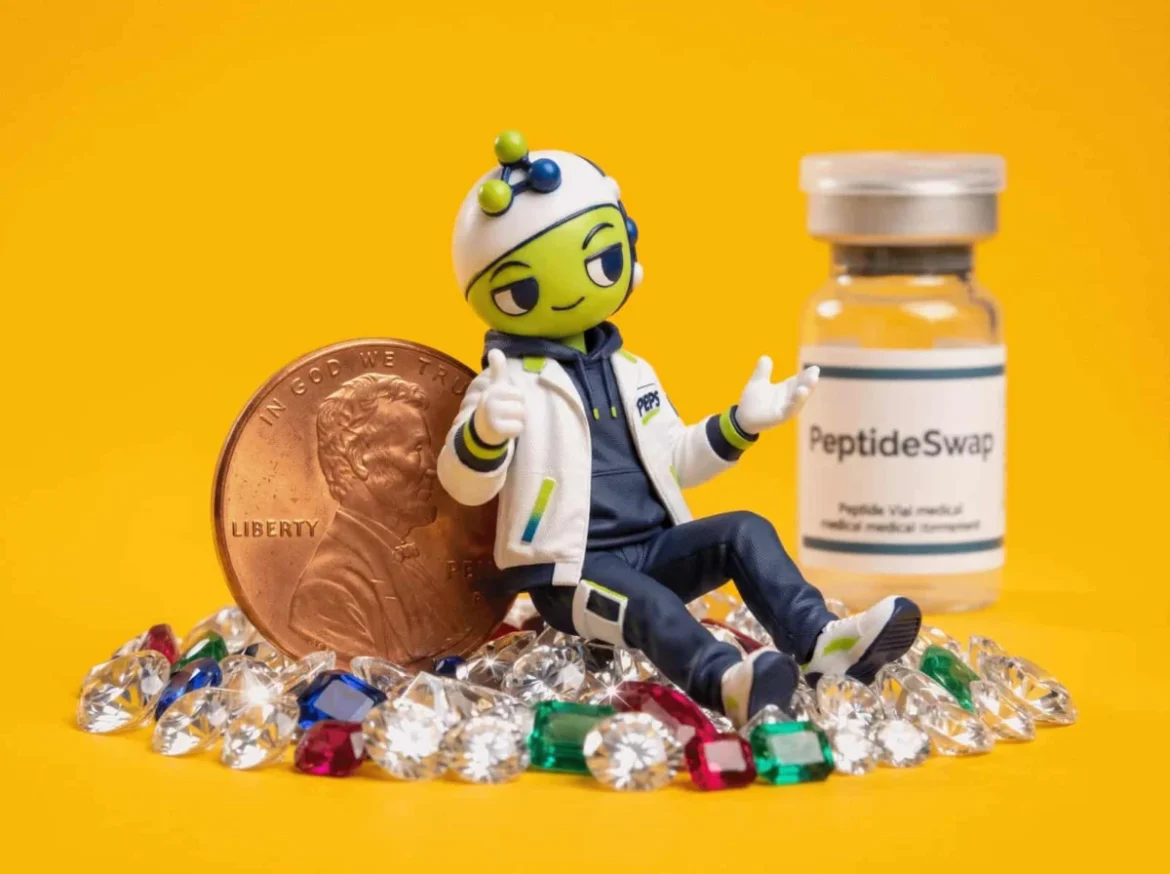
-30 Token Presale Gains Momentum Amid Rising Demand for Web3 Fitness and Wellness Payment Solutions
The search for high-growth, low-cost digital assets remains a primary focus for cryptocurrency traders navigating current market conditions. Among emerging projects, the ERC-30 token presale for PeptideSwap has drawn increased attention following notable whale accumulation and projections of substantial adoption within the specialized health and fitness research sector. With market analysts evaluating the intersection of decentralized finance (DeFi) and decentralized science (DeSci), the platform aims to address structural payment challenges long faced by vendors and buyers of research peptides and alternative wellness compounds.
Background Context and Industry Landscape
The market for specialized fitness research items and physical optimization compounds has experienced significant global expansion over recent years. Industry publications, including reports from Peptidestil, estimate that digital currency volume allocated to research peptides will exceed $250 million. Furthermore, broader commercial data indicates that everyday consumers spend upwards of $1.4 billion annually on physical shipments within this expanding health and wellness niche.
Despite this commercial scale, participants in the physical optimization community have frequently encountered operational hurdles through traditional banking institutions. Payment processors and commercial banks routinely freeze merchant accounts or restrict transactions associated with alternative wellness supplements and research chemicals. This lack of reliable payment infrastructure created an acute demand for dedicated, secure financial channels that protect both buyers and suppliers from sudden account closures.
To address these vulnerabilities, PeptideSwap was developed as an online exchange utilizing blockchain technology to facilitate digital currency transactions for specialized fitness research items. By replacing traditional banking intermediaries with smart contract escrow systems, verified dealer lab checks, and automated buyback protocols, the platform seeks to establish professional financial standards for a previously fragmented market segment.
Chronology and Presale Metrics
The PeptideSwap initiative officially commenced its introductory acquisition phase on October 1, 2026, establishing a structured timeline for its token distribution and subsequent exchange deployments. As the project progresses through its initial development milestones, key operational metrics outline its current market standing:
- Presale Stage: First Round
- Launch Date: October 1, 2026
- Current Token Price: $0.0148 USD
- Total Funds Raised: $42,263.13 USD
- Total Tokens Sold: 42,263,130
- Participating Wallets: 151
- Presale Token Supply Allocation: 120,000,000
- Total Token Supply: 500,000,000
- Presale Hardcap: $2,000,000 USD
- Planned Centralized Exchange (CEX) Listing Price: $0.025 USD
- Projected Listing Day Yield: +150%
Out of the 120 million tokens allocated for this introductory phase, over 42 million units have been acquired by early participants. This leaves approximately 77.7 million tokens available, representing nearly 65% of the initial pool open for acquisition prior to public exchange listings. Current acquisition velocity indicates that the project is on track to reach the 200-wallet threshold within a two-to-three-week timeframe, reflecting steady organic engagement from both retail participants and institutional stakeholders.
Tokenomics and Supply Reduction Mechanisms
The economic design of the PeptideSwap ecosystem centers on utility-driven demand and aggressive supply deflation. The native utility asset, designated as PEPS, serves as the primary medium for all network transactions, fee settlements, and platform interactions.
To manage long-term circulation and encourage scarcity, the protocol implements a dual-action fee distribution model:
- Treasury Allocation: Fifty percent of all network and transfer fees are routed directly to a development treasury dedicated to ongoing platform upgrades, security audits, and ecosystem expansion.
- Permanent Token Burn: The remaining fifty percent of transaction fees are directed toward a public burn address, permanently removing tokens from circulation.
Through this automated mechanism, project developers aim to reduce the total circulating supply down to a baseline of 500,000 units over time. This targeted reduction represents a fraction of the original 500 million total supply. Market analysts note that such extreme scarcity models are designed to generate upward valuation pressure as public liquidity deepens across decentralized and centralized exchanges following the official debut.
Projected Market Implications and Valuation Analysis
With the planned centralized exchange listing price established at $0.025 USD, early participants acquiring tokens at the current rate of $0.0148 USD stand to achieve baseline appreciation upon public trading commencement. Financial projections suggest that initial liquidity events on platforms like Uniswap could yield immediate positive returns for participants who secured allocations during the private presale phase.
For example, a $100 commitment at current introductory rates secures approximately 6,756 tokens, which would theoretically value at roughly $168.90 based solely on the planned $0.025 CEX listing price, prior to any open-market price discovery or post-launch trading volume. Larger allocations scale proportionally, though market observers emphasize that digital asset valuations remain subject to broad macroeconomic conditions, market volatility, and execution risks inherent to early-stage technology projects.
Official communication channels and documentation for the project are maintained via their primary web portal at www.PeptideSwap.com, alongside community engagement platforms on Telegram, X (formerly Twitter), and YouTube. Market participants and prospective buyers are encouraged to review complete project documentation and evaluate their individual risk tolerance prior to engaging with digital asset presales.
Frequently Asked Questions
What is the native utility asset of this decentralized exchange?
The native asset is PEPS, which powers all network transactions, governance interactions, and fee settlements across the platform.
How does the tokenomics model reduce circulating availability?
Fifty percent of all collected network fees are allocated to a public burn wallet, permanently removing tokens from circulation until the total supply reaches the targeted baseline of 500,000 units.
What is the planned public exchange debut price for this digital currency?
The target exchange debut price is set at $0.025 USD per unit.
Where are network development funds stored?
Fifty percent of all transaction fees are routed directly to an ecosystem treasury dedicated to ongoing platform improvements and infrastructure maintenance.
Can retail buyers access these private rates after public listing?
No, introductory rates are strictly exclusive to the ongoing private acquisition phase prior to the official public exchange launch.
When did this introductory acquisition event officially launch?
The event officially opened to participants on October 1, 2026.
What is the overall fundraising hardcap for this round?
The total hardcap target for the introductory phase is established at $2,000,000 USD.
How many digital units were earmarked for this opening phase?
A total of 120 million units were allocated specifically for this introductory round.
What is the official web portal address for participation?
Interested participants can visit www.PeptideSwap.com to review project documentation and metrics.
How many distinct wallets currently hold positions in the project?
There are currently 151 distinct wallets holding positions within the ecosystem, encompassing both retail participants and institutional allocations.
Disclaimer: This article is presented for informational purposes only and does not constitute financial, investment, or trading advice. Cryptocurrencies and token presales carry a high level of risk, and readers should conduct thorough independent research and consult with a qualified financial advisor before making any investment decisions.
