
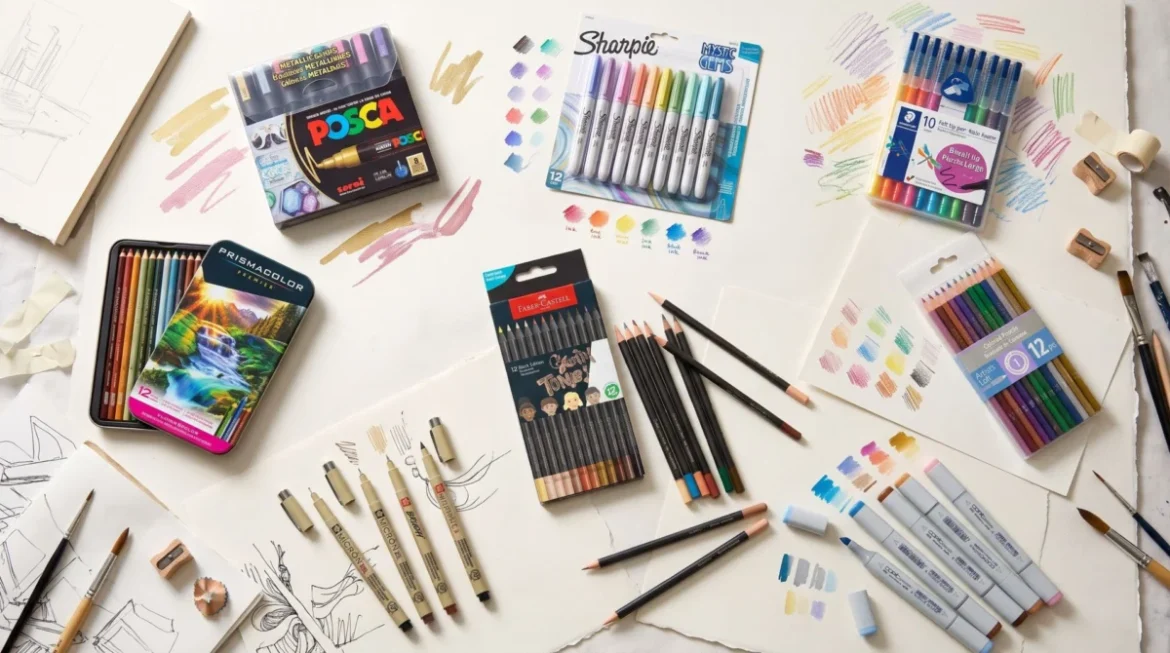
The annual retail shift toward late-year discounting has officially begun, with major arts and crafts retailers launching early promotional events aimed at both professional creators and holiday shoppers. Prominent art supply chains and online retailers are rolling out substantial price reductions on high-end creative materials weeks ahead of the traditional post-Thanksgiving shopping rush. This early onset of holiday discounting reflects broader trends in the retail sector, where merchants are increasingly stretching promotional windows to capture consumer spending earlier in the fourth quarter.
Among the early participants, major retailers such as Michaels have introduced targeted promotions spanning globally recognized brands like Posca and Faber-Castell. Industry analysts note that these preemptive sales events serve a dual purpose: they allow suppliers to clear inventory ahead of end-of-year financial reporting, and they provide budget-conscious consumers with opportunities to acquire professional-grade materials at reduced price points. As creative professionals, hobbyists, and students navigate inflationary pressures on everyday goods, these early-season discounts have become a focal point for acquiring specialized tools that typically command premium prices.
Background and Evolution of Early Black Friday Retail Trends
The phenomenon of early Black Friday promotions is not entirely new, but its application to niche markets such as fine art and professional craft supplies has accelerated significantly over the past half-decade. Historically, Black Friday was concentrated on the single Friday following Thanksgiving, characterized by doorbuster electronics and appliance deals. However, supply chain disruptions, shifts in consumer behavior toward e-commerce, and intense competition among brick-and-mortar and online retailers have transformed the shopping holiday into a multi-week retail event.
In the art materials sector, the shift began in earnest during the late 2010s as retailers recognized that creative supplies—ranging from archival-quality sketchbooks to specialized Japanese markers and European watercolors—represent significant upfront investments for consumers. By introducing promotions as early as late October or early November, retailers can smooth out logistics, prevent website crashes associated with single-day traffic spikes, and capture spending from gift-givers before holiday budgets are exhausted by other categories.
Furthermore, the rise of digital art communities on platforms such as YouTube, TikTok, and Instagram has created a massive, highly engaged demographic of young adults and hobbyists who actively experiment with physical mediums. Brands like Posca (known for its opaque paint markers) and Faber-Castell (renowned for precision pencils and drawing instruments) have seen surges in demand driven by viral content, making them prime targets for promotional discounting.
Financial Implications and Consumer Behavior
The timing of these early sales coincides with a critical period for consumer spending. Economic indicators suggest that while employment remains stable, household budgets are increasingly stretched by the cumulative effects of inflation over recent years. Consequently, discretionary categories such as arts, crafts, and hobbies are experiencing heightened price sensitivity.
According to retail market researchers, promotional events featuring discounts of up to 25% online, alongside in-store incentives such as "buy one, get one 50% off" mix-and-match programs, significantly alter purchasing patterns. Rather than buying single items as needed, consumers tend to bundle purchases during promotional windows to maximize savings. This behavior is particularly pronounced among parents purchasing holiday gifts for children interested in the arts, as well as fine arts students preparing for the second half of the academic year.

Art educators and independent studio artists also capitalize on these pre-Black Friday events. For professionals who consume high volumes of consumables—such as canvas, acrylic paints, specialized inks, and drafting pens—bulk purchasing during seasonal sales represents a vital strategy for managing operational overhead. Retailers are well aware of this dynamic, structuring their inventory and promotions to attract both casual hobbyists and professional practitioners.
Industry Perspectives and Official Retail Strategies
While official corporate statements regarding holiday sales strategies are typically guarded to maintain competitive advantages, retail analysts and supply chain experts have provided insight into the mechanics behind these early promotions.
Market observers note that the art supply industry has experienced a stabilization following the unprecedented demand spikes witnessed during the COVID-19 pandemic, when millions of individuals took up crafting and painting during lockdowns. As baseline demand has normalized, manufacturers and retailers have had to work harder to stimulate consumer engagement. Early discounting acts as a proven catalyst for maintaining sales velocity during the shoulder period between the back-to-school shopping season and the peak December holiday rush.
"Retailers are no longer waiting for the traditional starting gun of Black Friday," explained a senior retail consultant who tracks consumer goods and specialty retail. "The strategy is about securing a share of the consumer’s wallet early. In categories like art supplies, where brand loyalty is exceptionally strong—once an artist finds a marker or pencil weight they prefer, they rarely switch—securing that initial transaction often locks in long-term customer value."
Moreover, the hybrid retail model employed by major chains—combining tiered online discounts with in-store experiential promotions—allows companies to gather valuable data on consumer preferences. Online-exclusive markdowns appeal to digital-first shoppers seeking specific imported brands, while in-store BOGO (buy-one-get-one) deals drive foot traffic to physical locations, where shoppers are statistically likely to make additional impulse purchases.
Broader Economic and Environmental Context
Beyond the immediate financial benefits to consumers, the expansion of the holiday shopping window carries broader structural implications for the retail and logistics sectors. Spreading promotional activity across several weeks helps alleviate the extreme pressure placed on shipping networks, fulfillment centers, and delivery services during Thanksgiving week.
In the context of the art supply sector, which relies heavily on international manufacturing hubs in Europe and Asia for specialized pigments, papers, and precision instruments, advanced sales forecasting allows distributors to optimize cargo freight and warehousing. By gauging consumer interest through early-November promotions, retailers can better manage inventory replenishment for the final push of the holiday season, minimizing the risk of out-of-stock items on high-demand creative goods.
As the retail calendar continues to evolve, early Black Friday sales on professional art supplies underscore a permanent shift in how specialty goods are marketed. What was once a localized clearance effort has matured into a sophisticated, data-driven campaign designed to meet the economic realities of modern consumers while sustaining the health of the creative retail ecosystem. For artists, students, and holiday gift-givers alike, the coming weeks present a strategic window to acquire professional-grade materials before standard pricing resumes at the close of the holiday season.
