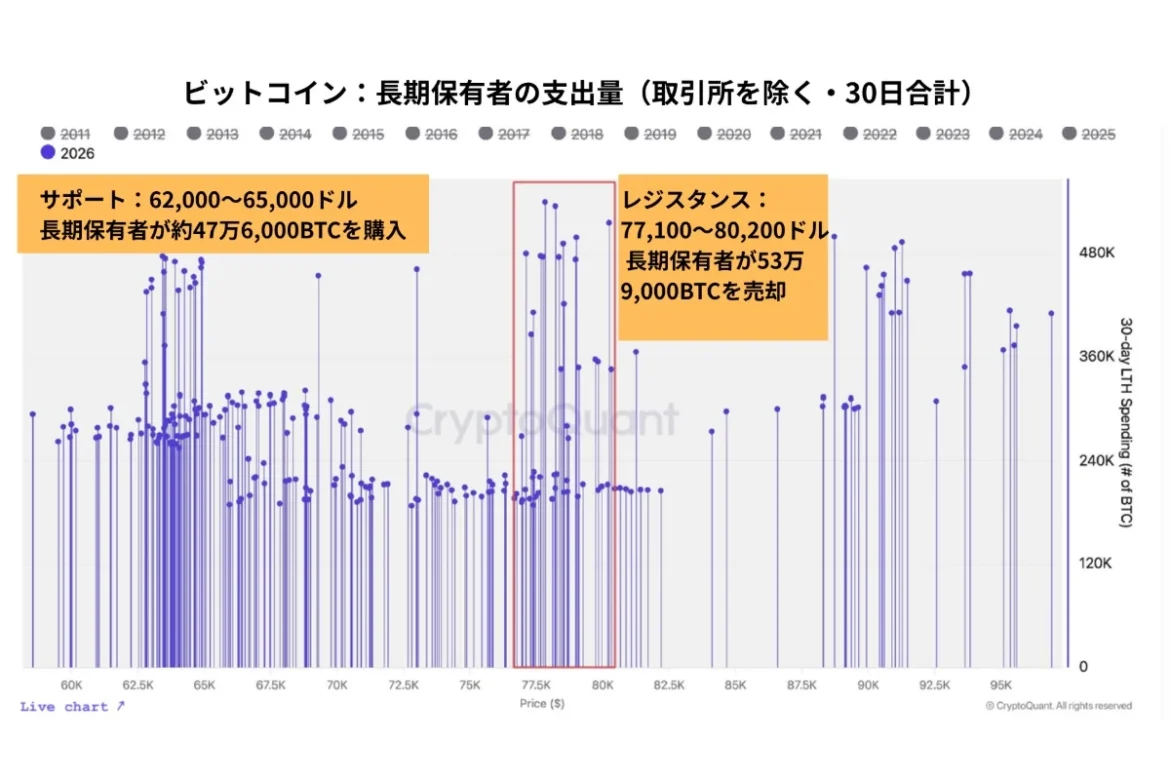
Bitcoin’s recent price movements have drawn intense scrutiny from market analysts and institutional investors alike, particularly as on-chain data highlights significant capital reallocation by long-term holders (LTHs). According to recent insights published by prominent crypto analytics firm CryptoQuant, seasoned investors holding significant balances of the premier cryptocurrency have been actively adjusting their positions, establishing clear structural boundaries that currently dictate market behavior.
The digital asset market has experienced heightened volatility over the past several quarters, with Bitcoin fluctuating within key psychological and technical thresholds. On-chain metrics reveal that while older coins are being distributed at higher price points—specifically targeting the $77,000 to $80,000 range, and pressing toward an upper realized price band near $88,700—accumulation patterns continue to provide a robust safety net during market pullbacks. This dynamic interplay between profit-taking and strategic accumulation offers vital clues regarding the market’s macro trajectory and institutional sentiment.
Understanding Long-Term Holder Dynamics and Realized Price Bands
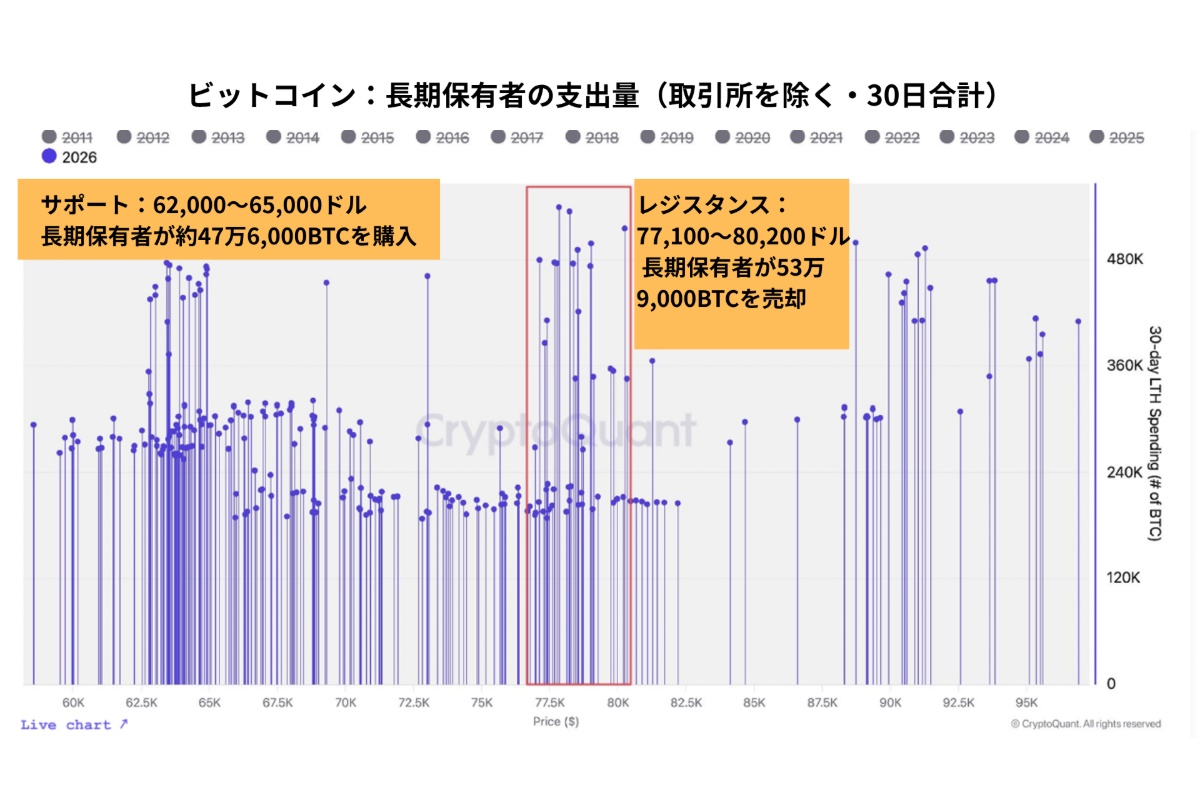
To fully grasp the current market structure, analysts closely monitor the realized price bands of long-term holders. Historically, these cohorts represent the bedrock of market stability, accumulating assets during periods of deep bearish sentiment and distributing portions of their holdings during bull market phases. Recent on-chain intelligence indicates that while long-term holders have capitalized on price surges approaching the $88,700 mark—a level aligned with sophisticated on-chain valuation models—they have also engaged in strategic accumulation during broader market corrections.
This behavior underscores a sophisticated understanding of market cycles. Rather than engaging in panic selling, LTHs use corrections to re-establish positions at lower cost bases, thereby dampening overall market volatility. The current cycle has demonstrated a high degree of maturity among these investors, who appear increasingly unfazed by macroeconomic headwinds, regulatory developments, and short-term liquidity fluctuations.
Chronology of Key Price Zones: Accumulation and Distribution
A closer examination of the 30-day moving averages of long-term holder spending reveals distinct behavioral phases over the past year. Data compiled by CryptoQuant tracks substantial movements of Bitcoin across various price tiers, painting a comprehensive picture of market sentiment and capital allocation.
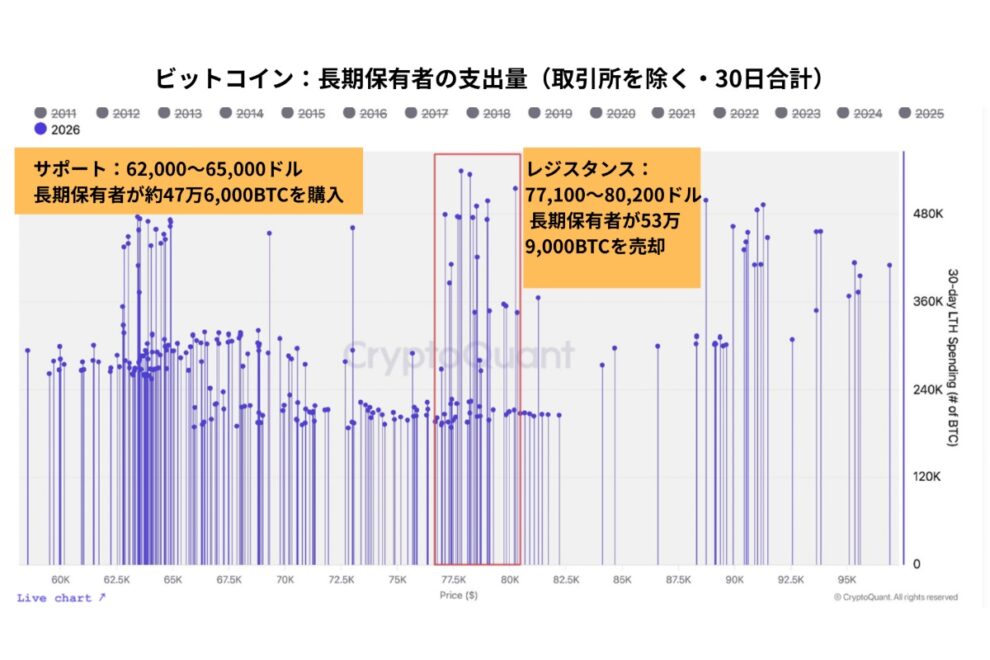
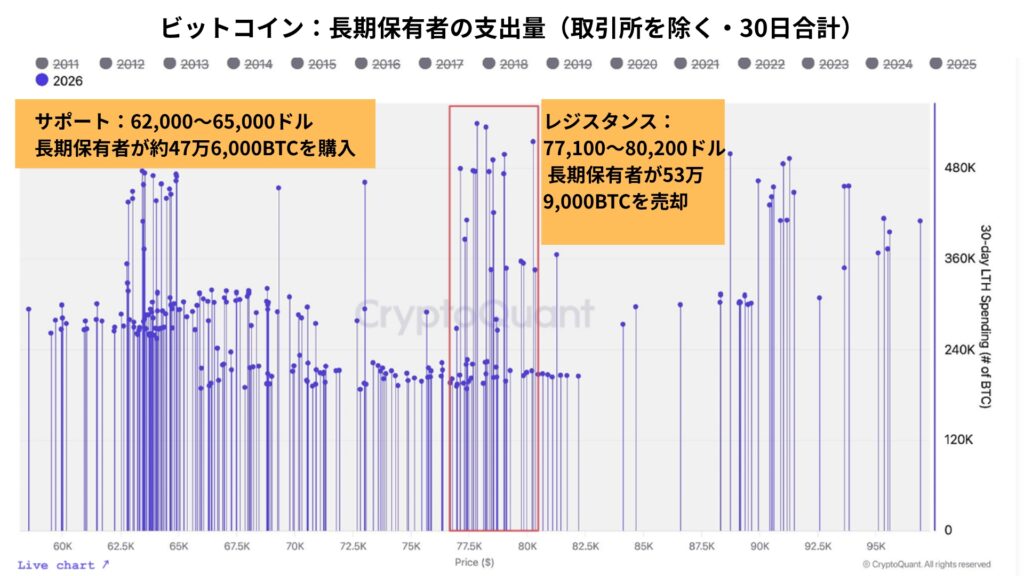
In the lower valuation bands—specifically between $62,000 and $65,000—long-term holders demonstrated aggressive accumulation phases. During periods of consolidation or downward pressure in early 2026, on-chain metrics recorded hundreds of thousands of bitcoins moving into long-term storage wallets. This pattern has historically served as a strong bullish indicator, signaling that institutional and high-net-worth investors view sub-$65,000 valuations as an attractive entry point for long-term capital deployment.
Conversely, as prices escalated toward the $77,100 to $80,200 range, spending metrics spiked correspondingly. Long-term holders utilized these rallies to lock in profits, leading to a temporary cooling of upward momentum. This distribution phase, however, did not trigger a systemic market correction. Instead, the liquidity generated by profit-taking was largely absorbed by new market entrants and institutional buyers, preventing severe downward spirals and establishing a new baseline of support.
Broader Market Implications and Macroeconomic Factors
The interplay between long-term holder distribution and macroeconomic conditions cannot be overstated. As global financial markets navigate shifting monetary policies, inflation reports, and regulatory scrutiny, Bitcoin’s position as both a risk-on asset and a structural hedge continues to evolve.
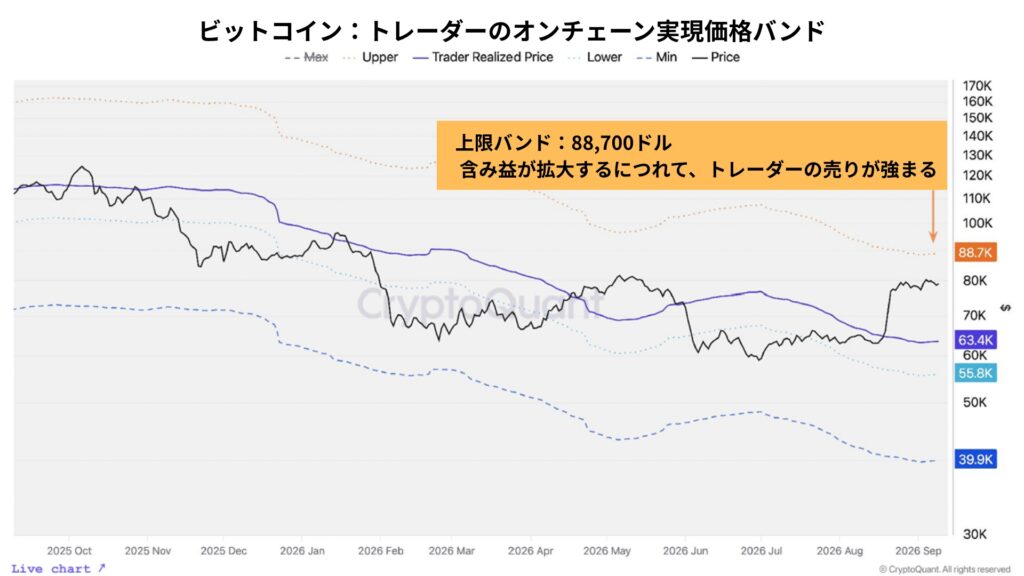
The ability of the market to absorb heavy distribution from long-term holders at the $88,700 threshold indicates underlying structural strength. Market analysts note that derivative markets and spot exchange-traded funds (ETFs) have played a pivotal role in this equilibrium. Institutional inflows into spot Bitcoin ETFs have provided the necessary liquidity to absorb older coins being sold into the market, thereby reducing the net selling pressure on traditional cryptocurrency exchanges.
Furthermore, the consistency of long-term holder accumulation during historical drawdowns suggests that the market’s structural floor has risen significantly compared to previous economic cycles. While short-term traders remain vulnerable to macroeconomic data releases—such as consumer price index (CPI) reports and central bank interest rate decisions—the broader trend among veteran market participants points toward continued confidence in Bitcoin’s long-term value proposition.
Looking Ahead: What On-Chain Metrics Tell Us About Future Price Action
As the cryptocurrency market looks toward the remainder of 2026, on-chain analysts emphasize the importance of monitoring realized price bands and exchange-excluded holder metrics. The $77,100 to $80,200 range currently acts as a primary battleground for market participants. A sustained break above this zone could pave the way for a renewed assault on the $88,700 upper resistance level, whereas a failure to hold these supports might reintroduce consolidation phases near the $62,000 to $65,000 accumulation zone.
Ultimately, the behavior of long-term holders serves as a reliable barometer for the digital asset’s market maturity. By balancing strategic profit-taking with disciplined accumulation, these seasoned investors continue to shape the trajectory of the cryptocurrency ecosystem, providing a stabilizing force amid ongoing global financial evolution.