
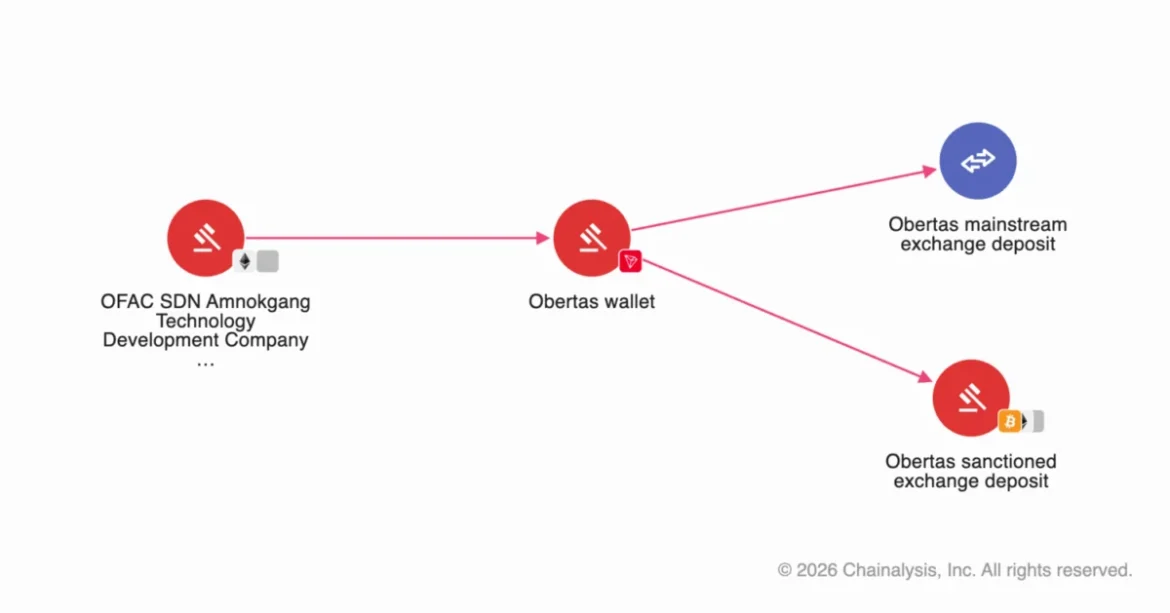
The United States Department of the Treasury’s Office of Foreign Assets Control (OFAC) escalated its campaign against North Korean illicit financing operations by sanctioning 10 individuals and one entity. The October 28, 2026, enforcement action targets a sophisticated, sprawling network of state-sponsored North Korean IT workers and their international financial facilitators. Operating across multiple jurisdictions, these operatives secure remote employment at legitimate Western businesses, earning substantial revenue that is systematically funneled back to Pyongyang to finance the Democratic People’s Republic of Korea’s (DPRK) unlawful weapons of mass destruction and ballistic missile programs.
This latest regulatory strike exposes a multi-layered financial pipeline wherein DPRK agents, often stationed abroad in countries like Russia, utilize VPNs, stolen identities, proxy infrastructure, and advanced generative artificial intelligence tools to dupe unsuspecting corporations. Once securely embedded in tech roles, these workers generate millions in stablecoins and other cryptocurrencies. They then rely on a network of Russian nationals and front companies to launder these digital assets, converting them into fiat currency through sanctioned and mainstream cryptocurrency exchanges to bypass international financial restrictions.
An Evolution in Threat Tactics and Generative AI Integration
The scope of the North Korean IT worker phenomenon has expanded dramatically over the past several years. According to United Nations Panel of Experts reports, these global operations generate an estimated $250 million to $600 million in annual revenue for the Kim Jong Un regime, serving as a vital financial lifeline for a heavily sanctioned economy. What began as rudimentary freelance fraud has evolved into a highly industrialized, technologically advanced enterprise.

Recent investigative findings reveal that DPRK operatives have increasingly adopted generative artificial intelligence to streamline their infiltration of global labor markets. North Korean agents utilize AI tools to fabricate hyper-realistic, localized resumes tailored to specific corporate job postings, draft convincing cover letters, and even generate deepfake video profiles and images for remote video interviews. These technological advancements have drastically lowered the barrier of entry for less-skilled operatives, allowing them to bypass traditional corporate screening processes, HR compliance checks, and technical interviews.
Consequently, corporations ranging from small startups to major multinational firms have unknowingly hired these state-sponsored actors. Beyond revenue generation, the presence of DPRK operatives inside corporate networks poses severe cybersecurity vulnerabilities. Once inside, these workers have been known to leverage their authorized access to conduct internal reconnaissance, deploy malicious code, expropriate sensitive proprietary data, and facilitate ransomware attacks on behalf of the regime.
Chronology and Enforcement Context of the U.S. Response
The U.S. government has spent years assembling a coordinated, interagency response to dismantle the DPRK IT worker infrastructure. The timeline of regulatory and law enforcement actions highlights a progressive tightening of the dragnet around Pyongyang’s financial facilitators:
- May 2022: The Federal Bureau of Investigation (FBI), the Department of State, and the Department of the Treasury issued a joint advisory warning global corporations about North Korean IT workers utilizing proxy servers, laptop farms, and falsified identities.
- May 2023 and Onward: The Department of Justice began securing indictments and sentencing U.S.-based facilitators who operated illegal "laptop farms"—physical hubs that forwarded American corporate hardware to overseas locations to create a false domestic presence for North Korean workers.
- Throughout 2023 to 2025: OFAC progressively targeted primary front companies, such as Chinyong Information Technology Cooperation Company and Amnokgang Technology Development Company, which served as administrative umbrellas for overseas worker delegations.
- October 28, 2026: OFAC designated 10 individuals and the First Financial and Technical Development Center (FFTDC), focusing specifically on the financial intermediaries and money laundering nodes responsible for converting worker crypto earnings into cash.
Targeted Facilitators and Financial Mechanics

The October 2026 sanctions zero in on the crucial link between digital earnings and liquid cash: the financial facilitators. Among those sanctioned are Russian nationals Vitold Viktorovich Obertas and Ilya Aleksandrovich Boykov, who played pivotal roles in washing millions of dollars in cryptocurrency for DPRK front operations.
According to OFAC and blockchain analytics data, Obertas has converted approximately $2 million in cryptocurrency into fiat currency for North Korean officials since early 2025, though on-chain forensic analysis indicates his relationship with illicit DPRK networks stretches back to early 2023. Forensic transaction tracing reveals that funds generated by North Korean blockchain and DeFi protocol developers flowed from worker wallets through intermediary consolidation addresses, eventually reaching Obertas and Boykov. Boykov subsequently routed these digital assets through high-risk and sanctioned platforms, such as the Russian cryptocurrency exchange Garantex, to complete the cash-out process.
Simultaneously, OFAC targeted key North Korean managers overseeing these networks. DPRK nationals Kim Ki Hyok and Kim Hyo Dong were sanctioned for managing overseas IT worker delegations in Russia under the overarching authority of the Chinyong and Amnokgang corporate umbrellas. Kim Ki Hyok personally directed IT operations and transferred nearly $500,000 in cryptocurrency for his group, while Kim Hyo Dong managed separate delegations, facilitated sanctions evasion, and moved more than $100,000 in financial assets.
The designation of the Russian-based First Financial and Technical Development Center (FFTDC) further illustrates the institutional backing of these schemes. FFTDC operated as a direct deployment vehicle for overseas workers. Between 2025 and late 2026, six specific Russia-based DPRK IT workers—Kim Kyong Ju, Ri Thae Chol, So Hyon Jin, Han Yu Song, Kim Sung Gwan, and Hyon Se Il—collectively generated over $750,000 in revenue for FFTDC, all of whom were included in the latest round of sanctions.
Broader Economic Implications and Corporate Compliance

The ongoing exploitation of the global gig economy and cryptocurrency markets by North Korea presents unique challenges for compliance officers, legal teams, and human resources departments worldwide. Because these networks rely on decentralized digital assets, stablecoins, and fragmented payment rails, traditional banking compliance tools often fail to capture the initial transactional exposure without specialized blockchain intelligence.
Compliance experts emphasize that corporations must adopt a multi-layered defense strategy. This includes rigorous verification of candidate identities during remote hiring processes—such as requiring live, unannounced video interviews, independent verification of employment history, and scrutiny of banking details provided for direct deposits. In the wake of OFAC’s updated designations, cryptocurrency exchanges, decentralized finance protocols, and financial institutions must immediately cross-reference their ledgers against the newly flagged wallet addresses and entity lists to avoid severe secondary sanctions violations.
Analytical assessment of the October 2026 sanctions indicates that while targeting financial intermediaries like Obertas and Boykov disrupts immediate cash flow channels, the adaptability of the North Korean regime ensures that new front companies and proxy facilitators will likely emerge. Consequently, the burden remains heavily on private-sector employers to enhance their internal vetting procedures, transforming corporate human resources departments into the front line of national security against state-sponsored financial subversion.
