
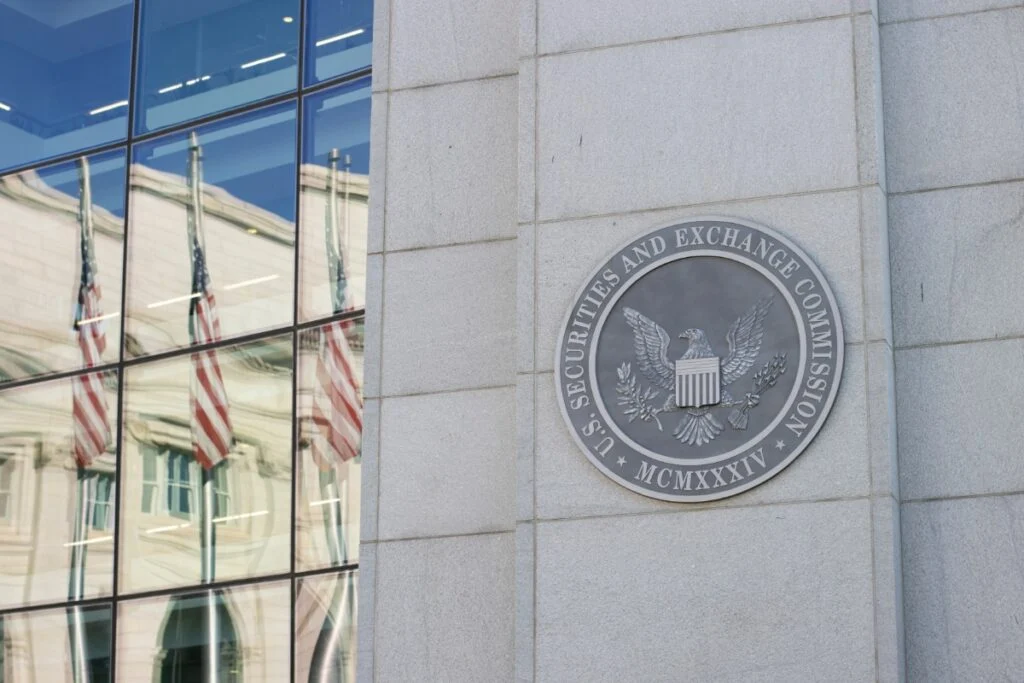
The United States Securities and Exchange Commission (SEC) formally issued a strategic innovation exemption and requested public comment on September 17, 2026, marking a monumental shift in how federal financial regulators approach digital assets. This regulatory milestone addresses a long-standing tension between traditional market infrastructure governed by the Securities Exchange Act of 1934 and the rapid proliferation of decentralized finance (DeFi) mechanisms over the past five years. At the core of the Commission’s recent action is a targeted framework designed to accommodate automated market makers (AMMs) within tokenized securities venues, creating a temporary yet vital bridge toward durable, long-term rulemaking.
The regulatory exemption primarily targets the integration of blockchain-based trading models, such as AMM liquidity pools, into regulated national market system (NMS) stock trading environments. By establishing a formalized space where tokenized assets can interact with automated liquidity protocols, the SEC is attempting to address the friction points that have historically hindered institutional participation in distributed ledger technology (DLT) markets. The initiative represents a measured, forward-looking compromise, acknowledging that while decentralized financial architectures offer unmatched speed, transparency, and operational efficiency, they must ultimately coexist within a framework that preserves investor protection, market integrity, and systemic stability.
Background Context: The Evolution of Tokenized Equities and Regulatory Friction
Over the past half-decade, the financial technology landscape has witnessed an exponential rise in the tokenization of real-world assets (RWAs), particularly equities, debt instruments, and commodities. Tokenized stocks—digital representations of shares in publicly traded companies issued on public or private blockchains—have promised to revolutionize capital markets by enabling instantaneous settlement, fractional ownership, and 24/7 trading capabilities. However, these innovations have consistently collided with legacy regulatory frameworks established nearly a century ago.
Under the traditional U.S. securities framework, secondary trading of NMS stocks is heavily centralized through registered national securities exchanges, alternative trading systems (ATS), and broker-dealers governed by strict clearing, settlement, and reporting mandates. AMMs, which utilize algorithmic liquidity pools and smart contracts rather than traditional order books and human market makers, operate in direct contrast to these legacy structures. This mismatch created a regulatory deadlock: market participants were forced to choose between operating in the grey market outside regulatory oversight or abandoning innovative tokenized models altogether.
The SEC’s September 2026 announcement signals a calculated departure from this rigid paradigm. By opening a public comment period and simultaneously granting targeted relief, the Commission is laying the groundwork for a regulatory framework that accommodates technological innovation without compromising the foundational pillars of securities regulation.
Chronology of Regulatory Adaptation and Industry Pressure
The journey toward this regulatory exemption has been marked by escalating pressure from institutional market participants, fintech startups, and digital asset exchanges. The timeline of this regulatory evolution underscores the growing urgency within both the private and public sectors:
- 2021–2022: The Post-Pandemic Digital Asset Boom. As retail trading volumes surged during the pandemic, interest in blockchain-based financial infrastructure exploded. Financial institutions began experimenting with private ledgers for repo markets and asset tokenization, immediately encountering regulatory hurdles regarding custody and settlement cycles.
- 2023–2024: Institutional Push for 24/7 Markets. Major traditional financial institutions, including the Intercontinental Exchange (ICE) and the New York Stock Exchange (NYSE), began exploring round-the-clock trading capabilities for equities. Concurrently, crypto-native firms like Coinbase pressed regulators for clearer pathways to list tokenized versions of U.S. equities.
- 2025: The Clash of Centralized Rules and Decentralized Tech. Friction peaked as offshore decentralized exchanges began offering unregistered derivative products tied to U.S. stocks. The SEC responded with heightened enforcement actions, driving home the reality that ignoring the sector was no longer a viable policy option.
- September 17, 2026: The Innovation Exemption. The SEC formally issues the innovation exemption and solicits public comments, creating a structured sandbox for tokenized NMS stock trading via AMMs.
Supporting Data and Market Implications
The economic stakes surrounding tokenized equities are immense. According to recent industry estimates, the global market for tokenized real-world assets is projected to expand into a multi-trillion-dollar sector over the next decade. Major market operators have already positioned themselves to capture this growth. For instance, Intercontinental Exchange (ICE) and the NYSE have steadily advanced initiatives to introduce 24/7 trading for select equities, while institutional-grade custodians have built robust infrastructure to bridge traditional brokerage accounts with blockchain networks.
The introduction of the SEC’s innovation exemption is expected to catalyze institutional capital inflows. By providing a legal safe harbor, the Commission has effectively mitigated the existential legal risk that previously deterred major financial institutions from committing significant R&D capital to blockchain projects. Analysts note that while the exemption is conditional and temporary, it provides a crucial testing ground for assessing how AMM liquidity pools perform under regulatory scrutiny.
Official Responses and Industry Analysis
Industry leaders and regulatory officials have offered nuanced reactions to the SEC’s announcement. In a published statement, SEC leadership emphasized that the innovation exemption is designed to gather empirical data on how automated market-making technologies function in practice. "Our objective is to foster responsible innovation while maintaining the robust investor protections that form the bedrock of the U.S. capital markets," the statement noted. "This exemption is a bridge, not a destination, built to gather the necessary data for durable, long-term rulemaking."
Market analysts have widely praised the move as a pragmatic compromise. Traditional market makers and digital asset firms alike view the public comment period as a vital opportunity to shape the future regulatory architecture of U.S. markets. However, some compliance experts caution that participating firms will still face rigorous reporting and risk-management requirements, ensuring that systemic risk is not inadvertently imported into the traditional financial system via decentralized channels.
Broader Impact on Global Financial Markets
The SEC’s decision is likely to have profound ripple effects across global financial jurisdictions. As major financial hubs compete to become the preeminent center for digital asset innovation, the United States’ move to establish a clear, albeit provisional, framework for tokenized equities strengthens its competitive position.
European and Asian regulators, who have similarly grappled with the integration of distributed ledger technology into established market structures, are closely monitoring the U.S. experiment. If the sandbox model successfully proves that AMMs can operate transparently within a regulated NMS stock environment, it could serve as a global blueprint for digital asset harmonization.
Looking ahead, the success of this initiative will depend heavily on the quality of feedback received during the public comment period and the operational performance of the firms utilizing the exemption. As the financial sector transitions further into the digital age, the September 2026 SEC exemption may well be remembered as the pivotal moment when traditional equities and blockchain technology officially converged.
