
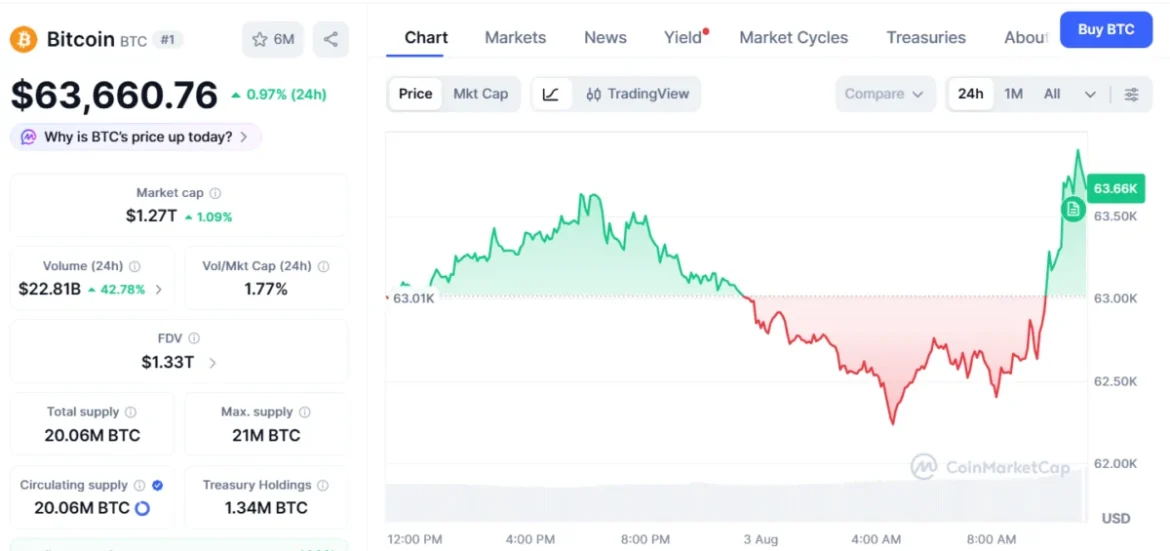
The cryptocurrency derivatives landscape successfully navigated one of its most critical stress tests of the year as approximately $15.6 billion in Bitcoin options reached their final settlement. Despite dire warnings from various market commentators concerning potential "max pain" price manipulation and cascading liquidations, the multi-billion-dollar expiry passed smoothly, leaving the leading digital asset holding firm in the mid-$83,000 range.
This monumental quarterly settlement on Deribit—the world’s largest crypto options exchange—wiped out a staggering concentration of open interest that had dominated trader positioning for months. While skeptics anticipated severe spot market turbulence as market makers unwound their delta hedges, the broader cryptocurrency ecosystem demonstrated remarkable structural resilience. Rather than contracting or flashing panic signals, capital continued to rotate seamlessly within the digital asset economy, highlighting a maturing market capable of absorbing colossal institutional-grade derivatives events without catastrophic collateral damage.
Anatomy of a Multi-Billion-Dollar Expiry: The Numbers Behind the Settlement
Ahead of the September 25 settlement, the options book presented an imposing block of hedging exposure, totaling roughly 182,000 BTC in open contracts. A granular breakdown of the derivatives order book revealed a pronounced bullish bias among institutional and retail participants alike. Call options—contracts giving buyers the right to purchase Bitcoin at a predetermined strike price—substantially outnumbered puts, which protect against downside risk.
Specifically, the expiry featured roughly 106,200 BTC in call open interest compared to approximately 75,900 BTC in puts. This heavy skew toward upside exposure meant that market makers and options dealers had accumulated significant short-gamma profiles, forcing them to actively buy underlying spot or futures contracts as Bitcoin’s price climbed toward previous local highs.
When quarterly options of this magnitude approach maturity, the mechanics of delta hedging come to the forefront. Options dealers constantly adjust their underlying asset holdings to remain neutral against price fluctuations in the spot market. As the contracts near expiration, the sensitivity of these hedges accelerates, sometimes causing localized squeezes or artificial price pinning. However, once the settlement timestamp passes and contracts are definitively exercised or expire worthless, the necessity for these hedging flows evaporates overnight.
Industry analysts frequently conflate notional value with direct cash injection, often misinterpreting a $15.6 billion settlement as an equivalent volume of spot purchasing or dumping. In reality, notional value simply represents the aggregate aggregate value of the underlying assets tied to the contracts at current market rates. The actual capital changing hands during settlement represents a fraction of this figure, primarily consisting of net settlement payouts and the lifting of margin requirements. Nevertheless, the evaporation of 182,000 BTC worth of open interest fundamentally recalibrates short-term market positioning, removing a massive layer of structural friction from the order books.
Price Action and Market Dynamics: Bitcoin Consolidates While Altcoins Rally
In the immediate wake of the settlement, Bitcoin traded subdued yet stable, changing hands at approximately $83,600. This followed a notable intraday pullback from a local weekly high near the $87,000 threshold. While this retracement left the premier cryptocurrency trading modestly below its recent cycle peaks, it comfortably maintained support well above the pre-breakout consolidation range that characterized much of the previous quarter.
Crucially, the cooling of Bitcoin’s price action did not trigger a systemic flight to safety or a broader liquidity drain across the broader digital asset landscape. Instead, market participants observed a classic internal rotation of capital. While Bitcoin paused to digest its recent gains, several large-cap altcoins demonstrated persistent relative strength.
XRP emerged as one of the standout performers of the weekly window, racking up gains of roughly 15% over a seven-day period. Concurrently, Solana continued to attract robust network activity and institutional interest, posting a 9% appreciation over the same timeframe. This divergence between Bitcoin’s consolidation phase and the aggressive outperformance of select altcoins underscores a healthy risk-on environment. Rather than signaling an exit from the asset class entirely, capital was actively redeployed into alternative ecosystems, proving that the derivatives expiry acted as a cleansing mechanism rather than a macro trend reversal.
Background and Chronology of Derivatives Growth in Crypto
To understand the significance of the September 25 expiry, one must contextualize the rapid evolution of the cryptocurrency derivatives market over the past several years. Historically, the crypto spot market dictated 100% of price discovery, leaving digital assets vulnerable to extreme retail-driven volatility and cascading liquidations on unregulated exchanges.
The maturation of regulated and institutional-grade derivatives platforms—anchored by institutions like Deribit, CME Group, and various offshore powerhouses—transformed this dynamic. Options and futures markets evolved into sophisticated barometers of institutional sentiment, providing risk-management tools for corporate treasuries, exchange-traded fund (ETF) issuers, and macro hedge funds.
Throughout 2024 and into 2025, open interest on major options exchanges regularly shattered historical benchmarks, fueled heavily by the launch and expansion of spot Bitcoin exchange-traded funds in the United States. These regulated ETFs created a direct bridge for institutional capital, which in turn required sophisticated hedging strategies via the options market. Consequently, quarterly expiries evolved from minor trading footnotes into multi-billion-dollar macro events capable of shifting global liquidity flows. The September settlement stands as the largest single-day expiry test of the year thus far, cementing the derivatives market’s central role in modern crypto price mechanics.
Industry Reactions and Expert Analysis
Ahead of the settlement date, social media channels and analytical newsletters were predictably rife with sensationalized predictions. Proponents of the "max pain" theory—the economic concept where options expire at a price that inflicts maximum financial damage on the largest number of option holders—warned of coordinated bear raids designed to drive Bitcoin toward specific strike prices.
However, veteran derivatives traders and market analysts consistently pushed back against these deterministic narratives, emphasizing that spot demand, macroeconomic data releases, and sustained ETF inflows far outweigh the ephemeral gravity of options expiries.
Speaking on condition of anonymity, a senior quantitative analyst at a digital asset liquidity provider noted that the market’s efficiency has improved dramatically:
"Retail investors often view options expiries through a superstitious lens, treating ‘max pain’ like an immutable law of physics. In reality, professional market makers hedge continuously. By the time an expiry actually arrives, the heavy lifting has already been executed incrementally over the preceding weeks. The quiet settlement we witnessed is proof that institutional hedging buffers market shocks rather than amplifying them."
Furthermore, market strategists pointed out that the steady absorption of these positions reflects a broader trend of institutional stabilization. With macroeconomic uncertainty surrounding global interest rate trajectories and geopolitical tensions persisting, the ability of the Bitcoin market to clear $15.6 billion in leveraged exposure without a flash crash speaks volumes about the deepening liquidity of the asset class.
Broader Implications: What Lies Ahead for the Post-Expiry Market
With the monumental September quarterly book now firmly in the rearview mirror, the cryptocurrency market enters a new phase of price discovery. The removal of such a massive block of hedging exposure means that near-term price action will be dictated less by traders scrambling to manage gamma risk and more by organic supply and demand fundamentals.
The immediate question facing market participants is whether spot buyers possess the conviction required to drive a sustained continuation of the rally in the absence of derivatives-driven tailwinds. Sustained inflows into spot Bitcoin ETFs, coupled with corporate balance sheet accumulations, will serve as the primary catalysts moving forward.
At the same time, the successful clearance of the September options expiry serves as a psychological victory for the market. It eliminates a lingering overhang of uncertainty that bears frequently weaponized to manufacture fear, uncertainty, and doubt (FUD). As liquidity redistributes across both Bitcoin and high-performing altcoins, the macroeconomic backdrop—characterized by evolving monetary policies and expanding institutional adoption—will resume its dominant role in shaping the trajectory of the digital asset economy.
Ultimately, the smooth settlement of $15.6 billion in Bitcoin options underscores a maturing financial ecosystem. While volatility remains an inherent characteristic of cryptocurrency, the infrastructure supporting it has proven robust enough to withstand multi-billion-dollar liquidity events with institutional calm, paving the way for the next chapter of industry growth.
