

The legislative trajectory of the Digital Asset Market Clarity Act has encountered severe turbulence, triggering notable shifts in prediction markets as political resistance and inter-agency disputes stall its path toward enactment. Originally viewed as a promising milestone for comprehensive digital asset oversight in the United States, the bill now faces mounting skepticism regarding its viability within the projected timeframe. As decentralized finance (DeFi) stakeholders, traditional banking institutions, and executive leadership clash over critical provisions, prediction platforms like Polymarket have registered a noticeable decline in market confidence. This report provides an in-depth examination of the legislative hurdles, key stakeholder positions, and broader market implications surrounding the CLARITY Act’s current status.
Background and Regulatory Significance of the CLARITY Act
The Digital Asset Market Clarity Act represents one of the most ambitious legislative efforts undertaken by United States lawmakers to establish a definitive regulatory framework for cryptocurrencies and blockchain technology. For years, the digital asset ecosystem has operated under regulatory ambiguity, frequently described by industry leaders as regulation by enforcement. This vacuum of clear statutory guidelines has left market participants vulnerable to overlapping and often conflicting directives from federal watchdogs, most notably the Securities and Exchange Commission (SEC) and the Commodity Futures Trading Commission (CFTC).
The core objective of the CLARITY Act is to delineate clear jurisdictional boundaries between the SEC and the CFTC, determining which digital assets qualify as securities and which fall under the purview of commodities regulation. By providing a structured pathway for tokens to transition from security status to commodity status as decentralization increases, the legislation aims to foster innovation while protecting retail investors. However, reconciling the vastly different regulatory philosophies of traditional financial markets and decentralized ecosystems has proven to be an extraordinarily complex task, laying the groundwork for the intense legislative battles witnessed in early 2026.
Chronology of Legislative Developments and Roadblocks
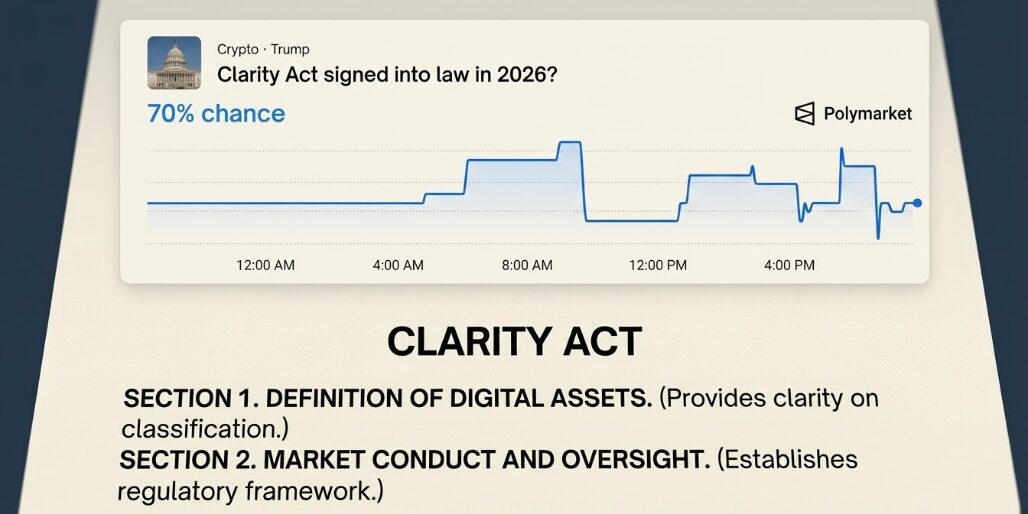
The path of the CLARITY Act has been marked by a series of strategic compromises, sudden stalemates, and shifting political priorities that have continuously altered its passage probability.
Initial Momentum in Mid-2025
The legislative framework gained substantial momentum in July 2025, when congressional committees advanced preliminary drafts of the bill. These early versions sought to establish robust anti-money laundering (AML) compliance standards tailored to decentralized finance (DeFi) protocols while offering regulatory relief for digital asset issuers. Major industry trade associations and crypto enterprises cautiously welcomed the draft, viewing it as a constructive step toward mainstream institutional adoption.
The White House Compromise and Banking Sector Rejection
As the bill progressed into early 2026, friction between traditional banking institutions and the cryptocurrency sector intensified. On March 6, 2026, Reuters reported that traditional banking groups, represented by organizations such as the American Bankers Association (ABA), had rejected a White House-brokered compromise. The proposed middle ground attempted to address the contentious issue of stablecoin rewards and yield-bearing crypto products, which banks argued posed a systemic threat to traditional commercial deposits by luring capital away from standard savings accounts. The rejection of this compromise effectively stalled the bill in committee, highlighting the deep-seated rivalry between legacy financial institutions and the emerging fintech sector.
The Presidential Ultimatum on the SAVE Act
Complicating the legislative landscape further, President Trump issued a decisive statement via social media on March 8, 2026, declaring that he would veto every single piece of legislation—explicitly including the CLARITY Act—until Congress successfully passed the full-strength SAVE America Act, which focuses on strict voter identification requirements and electoral integrity. This executive roadblock instantly depressed prediction market odds for the digital asset bill, as traders realized that the fate of the crypto legislation was now inextricably linked to broader, unrelated political battles in Congress.
Senatorial Mediation and Emerging Stalemate
By March 9, 2026, Senator Tom Tillis emerged as a key moderator tasked with reviving negotiations around the contentious stablecoin reward provisions. While Senator Tillis acknowledged the banking sector’s concerns regarding deposit flight, he faced the delicate challenge of maintaining enough support from the crypto industry to keep the legislation viable. Despite these mediation efforts, the conflicting demands of traditional lenders and digital asset advocates left the bill in a precarious legislative limbo.
Prediction Market Dynamics and Trader Sentiment
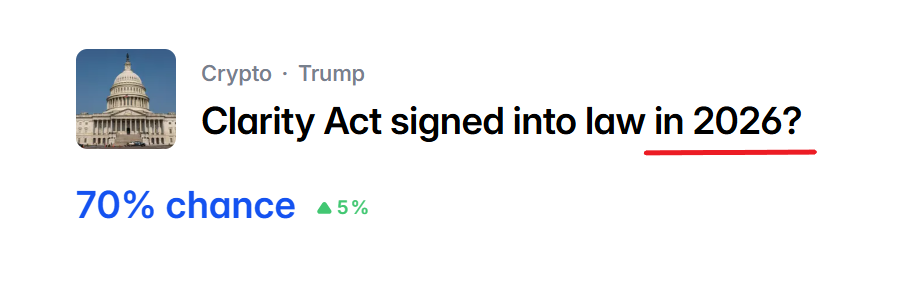
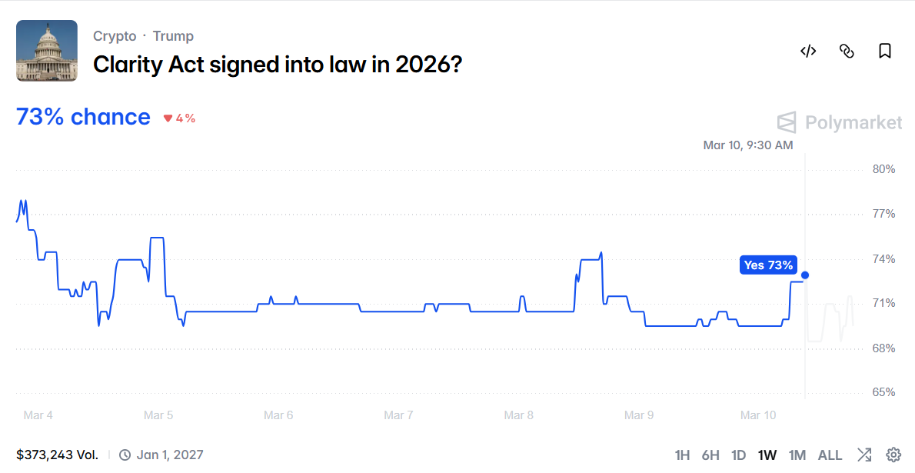
Prediction markets have served as a real-time barometer of the CLARITY Act’s shifting fortunes. Data from Polymarket illustrates a clear downward trend in market confidence regarding the bill’s enactment within the projected timeframe.
Early March Benchmarks and Point Declines
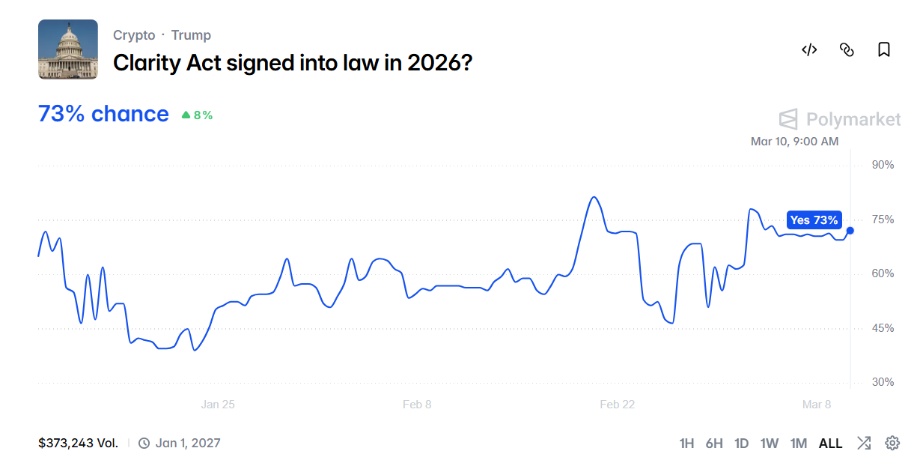
At the beginning of March 2026, Polymarket contracts predicting the successful enactment of the CLARITY Act hovered around 78%. However, following the breakdown of negotiations and subsequent political interventions, market sentiment experienced a notable contraction. By March 10, 2026, the probability for a successful "Yes" outcome had dropped to 73%, marking a five-point decline over the course of a single week.
Market Reaction to Executive and Legislative Friction
The five-point drop reflects a growing consensus among market participants that comprehensive crypto legislation is unlikely to bypass the current gridlock without significant concessions. Analysts note that while the long-term outlook for digital asset regulation remains favorable due to sustained bipartisan interest, the short-term friction has introduced substantial volatility. Traders have adjusted their positions to reflect a protracted legislative timeline, pushing expected enactment dates further into the future.
Official Responses and Stakeholder Perspectives
The legislative stalemate has elicited strong reactions from various stakeholders across the financial and political spectrum.
Cryptocurrency Industry Leaders
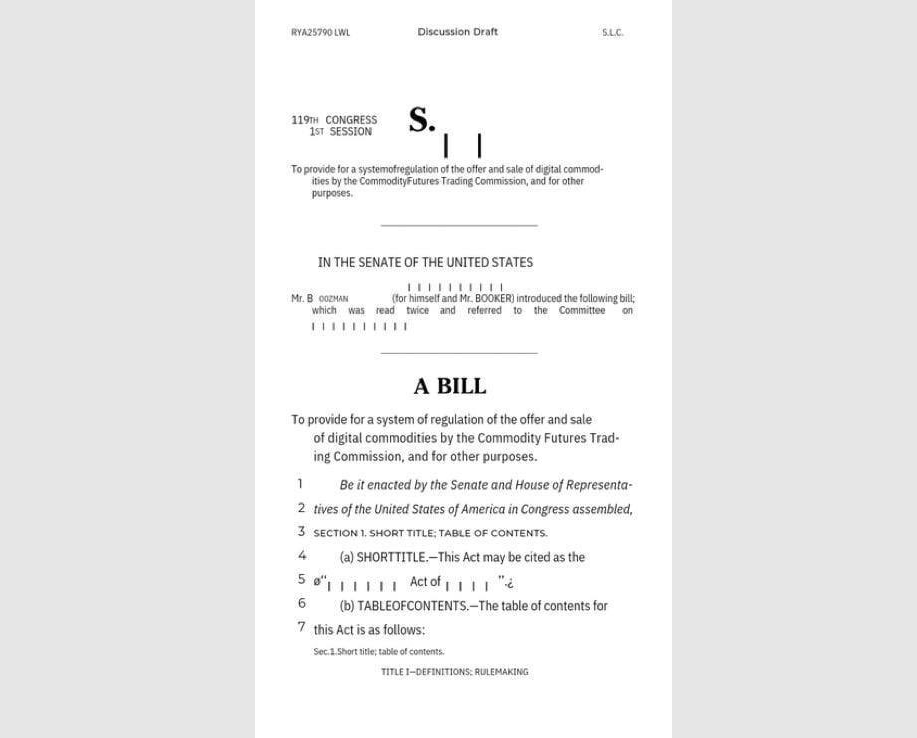
Prominent figures within the digital asset space have expressed mixed views regarding the compromises required to pass the bill. Echoing sentiments previously shared by Coinbase CEO Brian Armstrong—who famously stated that the industry would "rather have no bill than a bad bill"—several prominent crypto executives criticized provisions that they believe impose excessive compliance burdens on decentralized protocols. This defensive posture has occasionally aligned with the gridlock, as industry participants push back against regulatory text perceived as overly restrictive.
Traditional Banking Sector
The American Bankers Association and allied financial institutions have maintained a firm stance on protecting traditional deposit bases. Banks argue that permitting unregulated or lightly regulated stablecoin issuers to offer high-yield rewards without equivalent reserve requirements creates an uneven playing field and introduces systemic risk to the broader financial system. Their successful lobbying efforts to block certain compromise drafts underscore the formidable political influence legacy financial institutions continue to wield in Washington.
Executive Branch and Congressional Negotiators
The administration’s insistence on prioritizing unrelated legislative agendas, such as the SAVE Act, demonstrates how macro-political dynamics can overshadow sector-specific reforms. Congressional negotiators, caught between executive ultimatums, banking sector lobbying, and crypto industry demands, face an unprecedented challenge in forging a consensus text that can pass both chambers of Congress.
Broader Impact and Implications for the Digital Asset Ecosystem
The ongoing struggle to pass the CLARITY Act carries significant implications for the broader cryptocurrency market and the trajectory of fintech innovation in the United States.
Impact on DeFi and Institutional Adoption
A prolonged legislative vacuum leaves decentralized finance protocols operating under continued legal uncertainty. While institutional adoption of digital assets has steadily grown through spot exchange-traded funds (ETFs) and corporate treasury allocations, the lack of a comprehensive regulatory framework hinders the broader integration of tokenized assets and blockchain infrastructure into traditional financial plumbing.
Future Outlook for Regulatory Reform
Despite current setbacks, industry analysts generally agree that the momentum toward regulatory clarity is irreversible. Even if the current iteration of the CLARITY Act faces defeat or substantial revision, the extensive debate surrounding its provisions has laid the groundwork for future legislative frameworks. Lawmakers, regulators, and industry participants have mapped out the primary pain points of digital asset oversight, ensuring that subsequent legislative attempts will address core issues such as jurisdictional boundaries, consumer protection, and anti-money laundering compliance with greater precision.
Conclusion
The journey of the CLARITY Act through the halls of Congress highlights the complex interplay between traditional finance, emerging digital technologies, and high-stakes partisan politics. While prediction markets have adjusted their expectations downward in response to recent legislative roadblocks, the underlying demand for a coherent regulatory framework remains stronger than ever. As lawmakers, banking representatives, and crypto advocates continue their high-stakes negotiations, the ultimate fate of the CLARITY Act will serve as a definitive milestone for the future of financial innovation and regulatory oversight in the United States.
