
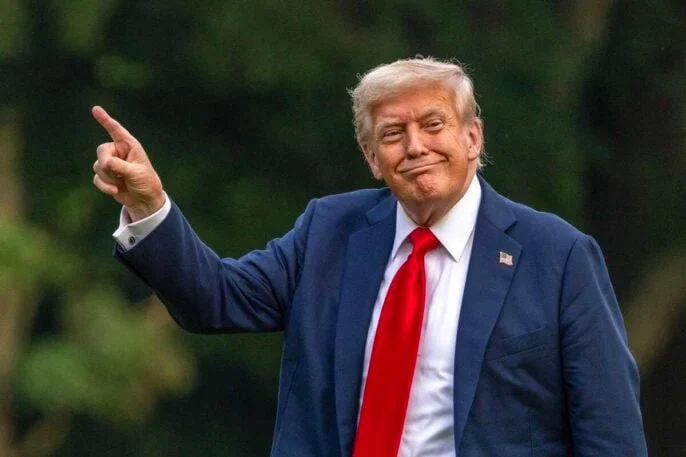
Following a decisive shift in power during Tuesday’s midterm elections, the incoming Democratic leadership is preparing an aggressive oversight strategy aimed at the Trump administration’s financial entanglements, specifically targeting the intersection of private business interests and public policy. As the party prepares to assume control of both chambers of Congress in January, lawmakers are readying a barrage of investigations, subpoenas, and legislative initiatives designed to check executive power and scrutinize potential conflicts of interest.
The Scope of Impending Congressional Oversight
The transition of power has galvanized key Democratic figures who are now positioned to helm the most influential committees in the House of Representatives. Representative Jamie Raskin, the presumptive chair of the House Judiciary Committee, has publicly signaled that his committee will prioritize an investigation into what he characterizes as systemic self-dealing. Central to these inquiries are President Donald Trump’s recent forays into the cryptocurrency sector, as well as long-standing concerns regarding the administration’s handling of presidential pardons and settlements involving legal entities.
Raskin’s proposed inquiry is expected to look closely at the World Liberty Financial project, a crypto venture associated with the Trump family, to determine if there is any evidence of political influence being leveraged for personal financial gain. By utilizing the investigative tools inherent to the Judiciary Committee—namely the power to issue subpoenas for corporate records and compel testimony under oath from both administration officials and private sector executives—Democrats aim to establish a transparent record of the administration’s financial activities.
Simultaneously, Representative Robert Garcia, poised to lead the House Oversight Committee, has adopted a more confrontational posture. His public declaration—a blunt “Lawyer up”—serves as a warning to the President’s inner circle, family businesses, and prominent billionaire allies, including Elon Musk. The Oversight Committee is expected to cast a wide net, examining the interplay between federal contracts, regulatory policy, and the private investments of those within the President’s orbit.
Legislative Priorities and the 100-Hour Pledge
While investigations remain a primary focus, the incoming leadership is keenly aware of the need to articulate a proactive legislative agenda. Hakeem Jeffries, set to ascend to the role of House Speaker on January 3, has committed to presenting a comprehensive legislative roadmap within his first 100 hours in office. This self-imposed deadline underscores a strategic pivot intended to reassure voters that, despite the focus on oversight, the party remains committed to its core campaign promises.
The proposed legislative agenda rests on four key pillars:
- Economic Affordability: Addressing the persistent concerns of the middle class regarding inflation and the cost of living.
- Medicaid Preservation: A commitment to reversing recent budgetary cuts to the federal healthcare program for low-income citizens.
- Trade and Tariffs: Developing a cohesive response to the current administration’s protectionist trade policies, which many Democrats argue have placed an undue burden on American consumers.
- Foreign Policy: Formulating a congressional stance on de-escalating tensions and pursuing diplomatic avenues to address the conflict with Iran.
Contextualizing the Political Climate
The current environment is a direct evolution of the tensions that have defined American politics since the previous election cycle. The midterm results have shifted the balance of power, granting Democrats the authority to conduct the kind of deep-dive oversight that was largely absent during the preceding session.
The historical precedent for these investigations lies in the long-standing norms of congressional oversight, which historically serve as a counterbalance to executive authority. However, the current situation is complicated by a highly polarized electorate and a President who has frequently challenged the legitimacy of congressional subpoenas. The impending clash between the legislative and executive branches is expected to test the limits of the separation of powers as defined by the U.S. Constitution.
Economic and Regulatory Implications
The scrutiny of the cryptocurrency sector represents a significant shift in the regulatory environment. By targeting Trump’s crypto ventures, Democrats are signaling a desire to impose stricter ethical guidelines on how high-ranking officials manage their digital asset portfolios. If these investigations uncover evidence of malfeasance, it could trigger a wave of new financial transparency laws, potentially impacting how future administrations handle decentralized finance and digital assets.
Furthermore, the focus on billionaire allies and their relationship with the administration highlights a broader concern regarding the influence of private capital on federal regulatory agencies. Analysts suggest that if the Oversight Committee succeeds in obtaining internal documents, the findings could fundamentally alter the relationship between federal oversight bodies and the corporate sector.
Hurdles to the Democratic Agenda
Despite their newfound majority, Democrats face significant obstacles in implementing their vision. The most immediate threat is the prospect of a presidential veto. The President has made it clear that he is willing to block any legislation that he deems politically unfavorable, potentially stalling major policy changes.
In the Senate, the 60-vote filibuster threshold remains a formidable barrier. Without a supermajority, Democrats will need to engage in bipartisan negotiation to pass substantial legislation, a prospect that seems increasingly unlikely given the current climate of partisan animosity. This legislative gridlock, combined with the focus on investigations, creates a high-stakes environment where the party must balance its desire for accountability with its need to pass substantive economic policy.
The Impeachment Debate
Within the Democratic caucus, there is a palpable divide regarding the utility of impeachment. Some progressive factions argue that the President’s conduct necessitates an immediate start to impeachment proceedings. Conversely, more moderate members, and leadership figures like Jeffries, caution against such a move.
The argument against impeachment is rooted in political pragmatism. Lawmakers fear that a focus on impeachment would be perceived as political retribution, thereby alienating independent voters and distracting from the party’s economic agenda. Jeffries has consistently emphasized the necessity of “delivering results for Americans” as the primary metric of success for the new session, suggesting that while investigations will proceed, the party is wary of overextending its political capital on a process that could end in failure or public backlash.
A Timeline of Escalation
The trajectory of these events is expected to move rapidly following the January 3 swearing-in ceremony.
- January 3: Commencement of the new Congress; House Speaker Hakeem Jeffries to unveil the 100-hour legislative agenda.
- January 15–30: Anticipated initial round of committee hearings, likely focusing on the foundational documents of the administration’s business dealings.
- February 2025: Expected issuance of the first major subpoenas targeting private business records and key advisors.
- Q2 2025: Potential for high-profile testimony from executive branch officials and corporate figures, which will likely serve as the litmus test for the effectiveness of the Democratic oversight strategy.
Analysis of the Path Forward
The coming months will serve as a critical period for American governance. The success of the Democratic strategy will depend on their ability to maintain internal unity while navigating a hostile executive branch. By focusing on both legislative output and rigorous oversight, the party is attempting to walk a fine line between fulfilling its role as a check on executive power and providing the governance that voters demanded at the ballot box.
For the administration, the challenge will be managing the legal and public relations fallout from these investigations while maintaining a functioning government. The potential for a sustained period of political volatility is high, as both sides appear to be digging in for a protracted struggle over the limits of presidential power and the integrity of federal institutions.
Ultimately, the effectiveness of the incoming Congress will be measured not just by the headlines their investigations generate, but by their ability to navigate the complexities of a divided government. If the Democratic leadership can maintain its focus on its legislative agenda while conducting investigations that are viewed as substantive rather than performative, they may be able to secure a lasting impact on federal oversight standards. However, if the process devolves into partisan theater, it risks further deepening the national divide and potentially harming the party’s long-term political prospects. As January approaches, the eyes of the nation turn toward Capitol Hill, where the next chapter of American legislative history is about to be written.
