

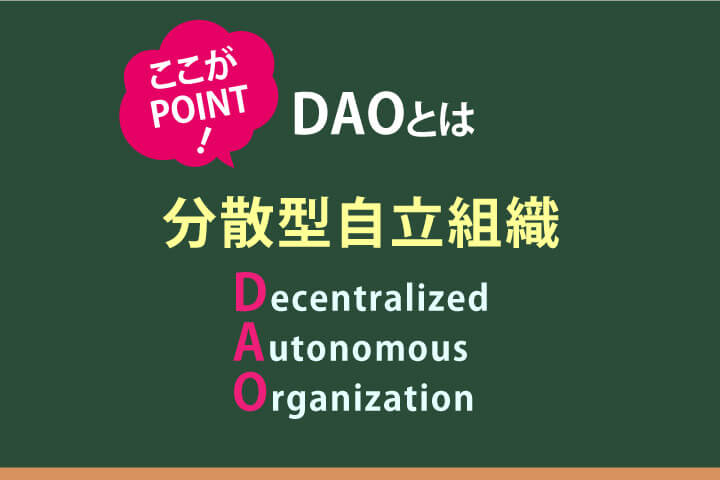
Decentralized Autonomous Organizations, commonly known as DAOs, represent a paradigm shift in how human capital and financial resources are aggregated and managed in the digital age. As the Web3 ecosystem matures, these organizations are moving beyond experimental niche projects to become foundational pillars of decentralized infrastructure. By leveraging blockchain technology and smart contracts, DAOs eliminate the need for centralized intermediaries, allowing global communities to coordinate toward shared goals with unprecedented transparency and autonomy.
The Evolution of Organizational Structure
The traditional corporate model, characterized by hierarchical management and centralized decision-making, has remained largely unchanged for centuries. However, the emergence of Bitcoin in 2009 demonstrated that a global network could function without a central authority through a consensus mechanism. This innovation paved the way for the development of DAOs, which extend the principle of decentralization to the governance of organizations.
A DAO is essentially an internet-native entity that is collectively owned and managed by its members. Unlike traditional companies where power is concentrated in the hands of a board of directors or executive management, a DAO’s rules are encoded in software protocols—specifically, smart contracts. These protocols automatically execute actions when certain conditions are met, ensuring that the organization operates exactly as its code dictates, without the risk of human interference or corruption.

Key Pillars of DAO Functionality
The efficiency and success of a DAO rely on three fundamental pillars: decentralized decision-making, transparent rule enforcement, and community-driven resource allocation.
- Decentralized Decision-Making: In a DAO, the power to propose and vote on changes rests with token holders. This democratic approach ensures that every member has a stake in the organization’s direction. Whether it is updating a protocol, reallocating treasury funds, or electing new leadership, the process is conducted on-chain, providing an immutable record of every vote cast.
- Transparent Rule Enforcement: Smart contracts serve as the "constitution" of a DAO. Because these contracts are deployed on a public blockchain, their logic is auditable by anyone. This inherent transparency reduces the necessity for trust between members, as the code ensures that actions are only taken when the requisite consensus is reached.
- Automated Resource Management: DAOs utilize shared treasuries that are managed through multisignature wallets or automated voting mechanisms. This allows for the rapid deployment of capital toward projects that provide value to the ecosystem, bypassing the bureaucratic delays associated with traditional corporate finance.
Chronology and Development of the DAO Concept
The concept of the "Decentralized Autonomous Corporation" was popularized in the early 2010s by visionaries like Daniel Larimer and Vitalik Buterin. However, the most pivotal moment in DAO history occurred in 2016 with the launch of "The DAO." While the project ultimately suffered a security exploit that led to a hard fork of the Ethereum blockchain, it served as a critical learning experience for the entire industry.

Following this, the landscape saw a proliferation of governance models. By 2020, the rise of "DeFi Summer" catalyzed a new wave of interest, as decentralized finance protocols began issuing governance tokens to users, effectively transitioning their control to the community. Today, DAOs cover a diverse spectrum of sectors, including venture capital (e.g., The LAO), media, philanthropy, and protocol management (e.g., MakerDAO and Uniswap).
Data-Driven Perspectives on DAO Growth
The growth of the DAO ecosystem is evidenced by the sheer volume of assets under management (AUM). According to industry aggregators, top-tier DAOs hold tens of billions of dollars in their treasuries. While market volatility impacts these figures, the sustained activity within governance forums suggests a robust and engaged user base.
Research indicates that the most successful DAOs share a common trait: high voter participation rates in critical decision-making phases. When a protocol requires a significant upgrade, community engagement typically surges, demonstrating the effectiveness of the model in mobilizing distributed talent. However, data also highlights a "voter apathy" challenge, where the majority of smaller token holders do not participate in routine governance, leading to a concentration of influence among large token holders, or "whales."
Challenges and Regulatory Implications
Despite their technological promise, DAOs face significant hurdles, particularly regarding legal personality and liability. In most jurisdictions, the law does not yet recognize DAOs as legal entities. This creates uncertainty for members regarding personal liability for the actions taken by the organization.
Several forward-thinking regions, such as Wyoming in the United States and the Marshall Islands, have begun to introduce legislation that allows DAOs to incorporate as legal entities. This development is crucial for bridging the gap between Web3 governance and traditional commercial law. Without legal status, DAOs struggle to enter into real-world contracts, hire employees, or pay taxes in a manner consistent with local regulations.
Furthermore, the "security of smart contracts" remains an ongoing concern. A flaw in the code can lead to irreversible loss of funds, as demonstrated by several high-profile hacks across the DeFi sector. To mitigate these risks, leading DAOs are increasingly adopting rigorous auditing practices and "bug bounty" programs to incentivize ethical hackers to identify vulnerabilities before they can be exploited.

The Role of Community and Human Capital
At the heart of every successful DAO is a vibrant community. Unlike a company that relies on a top-down management structure, a DAO functions through the voluntary contributions of its members. This creates a unique dynamic where motivation is tied to the long-term success of the protocol.
Discord has emerged as the primary communication hub for most DAOs, serving as the modern-day office where developers, designers, and marketers collaborate in real-time. This open-source culture encourages a meritocratic environment where an individual’s influence is determined by their contribution rather than their title or tenure.

Broader Implications for the Global Economy
The rise of DAOs suggests a future where organizational boundaries are more fluid. We may soon see the emergence of "inter-DAO" collaborations, where autonomous organizations partner to achieve complex goals that would be impossible for any single entity to tackle alone. This "composability" is a defining feature of the Web3 space, allowing different protocols to plug into one another like Lego bricks.
Moreover, DAOs provide an inclusive financial infrastructure that allows anyone with an internet connection to participate in global capital markets. By removing barriers to entry, they are democratizing access to venture-style investment and governance.

Conclusion: Navigating the Road Ahead
The journey of the DAO is still in its infancy. As the underlying technology continues to evolve, we can expect to see more sophisticated voting mechanisms, such as quadratic voting—which aims to balance the influence of whales and small holders—and reputation-based governance systems that reward long-term commitment.
The transition toward decentralized governance is not without its difficulties. It requires a fundamental shift in how we perceive authority, trust, and accountability. However, as the limitations of centralized systems become increasingly apparent in an interconnected world, the DAO model offers a compelling alternative: an organizational structure that is as transparent, borderless, and resilient as the internet itself. While the regulatory landscape remains a work in progress, the continued influx of talent and capital into the space underscores a collective belief that the future of organization is, by design, decentralized.
