
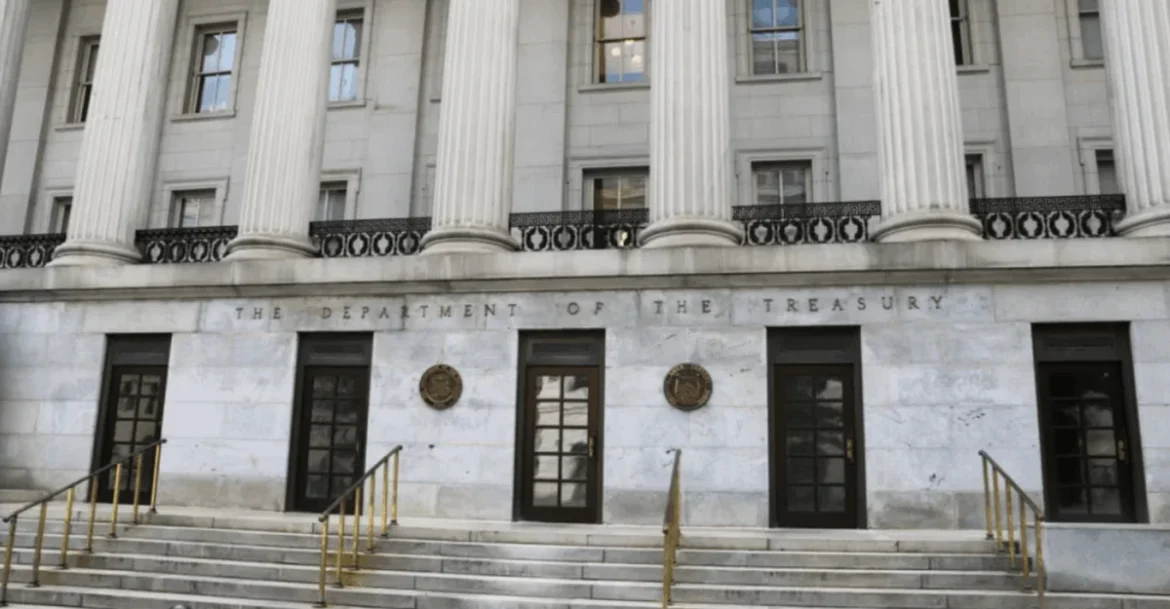
In a landmark enforcement action that highlights the blurring lines between state-sponsored illicit finance and transnational organized crime, the United States Department of the Treasury’s Office of Foreign Assets Control (OFAC) has designated eight Canada-based money services businesses. These entities are accused of systematically facilitating financial transactions on behalf of the Iranian regime. However, advanced blockchain and financial intelligence analysis reveals a far more complex and alarming reality: this specific underground financial infrastructure did not operate in a vacuum. Instead, the same digital asset providers and over-the-counter (OTC) brokers catering to Iranian state interests and terrorist-financing networks were simultaneously laundering billions of dollars in bulk cash proceeds for some of the world’s most notorious drug cartels, including the organization led by former Olympic snowboarder-turned-fugitive Ryan Wedding.
This unprecedented regulatory move represents the first time U.S. authorities have trained their sights directly on Canadian cryptocurrency and OTC providers as vital conduits for Iran’s illicit financial network. By peeling back the layers of blockchain transactions, compliance experts and law enforcement agencies have uncovered a shared financial ecosystem where geopolitical adversaries and enterprise-level drug traffickers utilize the exact same intermediaries to obscure the origins of their illicit capital.
The Evolution of the Crackdown on Iranian Financial Proxies
The designation of the eight Canadian money services businesses is the latest and most aggressive escalation in a sustained campaign by OFAC to sever the Iranian regime’s access to global cryptocurrency markets. Over the past year, U.S. regulatory and enforcement bodies have systematically targeted cryptocurrency exchanges within Iran that serve as lifelines for the sanctioned state apparatus.
The pressure began mounting significantly earlier in the year. In June, OFAC targeted several major Iranian digital asset exchanges—including Nobitex, Wallex, Bitpin, and Ramzinex—alleging they were instrumental in moving funds for the regime and evading international sanctions. This was followed by a subsequent wave of designations in August that added the Aban Tether Exchange and SHPS Shelbit to the growing sanctions blacklist.
Despite these actions, U.S. intelligence recognized that domestic Iranian exchanges alone could not sustain the regime’s international financial operations. To convert digital assets into fiat currency or vice versa, and to interface with Western financial systems, these networks required foreign intermediaries operating in permissive regulatory environments. Canada, with its proximity to the United States and a historically vibrant, albeit under-regulated, money services business sector in major metropolitan hubs like Vancouver and Toronto, emerged as a primary node for these activities. By targeting Canadian businesses connected to Iranian exchanges, OFAC has effectively extended its long arm of enforcement beyond the Middle East, striking at the cross-border infrastructure that allows sanctioned funds to flow freely into the West.
Anatomy of an Illicit Ecosystem: Millions in Sanctioned Crypto Flows
The scale of illicit cryptocurrency transactions passing through the newly designated Canadian OTCs is staggering. Comprehensive blockchain analysis of the wallet addresses associated with these firms has mapped millions of dollars moving through interconnected digital pipelines, bridging sanctioned jurisdictions, terrorist organizations, and organized crime.

Data compiled from investigative firms indicates that these Canadian OTC providers processed more than $6 million in inflows originating directly from sanctioned jurisdictions. Furthermore, approximately $3.7 million of the tracked volume came from explicit sanctioned entities listed on OFAC registers. Perhaps most concerning to international security analysts is the identification of an additional $2.3 million tied to wallets attributed to terrorist-financing networks. These include financial tentacles linked directly to Iran’s Islamic Revolutionary Guard Corps (IRGC), Hamas—specifically through designated Al-Qassam Brigades money movers—and the Houthi movement in Yemen.
The transactional footprint demonstrates a deep, structural integration with Iran’s state-backed financial architecture. Prominent Iranian cryptocurrency exchanges, including Aban Tether Exchange, Nobitex, Ramzinex, and Wallex, routinely routed funds to these Canadian intermediaries. The transaction logs also reveal direct transfers from wallets controlled by sanctioned Iranian individuals, such as financier Arash Estaki Alivand and Keyvan Fayyaz Gharen Blagh.
Fayyaz, an alleged cyber threat actor working on behalf of the IRGC and an employee of the Iran-based Mabna Institute, underscores the high-stakes national security implications of these financial links. According to U.S. authorities and the Rewards for Justice program, Fayyaz has been implicated in sophisticated hacking and extortion operations targeting U.S. entertainment and media companies, defense contractors, and communications technology providers, as well as critical energy infrastructure in Saudi Arabia. The ability of such actors to seamlessly move funds through Canadian OTCs highlights a critical vulnerability in North America’s financial perimeter.
The Wedding Cartel: Bridging Tehran and the Global Drug Trade
While the initial impetus for the Treasury Department’s investigation focused on Iranian sanctions evasion, the subsequent financial tracing exposed an unexpected nexus: the same Canadian OTC networks were acting as the primary laundering vehicle for the Wedding Criminal Enterprise, commonly referred to as the Wedding Cartel.
Ryan Wedding, a former Canadian Olympic snowboarder who competed in the 2002 Salt Lake City Winter Games before descending into a life of transnational criminality, became one of the world’s most wanted fugitives. Operating under the alias “El Jefe,” Wedding faces an array of heavy federal charges, including large-scale drug trafficking, witness intimidation, and murder-for-hire.
According to U.S. and Canadian federal prosecutors, Wedding led a sophisticated transnational criminal organization responsible for transporting massive quantities of Colombian cocaine—estimated at roughly 60 metric tons (60,000 kilograms) annually—through Mexico and Southern California into markets across the United States and Canada. The cartel allegedly operated under the direct protection and collaboration of Mexico’s powerful Sinaloa Cartel, generating an estimated $1 billion annually. To protect its supply chains, eliminate rivals, and obstruct law enforcement investigations, the organization routinely employed extreme violence, including the targeted murder of potential witnesses.
The sheer volume of capital generated by the Wedding Cartel necessitated an equally sophisticated money laundering apparatus. Federal investigators revealed that Wedding’s organization laundered billions of dollars in drug proceeds through localized money exchange businesses operating in the Vancouver and Toronto areas. The mechanism relied on a highly effective cash-to-digital-asset pipeline: couriers delivered bulk cash generated from street-level drug sales to these exchange businesses. The OTCs then converted the physical cash into digital assets—predominantly stablecoins like Tether (USDT)—before transferring the funds overseas or layering them through complex wallet webs.
Blockchain forensics illuminated this process in stark detail. Investigative analysis demonstrated that Farah, one of the newly sanctioned Canadian OTC exchanges, transferred millions of dollars directly to wallets associated with the Wedding Cartel, alongside secondary transfers routed through intermediary wallets. Furthermore, independent blockchain intelligence identified at least two additional Canada-based, Farsi-language OTC providers tied to the enterprise through the exact same intermediary wallet infrastructure.

Methodology of the Underground Pipeline: Farsi-Language OTCs as Universal Intermediaries
The convergence of Iranian state actors and North American drug cartels within the same boutique financial institutions points to a broader structural evolution in underground banking. Historically, criminal enterprises and rogue states maintained distinct, siloed financial networks. Drug cartels used traditional hawala networks or bespoke trade-based money laundering schemes, while sanctioned states relied on shell companies and state-backed front banks.
However, the digital asset era has compressed these financial ecosystems. Farsi-language OTCs operating in major Canadian urban centers cleverly positioned themselves to serve specific immigrant and expatriate communities, advertising their services to Iranian clients looking to move capital out of a sanction-bound economy. Yet, by offering rapid liquidity, minimal compliance checks, and a willingness to accept bulk physical cash without stringent source-of-wealth verification, these same businesses inadvertently—or intentionally—became irresistible to enterprise-level criminal organizations operating in the same geographic regions.
This duality created a financial bridge between distinct illicit economies. Iranian regime actors and proxies utilized the OTCs to convert crypto, obscure transaction origins, and fund cyber operations or regional proxies. Simultaneously, North American drug trafficking organizations utilized the exact same liquidity providers to cleanse mountains of physical cash derived from cocaine distribution, transforming dirty street money into pristine, easily transferable stablecoins.
Broader Implications and Industry Reactions
The coordinated Treasury action signals a profound shift in how financial regulators and intelligence agencies view the intersection of state-sponsored threats and organized crime. Illicit financial networks no longer operate in isolated silos; instead, they increasingly rely on shared, flexible financial intermediaries that span multiple continents.
For the cryptocurrency industry and regulatory compliance professionals, the designations serve as a watershed moment. They underscore the inadequacy of traditional Know-Your-Customer (KYC) frameworks that fail to account for the cross-pollination of different threat vectors. Compliance officers monitoring digital asset transactions must now account for the reality that a single OTC desk advertising niche regional services may simultaneously be servicing hostile foreign intelligence operations and violent narcotics syndicates.
As global enforcement agencies continue to follow the money, these sweeping designations demonstrate that investigating one form of financial crime—such as Iranian sanctions evasion—can unexpectedly lay bare the operational infrastructure of entirely unrelated criminal enterprises, such as global drug cartels. The dismantling of these Canadian money services businesses represents a major blow to both networks, illustrating that the global financial perimeter is tightening around the gray-market intermediaries that have long enabled the world’s most dangerous actors.
Frequently Asked Questions

Why did OFAC sanction Canadian cryptocurrency OTCs?
OFAC sanctioned eight Canadian money services businesses for allegedly facilitating cryptocurrency transactions on behalf of the Iranian regime and other sanctioned actors, identifying them as critical components of Iran’s broader illicit financial infrastructure.
How were these Canadian OTCs connected to Iran’s Islamic Revolutionary Guard Corps (IRGC)?
Advanced blockchain analysis identified millions of dollars in inflows to the OTCs from wallets linked directly to the IRGC, sanctioned Iranian individuals, and Iranian digital asset exchanges, including wallets associated with alleged IRGC cyber threat actors.
How much cryptocurrency did the sanctioned Canadian OTCs receive from illicit sources?
Investigative analysis uncovered more than $6 million in inflows originating from sanctioned jurisdictions, approximately $3.7 million from sanctioned entities, and an additional $2.3 million from wallets attributed to terrorist-financing networks, including those tied to the IRGC, Hamas, and the Houthis.
What was the link between the Canadian OTCs and Ryan Wedding’s criminal organization?
Blockchain tracing identified millions of dollars in transfers—including direct disbursements and routing through intermediary wallets—connected to the Wedding Criminal Enterprise, a transnational drug trafficking cartel responsible for moving massive quantities of cocaine from Colombia into North America.
How do drug trafficking organizations utilize cryptocurrency OTC services for money laundering?
Cartels and drug trafficking organizations rely on cash-to-digital-asset pipelines. Couriers deliver bulk physical cash to exchange businesses, which convert the proceeds into stablecoins or other digital assets before transferring the funds overseas to obscure their illicit origins.
What is the significance of the convergence between Iranian networks and international drug cartels?
The findings demonstrate that seemingly unrelated criminal organizations and hostile nation-states increasingly rely on overlapping, shared financial infrastructure, utilizing the same cryptocurrency intermediaries to move funds and evade international law enforcement.
