
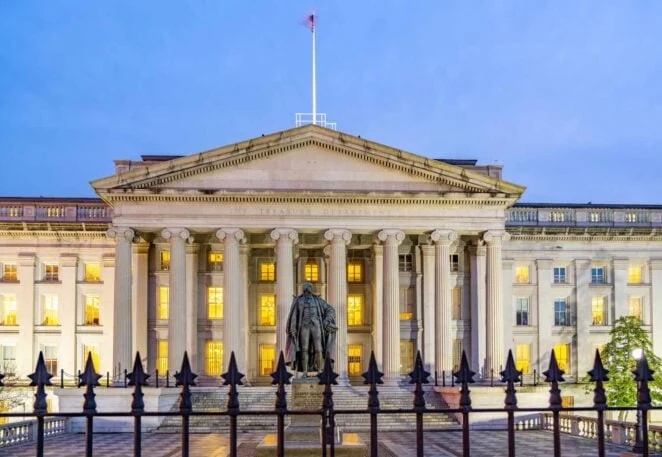
The United States Department of the Treasury has taken a decisive step to insulate the American financial system from offshore digital asset platforms, with the Financial Crimes Enforcement Network (FinCEN) issuing a formal order that effectively severs MEXC Global’s access to the US banking infrastructure. This regulatory action, announced on Friday, follows a comprehensive investigation revealing that the exchange facilitated at least $16 billion in transactions linked to illicit financial activities between May 2021 and May 2026. The move underscores an escalating effort by Washington to curtail the role of cryptocurrency exchanges in circumventing international sanctions regimes, specifically those targeting Russia, Iran, and North Korea.
The Regulatory Hammer: Operation Economic Outcast
The order issued by FinCEN is a direct manifestation of "Operation Economic Outcast," a strategic Treasury campaign inaugurated in August to dismantle the financial networks that support Iranian state actors and facilitate the bypass of global economic restrictions. By invoking Section 9714(a) of the Combating Russian Money Laundering Act, the Treasury has effectively categorized MEXC as a primary conduit for illicit finance, necessitating a total prohibition on US financial institutions from processing any funds transfers to or from the platform.
The implications for the exchange are profound. With the order set to take effect 30 days after its publication in the Federal Register, any US-based financial entity—including banks, credit unions, and payment processors—that continues to facilitate transactions for MEXC risks severe civil and criminal penalties. This regulatory "death penalty" effectively renders the exchange a pariah within the US financial ecosystem, forcing a critical re-evaluation of compliance standards for offshore crypto platforms that cater to a global user base.
A Chronology of Illicit Financial Flows
The evidence presented by the Treasury paints a picture of systemic failure in anti-money laundering (AML) and know-your-customer (KYC) protocols at MEXC. Despite the exchange’s public declarations of adherence to global compliance standards, investigators found a persistent pattern of engagement with prohibited entities.
Between May 2021 and May 2026, the volume of identified illicit transactions suggests that MEXC’s compliance infrastructure was either willfully ignored or fundamentally incapable of filtering sanctioned actors.
- April 2022: The US government sanctions Garantex, a Russian exchange known for hosting illicit financial activity.
- May 2021 – May 2026: MEXC processes approximately $16 billion in transactions connected to sanctioned regimes.
- June 2026: Treasury investigators confirm that MEXC continued to process transactions involving Garantex and its successor entity, Grinex, highlighting a direct violation of US foreign policy mandates.
The report further details $1.5 billion in transactions specifically linked to Russian sanctions evasion, including $232 million in direct interactions with entities sanctioned by a coalition of the United States, the European Union, and the United Kingdom.
The Iran and North Korea Nexus
While Russian sanctions evasion forms a significant pillar of the Treasury’s case, the involvement of Iranian state actors provides a broader geopolitical context to the enforcement action. FinCEN identified approximately $1 billion in direct transfers involving more than 40 Iranian crypto exchanges between 2021 and 2026. Many of these Iranian entities were already subject to international sanctions, yet they utilized MEXC as a bridge to convert or move digital assets.
Perhaps most alarming to regulators is the evidence of transactions directly benefiting the Islamic Revolutionary Guard Corps (IRGC), specifically the Qods Force, and the Central Bank of Iran. The Treasury verified approximately $22 million in transactions that directly supported these entities, effectively providing a lifeline for Iranian state-sponsored operations. Furthermore, the report notes the use of the "A7" network and the "A7A5" stablecoin, which were utilized as technical vehicles to obfuscate the origin and destination of funds, specifically to circumvent sanctions on Iran.
Analysis of Operational Deficiencies
The Treasury’s investigation highlights a stark discrepancy between MEXC’s corporate policy and its operational reality. While the exchange maintained formal policies prohibiting activity from sanctioned jurisdictions, these policies were described by FinCEN as having "deficiencies" that rendered them functionally toothless.
Industry analysts suggest that the sheer scale of the illicit volume—$16 billion over five years—indicates that these were not isolated oversight errors but rather a fundamental failure in the exchange’s risk management architecture. MEXC’s business model, which offered access to over 3,000 cryptocurrencies and tokenized assets, created a massive, heterogeneous liquidity pool that appears to have attracted high-risk actors seeking to bypass the transparency inherent in traditional financial systems. As of September, the exchange held approximately $5 billion in reserves and saw daily trading volumes exceeding $1 billion, positioning it as a significant, albeit now compromised, player in the global crypto market.
Broader Implications for the Crypto Industry
The action against MEXC represents a broader trend in the US regulatory approach to the digital asset sector. Regulators are increasingly shifting their focus from individual users to the financial intermediaries that provide the "on-ramps" and "off-ramps" between fiat currencies and the crypto ecosystem.
- Increased Scrutiny on Offshore Exchanges: The move serves as a stern warning to other offshore exchanges that have historically operated with limited regard for US sanctions policy. If a platform wishes to remain accessible to any portion of the global financial system, it must demonstrate a level of AML/KYC rigor that satisfies the Treasury’s stringent requirements.
- The End of Regulatory Arbitrage: For years, crypto platforms utilized "regulatory arbitrage," moving operations to jurisdictions with lenient oversight to attract users. The FinCEN order proves that geographical distance does not insulate a firm from the reach of the US Treasury if that firm interacts with the US financial system or uses US-dollar-denominated assets.
- Compliance as a Competitive Advantage: Moving forward, institutional-grade compliance will likely become the primary differentiator for exchanges. Platforms that fail to invest in sophisticated blockchain analytics and real-time transaction monitoring risk being completely shut out of the most liquid and stable financial markets in the world.
Official Stance and Market Response
While MEXC has not issued a detailed public rebuttal as of the time of reporting, the Treasury’s documentation is comprehensive and leaves little room for ambiguity regarding the nature of the transactions. The classification of the exchange as a significant concern for illicit finance is a high-level administrative designation that is rarely reversed.
Market observers have noted that the crypto community, while sensitive to regulatory overreach, has increasingly recognized the necessity of AML compliance to foster long-term mainstream adoption. The collapse of major players due to mismanagement or illicit involvement has accelerated the demand for transparency.
"The US government is essentially closing the loop," noted one financial analyst familiar with the Treasury’s enforcement strategy. "By targeting the entities that provide the plumbing for sanctions evasion, they are making it exponentially more expensive and difficult for rogue states to monetize their digital assets."
Future Outlook
As the 30-day window for the order’s implementation closes, financial institutions are expected to terminate any remaining banking relationships with MEXC to avoid being caught in the regulatory dragnet. This will likely lead to a significant liquidity crunch for the exchange, as its ability to interface with fiat currencies will be severely hampered.
The case of MEXC Global is likely to be studied as a landmark moment in the integration of digital asset oversight into traditional national security frameworks. It reinforces the principle that the borderless nature of cryptocurrency is not a shield against the enforcement of international law. As the Treasury continues its campaign under Operation Economic Outcast, the message to the industry is clear: the era of unchecked, anonymous cross-border flows in the digital asset space is rapidly drawing to a close. The requirement for transparency is no longer an optional feature of the digital economy; it is the prerequisite for its continued existence.
