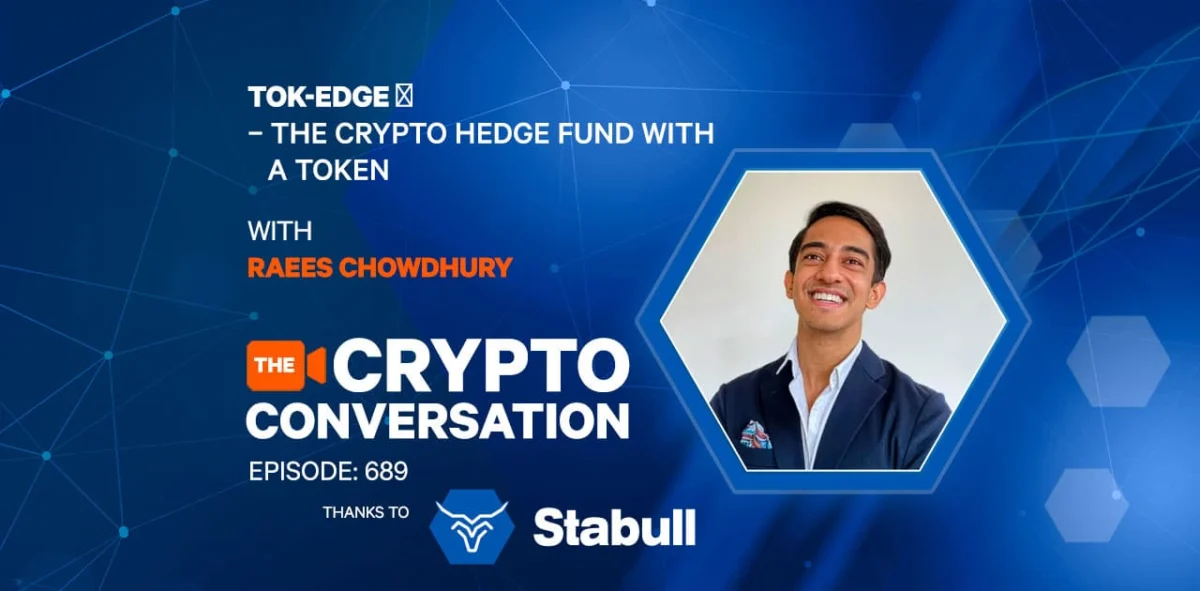
London, UK – Raees Chowdhury, co-founder and chief investment officer of Tok-Edge, has emerged from stealth with a groundbreaking London-based regulated DeFi hedge fund, introducing a novel cryptoasset structure known as the Redemption Token. This initiative, launched amidst a significant market drawdown, positions Tok-Edge as a contrarian force aiming to bridge the chasm between traditional finance and decentralized markets, offering institutional investors a sophisticated, regulated pathway into the burgeoning DeFi ecosystem. Chowdhury’s distinguished career, encompassing senior roles at consulting giants BCG and Bain Capital, a managing partner position at Revolt Ventures—a fund operating under a $10 billion AUM vehicle—and deep-seated experience in on-chain markets dating back to the pivotal ICO era of 2016-2017, grants him a unique dual fluency. This rare blend of expertise in both institutional finance and DeFi positions him at the vanguard of one of crypto’s most ambitious new fund structures.
The Strategic Launch Amidst Market Volatility
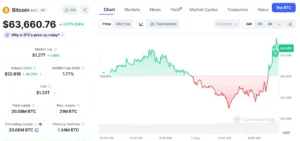
Tok-Edge’s calculated emergence coincides with a period of profound market volatility, characterized by Bitcoin trading roughly 50% below its all-time highs and many altcoins experiencing declines of 90% or more. This timing, far from coincidental, is deliberate and underpins Raees Chowdhury’s core thesis: such drawdowns represent an opportune moment for strategic capital allocation into DeFi. The fund’s foundation is built upon a rigorous, albeit contrarian, conviction that crypto represents a genuinely new, liquid asset class. Furthermore, Tok-Edge asserts that existing token models are structurally flawed, and that future market leaders will be those adept at integrating robust TradFi infrastructure with native DeFi principles. This perspective directly challenges the prevailing sentiment of caution and retrenchment that often accompanies bear markets, advocating instead for proactive engagement with the underlying innovation.
The current market environment, often referred to as a "crypto winter" or bear market, has seen significant capitulation from retail investors and a cautious approach from many institutional players. Bitcoin’s journey from its November 2021 peak near $69,000 to lows around $16,000-$20,000 in 2022, alongside the dramatic collapses of prominent projects and centralized entities, has reinforced skepticism. However, seasoned investors often view such periods as prime opportunities for long-term accumulation, leveraging lower valuations to build positions in high-conviction assets. Tok-Edge’s strategy aligns with this contrarian investment philosophy, betting on the long-term resilience and transformative potential of DeFi, particularly as the dust settles and fundamental value propositions become clearer.
Raees Chowdhury: A Confluence of Expertise
Raees Chowdhury’s professional trajectory is instrumental in understanding Tok-Edge’s vision. His formative years at top-tier management consulting firms like Boston Consulting Group (BCG) and Bain Capital provided him with an invaluable understanding of traditional financial markets, strategic analysis, and large-scale capital deployment. These roles typically involve advising Fortune 500 companies and private equity funds on complex financial and operational challenges, instilling a discipline and rigorous analytical framework rarely found within the nascent crypto sector. His subsequent role as a managing partner at Revolt Ventures, a fund nested beneath a formidable $10 billion AUM vehicle, further solidified his credentials in institutional investment management, including due diligence, portfolio construction, and risk management at a significant scale.
Parallel to his traditional finance career, Chowdhury cultivated deep roots in on-chain markets, tracing back to the Initial Coin Offering (ICO) era of 2016-2017. This period marked a Cambrian explosion of new crypto projects and token models, many of which ultimately failed due to unsustainable economics, regulatory uncertainty, or technical limitations. His direct involvement and observation during this formative period provided him with firsthand insights into the promises and pitfalls of early cryptoasset designs. This unique chronological overlap of traditional finance mastery and early crypto adoption positions Raees Chowdhury as a rare breed, capable of translating complex institutional requirements into DeFi-native solutions, and vice-versa. This dual fluency is not merely an advantage but a foundational pillar of Tok-Edge’s operational strategy, enabling the fund to navigate both regulatory complexities and the rapid evolution of decentralized protocols.
The Redemption Token: Solving the "Duality Problem"
At the core of Tok-Edge’s innovation lies the Redemption Token, a new category of cryptoasset meticulously designed to resolve what Raees Chowdhury terms the "duality problem" that has undermined most token models to date. This problem arises from the inherent tension between a token’s utility or governance function and its potential as an investable asset.
Historically, most crypto tokens have fallen into two main categories:
- Governance Tokens: These grant holders voting rights within a decentralized autonomous organization (DAO), allowing participation in protocol upgrades, treasury management, and other key decisions. While offering decentralization, their economic value often trends towards zero as their utility is primarily political and diluted by inflation or lack of direct revenue capture. Their price often becomes decoupled from fundamental value, leading to speculative bubbles and subsequent crashes. Examples include COMP, UNI, AAVE, which, despite underlying protocol strength, have struggled to maintain consistent long-term value appreciation tied directly to their governance function.
- Utility Tokens: Designed to provide access to a specific service or function within their native blockchain ecosystem (e.g., paying for transaction fees, storage, or computational resources). Their utility is often constrained to that specific blockchain, limiting their broader composability and liquidity across the wider DeFi landscape. Furthermore, their value is often tied to the network’s adoption and usage, which can be highly volatile and speculative, and they rarely offer direct shareholder-like economic rights. Examples include Filecoin (FIL) for storage or The Graph (GRT) for data querying.
The Redemption Token directly addresses these limitations. It is permissionless and composable within the broader DeFi ecosystem, meaning it can be freely traded, loaned, and integrated into various decentralized applications without requiring specific authorization. Crucially, it carries a genuine, defined function: the ability for fund investors to redeem underlying fund shares at net asset value (NAV). This mechanism fundamentally transforms the token from a speculative or purely functional instrument into a direct representation of an investor’s equity in the Tok-Edge Fund, akin to shares in a traditional investment vehicle.
Chowdhury draws an analogy to MicroStrategy, a publicly traded company that famously adopted Bitcoin as its primary treasury reserve asset. MicroStrategy’s stock effectively became a proxy for Bitcoin exposure, designed first as a structure, then deployed as a product. Similarly, Tok-Edge is implementing this structural-first approach, with the Redemption Token serving as the architectural backbone and the Tok-Edge Fund as its inaugural application. This design provides investors with liquidity and transparency, offering a clear, auditable link between the token’s value and the fund’s underlying assets, a stark contrast to the often opaque and speculative nature of many existing crypto tokens. It aims to eliminate the "duality problem" by providing a token that is both a liquid cryptoasset and a verifiable claim on real-world (or real-DeFi) value.
Building an Institutional-Grade DeFi Fund

Tok-Edge is meticulously constructed to meet the exacting standards of institutional finance, a critical differentiator in a sector often criticized for its lack of regulatory oversight and robust governance. The fund integrates elements such as independent custodians, regulated directors, and comprehensive governance structures typically associated with tier-one equities vehicles. This includes:
- Custodianship: Employing qualified, third-party custodians to securely hold digital assets, mitigating counterparty risk and ensuring asset segregation, a fundamental requirement for institutional investors. This moves beyond self-custody or reliance on unregulated exchanges, which have been points of failure in past crypto incidents.
- Regulated Directors: Appointing board members who adhere to strict regulatory guidelines, providing independent oversight, fiduciary responsibility, and adherence to best practices in corporate governance. This brings a layer of accountability and professionalism often missing in crypto-native ventures.
- Governance Structures: Implementing robust frameworks for decision-making, risk management, compliance, and reporting that mirror those found in established financial institutions. This ensures transparency, investor protection, and operational integrity.
However, these traditional financial safeguards are applied entirely to crypto and DeFi strategies. The fund is designed to navigate the unique complexities of decentralized markets, including smart contract risk, protocol interoperability, and the rapid pace of innovation. This hybrid approach aims to offer the best of both worlds: the innovation and yield potential of DeFi, combined with the security and reliability demanded by institutional capital. Tok-Edge’s London-based regulation further underscores its commitment to operating within established legal frameworks, offering an additional layer of assurance to investors accustomed to stringent financial oversight. The Financial Conduct Authority (FCA) in the UK has been progressively developing its stance on digital assets, and operating within a regulated framework is a significant hurdle for many crypto funds.
Investment Philosophy and Strategy
Raees Chowdhury outlines Tok-Edge’s multi-faceted approach to investment and capital allocation within the DeFi landscape:
- On-Chain Yield Generation: The fund actively pursues opportunities to generate yield directly from decentralized protocols. This can involve lending assets on platforms like Aave or Compound, providing liquidity to decentralized exchanges (DEXs) like Uniswap or Curve, or engaging in various forms of staking (e.g., liquid staking derivatives). These strategies aim to capitalize on the inherent efficiencies and composability of DeFi, which often offer yields significantly higher than traditional fixed-income instruments.
- Active Capital Allocation Between Strategies: Tok-Edge does not adopt a static investment posture. Instead, it employs active management, dynamically allocating capital between different DeFi strategies based on market conditions, risk profiles, and yield opportunities. This requires sophisticated real-time monitoring of on-chain data, understanding protocol mechanics, and assessing smart contract security.
- Holding Stablecoins and Earning On-Chain Yield: Chowdhury emphasizes that holding stablecoins (cryptocurrencies pegged to fiat currencies like USD) and earning yield on them within DeFi is not a concession but a deliberate feature of the strategy. In volatile markets, stablecoins offer refuge from price fluctuations while still allowing capital to remain productive. DeFi protocols offer various ways to earn yield on stablecoins, from lending to stablecoin-specific liquidity pools, providing a low-volatility, income-generating component to the portfolio. This challenges the common narrative that crypto investment must always involve high-risk, directional bets on volatile assets.
Chowdhury expresses strong conviction that DeFi yields are far from dead. While yields have compressed from the astronomical figures seen during the 2020-2021 bull market, sustainable and attractive yields persist for those with the expertise to identify and manage them. Furthermore, he believes that on-chain flows will identify the winners of the next cycle before most people see them coming. By meticulously analyzing transaction data, liquidity movements, and protocol engagement, Tok-Edge aims to gain an informational edge, predicting emerging trends and promising projects ahead of broader market recognition.
He draws a compelling parallel to the Berkshire Hathaway model—long-only, actively managed, and comfortable holding cash—arguing that this philosophy translates surprisingly well to liquid crypto asset management. Berkshire Hathaway, under Warren Buffett, is renowned for its patient, value-oriented approach, its active management of a concentrated portfolio, and its willingness to hold substantial cash reserves when attractive investment opportunities are scarce. Applied to crypto, this means a focus on long-term value creation in fundamentally sound DeFi protocols, active repositioning to capitalize on market inefficiencies, and the strategic deployment of stablecoins as a "cash" equivalent, ready to be deployed when compelling opportunities arise during market downturns. This disciplined, value-driven approach stands in contrast to the often frenetic and short-term speculative nature of much of the crypto market.
Market Implications and Future Outlook
Tok-Edge’s emergence, coupled with its innovative Redemption Token and institutional-grade structure, carries significant implications for the broader digital asset landscape.
Firstly, it signals a maturing of the DeFi sector. The development of regulated funds specifically designed for decentralized finance demonstrates a growing appetite from institutional players to engage with crypto beyond just Bitcoin or Ethereum spot exposure. It suggests that the infrastructure and talent are now in place to build sophisticated investment products that can meet the stringent requirements of pensions, endowments, and sovereign wealth funds. This move is crucial for mainstream adoption, as institutional capital typically requires robust regulatory frameworks, transparent operations, and familiar fund structures before committing significant allocations.
Secondly, the Redemption Token could serve as a blueprint for future cryptoasset design. By directly linking a token’s value to verifiable underlying assets and providing a clear redemption mechanism, it offers a powerful solution to the inherent valuation challenges and speculative excesses that have plagued many previous token models. If successful, this model could inspire a new generation of "security tokens" or "asset-backed tokens" that bridge the gap between traditional securities and blockchain technology, offering greater investor protection and clearer economic rights. This innovation could foster greater confidence in tokenized assets, paving the way for wider adoption across various asset classes.
Thirdly, Tok-Edge’s emphasis on active management and deep on-chain analytics highlights the evolving sophistication of crypto investment strategies. As the market matures, passive indexing may give way to more nuanced, actively managed approaches that leverage unique data sets and deep domain expertise. The ability to decipher on-chain flows and identify opportunities before they become mainstream could become a critical competitive advantage, akin to fundamental research in traditional equity markets.
The fund’s financial targets further underscore its ambition. With a Token Generation Event (TGE) capped at $21 million and an aggressive target of a $100 million first close later in 2026, Tok-Edge is positioning itself for substantial growth. These figures, while ambitious in the current climate, reflect a calculated bet on the long-term trajectory of DeFi and the increasing demand for institutional-grade access to this asset class. The success of this fund could encourage other traditional finance entities to explore similar hybrid models, accelerating the convergence of TradFi and DeFi.
In conclusion, Raees Chowdhury and Tok-Edge are not just launching another crypto fund; they are unveiling a meticulously crafted solution designed to unlock institutional capital for decentralized finance. By blending deep traditional finance expertise with native DeFi understanding, introducing a novel token structure that solves fundamental valuation problems, and operating within a regulated framework, Tok-Edge aims to redefine how institutional investors engage with the crypto economy. Their contrarian timing and rigorous thesis suggest a strategic play for long-term value, positioning them as a critical player in the ongoing evolution of global finance.