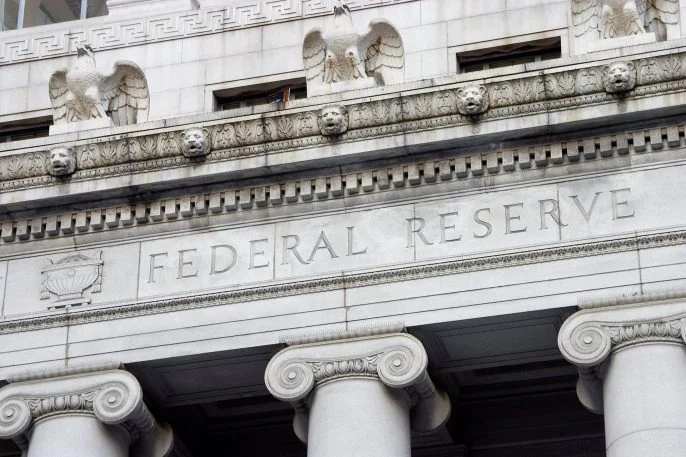
The Federal Reserve has signaled that the path toward price stability remains fraught with challenges, as minutes from the September 15–16 Federal Open Market Committee (FOMC) meeting revealed a consensus among officials that further monetary tightening is likely required before the close of the year. Despite the unanimous decision to implement a 25-basis-point increase in September—lifting the federal funds target range to 3.75% to 4%—policymakers expressed deep-seated concerns that inflation remains stubbornly above the central bank’s 2% mandate. The minutes underscore a growing apprehension that the massive capital expenditure fueling the artificial intelligence (AI) sector, coupled with persistent geopolitical pressures, is sustaining an inflationary environment that necessitates a more restrictive policy stance.
Chronology of the September Policy Shift
The September meeting marked a pivotal moment in the Federal Reserve’s ongoing effort to recalibrate the economy. Following months of cooling data, the sudden realization that inflationary pressures remained entrenched forced a shift in tone. Throughout the summer of 2026, market participants had largely priced in a plateau for interest rates. However, data emerging in late August suggested that the cooling trend had stalled, compelling the FOMC to move forward with the unanimous quarter-point hike in mid-September.
This decision did not occur in a vacuum. It followed a series of meetings throughout the fiscal year where the Committee navigated the delicate balance between preventing a recession and curbing excessive price growth. By the time the September meeting concluded, the Committee had moved from a "wait and see" posture to one that actively considers additional tightening as a necessary insurance policy against a potential resurgence in inflation.
The AI Buildout as an Economic Catalyst
Perhaps the most significant development in the recent meeting minutes is the explicit identification of the AI infrastructure boom as a source of inflationary pressure. Policymakers noted that the unprecedented surge in investment in data centers, specialized semiconductor manufacturing, and power grid expansion has created a unique demand-side shock.
Some committee members expressed concern that the scale of AI infrastructure spending is pushing aggregate demand beyond the economy’s current supply capacity. In the medium term, this mismatch creates upward pressure on prices for labor, construction materials, and energy. Furthermore, the minutes highlighted that business contacts across various sectors have reported an increasing ability to pass these heightened operational costs on to consumers. This pricing power suggests that the inflationary environment is becoming embedded in corporate strategy, a development that the Fed is particularly keen to dampen.
Supporting Data and Staff Projections
The economic landscape presented by Federal Reserve staff paints a complex picture of a resilient yet overheated economy. As of August 2026, the annual headline Personal Consumption Expenditures (PCE) index—the Fed’s preferred gauge of inflation—was estimated at 3.8%. Even when applying a forthcoming methodological adjustment by the Bureau of Economic Analysis (BEA), which would recalibrate the figure to 3.6%, the rate remains significantly above the 2% target. Core inflation, which strips out volatile food and energy components, stands at 3.4% (or 3.2% under the new methodology).
The staff’s updated forecasts reflect a more pessimistic view regarding the timeline for returning to price stability. Inflation projections for 2026, 2027, and 2028 were revised upward, with the staff now projecting a return to the 2% target only by 2029. This extension of the timeline reflects the persistence of price pressures in the face of robust consumer spending and high business investment.
Financial conditions, meanwhile, remain surprisingly supportive of growth despite the Fed’s aggressive posture. Equity markets have maintained strength, and corporate credit spreads—the difference in yield between corporate bonds and risk-free Treasuries—have remained narrow. This suggests that investors are not currently pricing in a severe economic contraction, which paradoxically makes the Federal Reserve’s job more difficult. If financial conditions remain too loose, the restrictive effect of higher interest rates is mitigated, potentially forcing the Fed to maintain higher rates for longer than it would otherwise prefer.
Bond Market Volatility and Structural Borrowing
The surge in AI-related investment has also left a distinct footprint on the bond market. Treasury yields across the two-to-10-year spectrum rose by approximately 35 basis points during the inter-meeting period. While geopolitical tensions and shifting economic data played a role, market analysts and FOMC members pointed to the massive issuance of corporate and sovereign debt required to finance AI infrastructure as a significant factor in the yield climb.
As the cost of borrowing rises, the divergence between different sectors of the economy is widening. While large-cap technology firms and their primary suppliers appear able to absorb or pass on these costs, other segments are struggling. The housing market, in particular, remains under extreme pressure due to elevated mortgage rates, serving as a primary friction point in the broader economy.
Official Responses and Strategic Rationale
During the deliberations, a clear divide emerged regarding the current stance of monetary policy. Several officials argued that the current policy rate of 3.75% to 4% is not yet sufficiently restrictive, or at best, only "mildly restrictive." These members advocated for a higher terminal rate to ensure that the economy is truly constrained enough to bring inflation down.
Conversely, others favored a more cautious approach, emphasizing that the cumulative effect of past hikes has yet to fully filter through the economy. However, the prevailing view among the participants was that the risk of doing too little—and allowing inflation to become structural—outweighed the risk of doing too much and triggering a slowdown. Many argued that a higher rate path serves as essential "insurance" against the risk of inflation expectations becoming unanchored.
Broader Implications and Future Policy Trajectory
The implications of the September minutes are clear: the Federal Reserve is not yet ready to declare victory. The upcoming meeting, scheduled for October 27 and 28, will be the next major litmus test for the economy.
However, the Committee was careful to stress that no future hike is predetermined. The path of monetary policy remains strictly data-dependent. Policymakers will be monitoring the next rounds of employment data, PCE readings, and reports on corporate investment to gauge whether the AI-fueled expansion is beginning to moderate or if the supply-demand imbalance is intensifying.
If the labor market continues to exhibit the "full employment" characteristics noted in the minutes, and if inflationary pressures from the tech sector do not subside, the probability of a year-end hike remains high. Conversely, any evidence of a cooling in consumer spending or a sharp rise in unemployment could prompt the Committee to pause and evaluate the cumulative impact of its previous decisions.
For businesses and investors, the current environment presents a paradox. The economy is demonstrating surprising resilience, supported by massive capital investment in the technological infrastructure of the future. Yet, this very same resilience is fueling the inflation that the Federal Reserve is mandated to suppress. As the central bank continues to navigate this tension, the focus will remain on whether the economy can achieve a "soft landing" or if the current policy trajectory will necessitate a more painful correction in the coming months.
The Federal Reserve’s commitment to its 2% target remains the primary anchor of its policy framework. Whether the current tools at the disposal of the FOMC are sufficient to manage the unique inflationary pressures of the AI era remains the defining question for the remainder of 2026 and beyond. Market participants should expect continued volatility as the interplay between technological advancement and monetary policy continues to evolve.