The decentralized finance landscape on Ethereum Mainnet has achieved a significant milestone with the official launch of multicollateral margin on Synthetix, introducing Ether as the first non-stablecoin asset eligible to be posted as collateral. This development marks a historic first for the Ethereum ecosystem, allowing market participants for the first time to utilize native ETH directly as margin to trade perpetual contracts on Layer 1 without requiring wrappers, bridging mechanisms, or the liquidation of their underlying token holdings.
By integrating native ETH margin, Synthetix has effectively bridged the gap between long-term asset conviction and active derivatives trading. Traders can now deposit ETH into a unified multicollateral margin account, using it to back positions across any USDT-settled market available on the protocol. This architectural upgrade is designed to streamline capital efficiency, optimize trading strategies, and unlock billions of dollars in previously idle capital sitting across the Ethereum network.
Background Context and Evolution of Synthetix Perps
To understand the weight of this release, one must examine the trajectory of decentralized perpetual exchanges (perp DEXs) on Ethereum. Historically, margin trading on Layer 1 derivatives protocols relied predominantly on stablecoins, primarily USDT or USDC. While stablecoins offer predictable accounting for profit and loss (PnL), fees, and funding rates, they force traders holding bullish assets like ETH to liquidate their holdings or engage in complex bridging and wrapping protocols to access trading liquidity. This fragmentation often resulted in capital inefficiency, high transaction friction, and missed opportunities for investors who preferred maintaining spot exposure while participating in derivatives markets.
Synthetix has long positioned itself as a core liquidity layer for decentralized derivatives, emphasizing settlement directly on Ethereum Mainnet to maximize security and decentralization. The introduction of a multicollateral architecture represents the culmination of extensive engineering efforts aimed at expanding the platform’s utility beyond single-asset stablecoin margins. By allowing native assets to serve as collateral, Synthetix is aligning its infrastructure with traditional financial markets and mature centralized exchanges, where multi-asset margin accounts are standard practice.
How Native ETH Margin Functions on Synthetix
The integration of ETH as margin is underpinned by a robust risk management framework designed to protect protocol solvency while offering maximum flexibility to traders. When a user deposits ETH into their Synthetix account, the asset is valued in real-time using its live oracle index price. To account for the inherent volatility of cryptocurrency assets compared to stablecoins, the protocol applies a risk discount, commonly referred to as a "haircut."
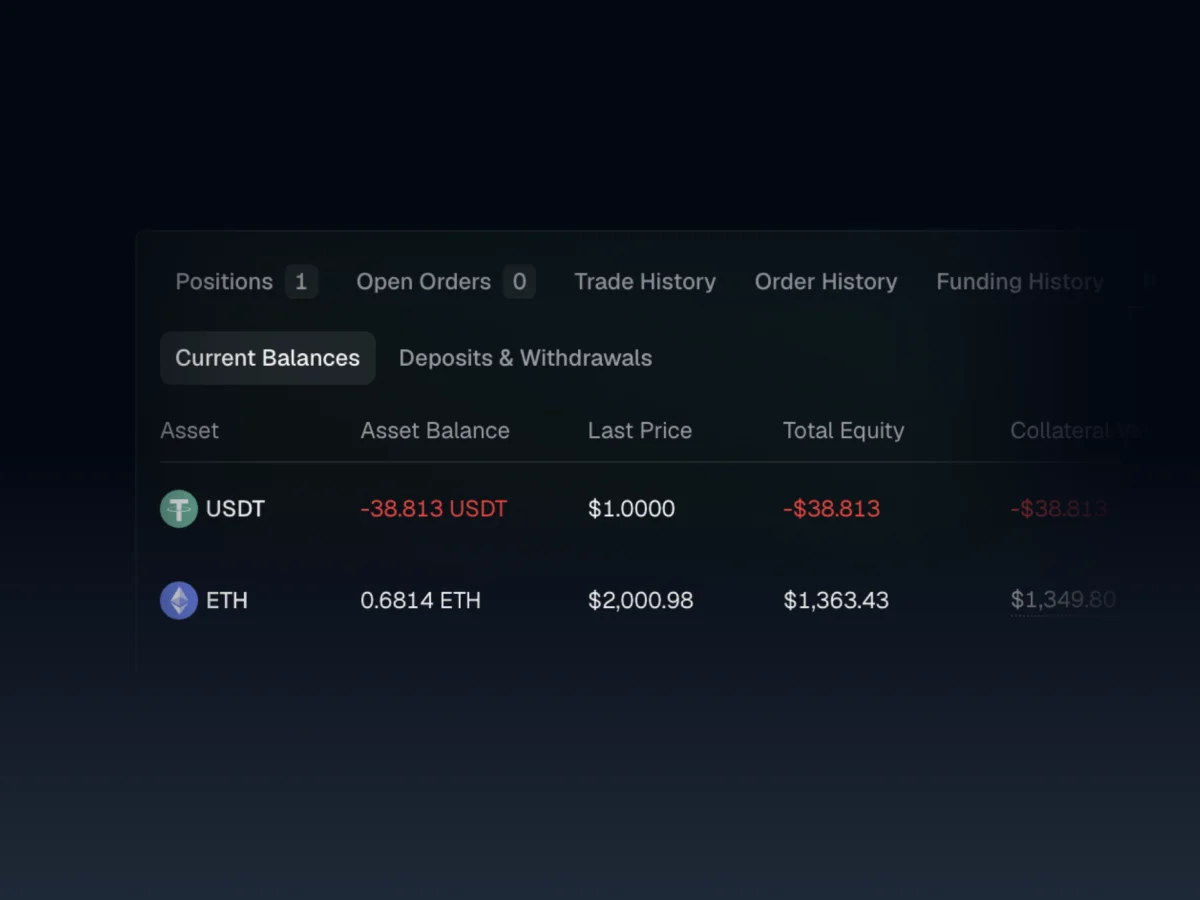
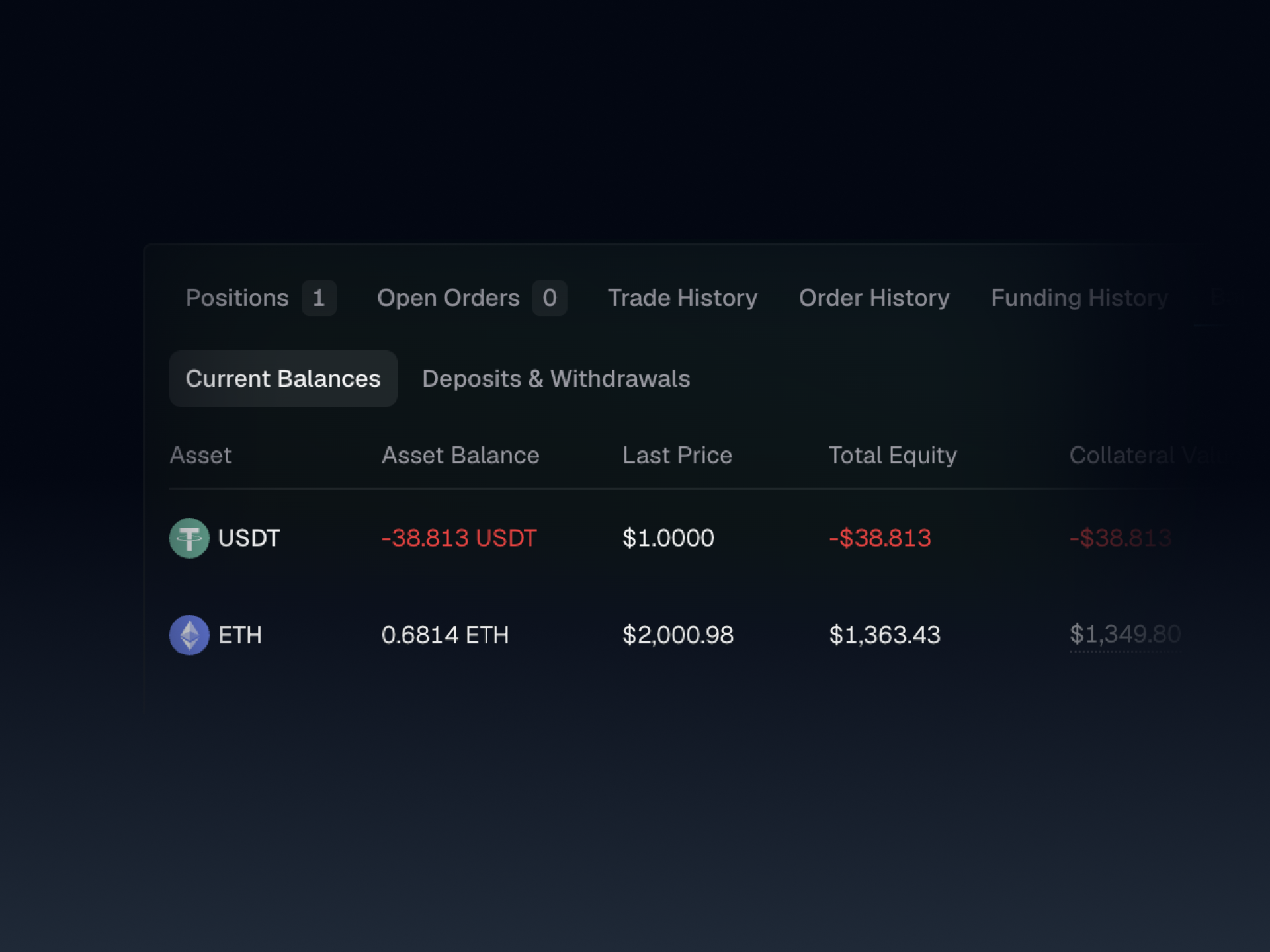
The resulting figure represents the user’s Collateral Value, which dictates the exact amount of margin power the deposited ETH contributes toward open positions. Because Synthetix perpetual markets are settled in USDT, operational metrics such as trading fees, funding payments, and realized PnL continue to be denominated in USDT. Consequently, if a trader opens positions backed entirely by ETH collateral without maintaining a positive USDT cash balance, their USDT account balance may temporarily dip into negative territory. This mechanism is entirely intentional and fully collateralized by the underlying ETH reserve.
Traders retain full control over their account health and can reconcile negative USDT balances at any time by utilizing the protocol’s built-in swap feature, which converts a portion of their deposited ETH into USDT directly within the margin account. However, because ETH collateral is subject to market fluctuations, a downward movement in the price of Ether will reduce the overall collateral value, even if open positions remain static. Synthetix has implemented automated safeguards: if a user’s USDT debt exceeds permitted thresholds due to unfavorable price action, the protocol may automatically liquidate or convert a portion of the collateral to maintain solvency. Users are strongly encouraged to monitor their account health buffers closely and utilize official documentation for detailed parameters regarding haircuts, maintenance margins, and withdrawal limits.
Unlocking Advanced Strategies: The Mechanics of Efficient Basis Trades
The availability of native ETH multicollateral margin fundamentally transforms one of the most prominent institutional and retail strategies in cryptocurrency trading: the basis trade. Traditionally, executing a cash-and-carry or basis trade—where a trader holds a spot asset while simultaneously opening an equivalent short position in perpetual futures to capture funding rates—required managing capital across separate accounts or platforms, often introducing smart contract risk or bridging latency.
With Synthetix’s unified multicollateral margin, traders can deposit ETH as collateral and directly open an equal-sized short position in ETH perpetual contracts within the same interface. This creates a delta-neutral position where fluctuations in the spot value of the collateral largely offset the PnL of the short perpetual contract. By removing the friction of converting assets or managing fragmented balances, traders can seamlessly collect funding payments while maintaining their underlying market footprint.
Market analysts note that more efficient basis trading directly benefits the broader exchange ecosystem. As institutional and professional arbitrageurs find it easier to deploy capital-neutral strategies, funding rates tend to stabilize and remain closely aligned with spot market conditions. This self-correcting mechanism fosters tighter bid-ask spreads, deeper liquidity, and more competitive pricing for all participants utilizing the protocol.
Tapping into Billions in Idle Capital and Broader Ecosystem Implications
The launch of native ETH collateral on the sole perpetual DEX built natively on Ethereum Mainnet unlocks access to a massive pool of liquidity. Market estimates place the value of idle ETH held across wallets and passive configurations well in excess of $100 billion. By enabling this capital to serve a dual purpose—acting as a long-term holding while simultaneously securing derivative positions—Synthetix is pioneering a new standard for asset utility on Layer 1.
Industry observers and decentralized finance proponents have highlighted the broader macroeconomic implications of this release. If platforms operating on Ethereum Mainnet can successfully capture even a modest fraction of monthly derivatives trading volume—such as a 10% market share of comparable centralized or cross-chain venues—it could catalyze a powerful economic flywheel for the entire Ethereum network. Increased trading volume drives higher fee generation, greater network utility, and enhanced composability across the interconnected DeFi stack, reinforcing Ethereum’s position as the premier settlement layer for global finance.
Timeline and Future Collateral Expansion
The deployment of ETH margin is structured as the foundational phase of a broader roadmap for Synthetix Perps. While Ether is currently the premier non-stablecoin asset supported by the multicollateral engine, the underlying architecture has been purposefully engineered for modular scalability.
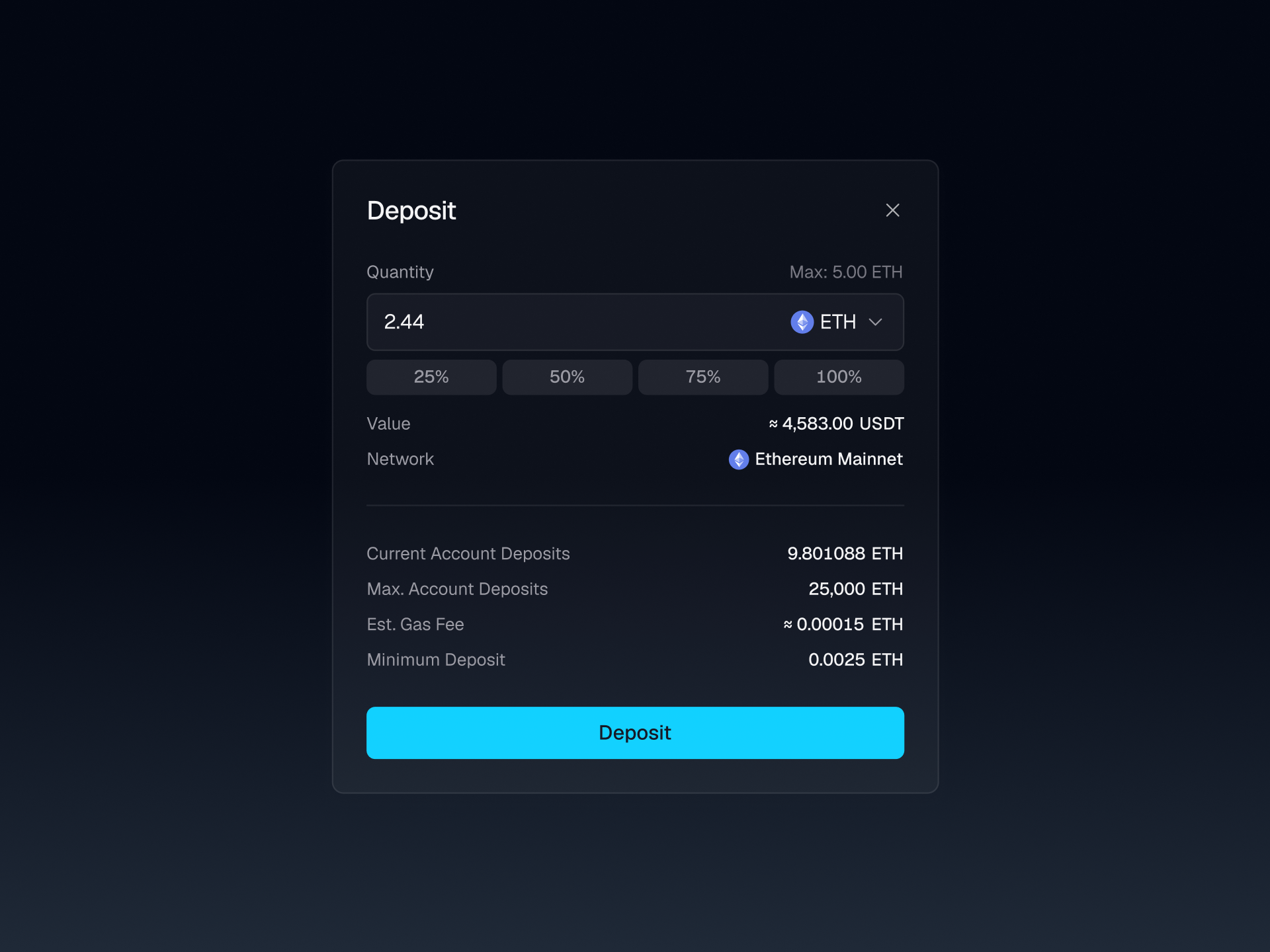
According to development disclosures, additional collateral types are scheduled for integration in subsequent updates. This pipeline includes plans to incorporate yield-bearing assets, allowing users to earn native staking yields or protocol rewards on their collateral while simultaneously utilizing it to secure derivative positions. Initial launch parameters enforce specific minimum deposit thresholds, maximum account caps, and per-asset limits to ensure systemic stability during the initial adoption phase, with broader limits slated for rollout as the system processes greater transaction volume.
Official Responses and Market Reception
Reactions from the decentralized finance community have been overwhelmingly positive, with prominent traders and liquidity providers praising the protocol’s focus on Layer 1 native integration. Core contributors emphasize that building directly on Ethereum Mainnet ensures maximum security guarantees, avoiding the centralization vectors and bridge vulnerabilities associated with alternative scaling solutions.
"For too long, traders have been forced to choose between holding their most convicted assets and deploying active trading strategies," remarked a lead ecosystem advocate familiar with the deployment. "By unifying ETH and stablecoins within a single margin account on Mainnet, we are removing unnecessary friction and giving traders the exact tools they need to maximize capital efficiency without leaving the security of Ethereum Layer 1."
Conclusion and Next Steps for Market Participants
The live deployment of multicollateral margin on Synthetix signifies a mature evolution in decentralized derivatives trading. By allowing users to deposit ETH, maintain uncompromised market exposure, execute sophisticated delta-neutral strategies, and access deep liquidity pools entirely on Ethereum Mainnet, the protocol has established a new benchmark for capital efficiency.
Traders seeking to utilize ETH as margin can access the updated deposit flows directly through the Synthetix platform interface. Comprehensive documentation detailing risk parameters, asset haircuts, and account management tools is available via the official Synthetix documentation portal, where users can also engage directly with core contributors for technical support. As additional yield-bearing assets and expanded collateral caps roll out in the coming months, Synthetix continues to solidify Ethereum Mainnet as the premier institutional and retail venue for decentralized perpetual trading.