Monero (XMR), one of the cryptocurrency market’s oldest and most prominent privacy-focused digital assets, experienced a sharp market correction on Thursday, shedding approximately 15% of its value in less than five hours. The sudden downturn was triggered by an official announcement from cryptocurrency exchange KuCoin, which confirmed plans to terminate support for the asset. This latest development arrives merely nine days after rival trading platform MEXC discontinued its XMR spot trading pairs, compounding an ongoing trend of tightening regulatory compliance and decreasing exchange availability for privacy-centric coins.
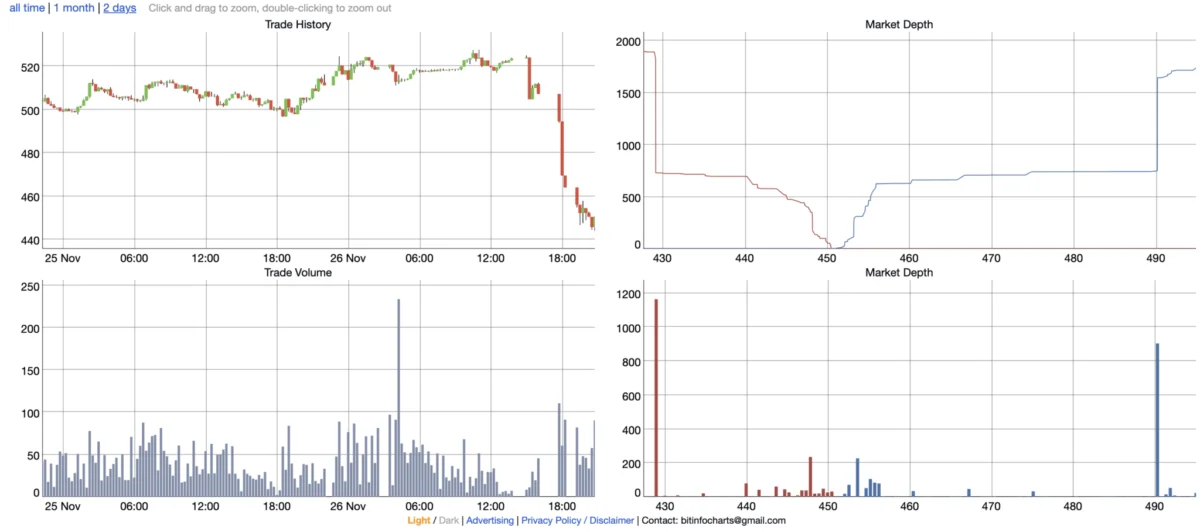
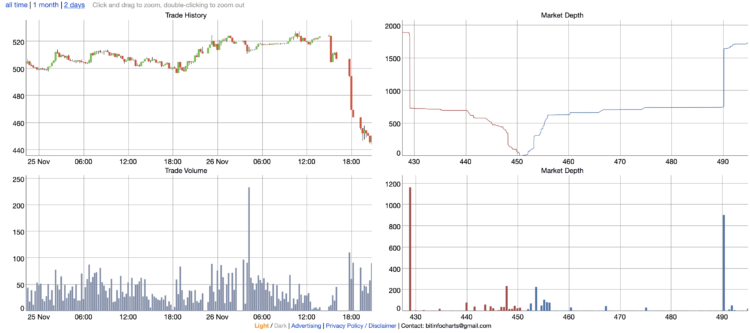
According to market data sourced from BitInfoCharts, Monero’s price plummeted from an intraday high of $525.36 down to $446.54 during the Thursday trading session. For long-term holders and institutional market participants, the abrupt sell-off bore an uncanny resemblance to the market reaction witnessed in February 2024, when industry giant Binance announced its own comprehensive Monero delisting. However, analysts note a critical structural difference: the ecosystem of major centralized exchanges willing to host privacy coins has shrunk considerably since then, leaving fewer avenues for retail and institutional traders to acquire, sell, or manage their XMR exposure.
Chronology of the KuCoin Delisting and Immediate Operational Changes
In a formal statement published on November 26, 2026, KuCoin outlined the phased wind-down of all Monero-related services on its platform. The exchange specified that all four primary XMR spot trading pairs—namely XMR/USDT, XMR/USDC, XMR/ETH, and XMR/BTC—will be officially delisted on November 30 at 08:00 UTC.
Ahead of the final trading deadline, KuCoin moved swiftly to restrict incoming transfers. The platform suspended all XMR deposits immediately upon the announcement and has indicated that these channels will not be reopened. For users currently holding funds on the exchange, withdrawals are slated to remain operational until December 31 at 08:00 UTC. Nevertheless, the platform included a standard operational caveat, reserving the right to accelerate the closure of withdrawal channels if unforeseen technical issues or network anomalies arise.
The wind-down extends far beyond basic spot trading markets. KuCoin confirmed that its XMR flexible savings products would be terminated on November 27, followed immediately by the discontinuation of asset conversion tools and automated trading services on November 30.
Perhaps most critically for leveraged traders, KuCoin’s announcement included a direct warning regarding its VIP loan products. The exchange will cease accepting Monero as collateral. Borrowers who currently utilize their XMR holdings to secure loans must either settle their obligations or provide alternative cryptocurrency collateral prior to the enforcement date to avoid forced liquidation of their positions. Furthermore, for users who fail to withdraw their balances before the final December deadline, KuCoin cautioned that remaining XMR funds could potentially be converted into stablecoins, though the exchange emphasized that such conversions are not guaranteed.
While citing general internal platform policies and risk management frameworks as the driving force behind the decision, KuCoin’s official statements did not point to a singular, specific regulatory mandate enforcing the removal. Observers within the digital asset sector, however, widely attribute such sweeping compliance shifts to intensifying global scrutiny surrounding anti-money laundering (AML) protocols and know-your-customer (KYC) requirements, which often target privacy-enhancing technologies designed to obscure transaction trails.
The Accumulating Liquidity Crisis for Privacy Coins
The departure of KuCoin represents a monumental blow to Monero’s market liquidity, particularly given the sheer volume of trades the exchange previously facilitated. Market metrics pulled from CoinGecko on November 26 highlighted KuCoin as one of Monero’s primary liquidity hubs, with its XMR/USDT trading pair alone generating approximately $62.6 million in volume over a standard 24-hour cycle.
This event is merely the latest chapter in a broader exodus of centralized platforms. On November 17, MEXC quietly discontinued its XMR spot trading pairs. Earlier regulatory and operational pressures saw Binance completely remove the asset in early 2024, while Kraken altered its regional strategy by halting XMR trading for users residing in the European Economic Area (EEA) in October 2024, explicitly pointing to evolving regulatory frameworks.
Historical research reports published by Kaiko illustrate that market depth and liquidity across the entire privacy token sector—encompassing assets like Monero (XMR), Zcash (ZEC), Dash (DASH), and Oasis Network (ROSE)—have been on a steady downward trajectory since 2021. As successive exchanges restrict access, trading volume does not simply vanish; rather, a portion migrates to decentralized exchanges (DEXs), peer-to-peer (P2P) networks, or cold storage wallets.
However, market analysts warn that the migration of volume away from high-throughput centralized exchanges introduces severe structural vulnerabilities. When fewer centralized venues compete to clear orders, market depth diminishes. Consequently, during periods of heightened macroeconomic uncertainty or sudden sector-wide news events, remaining order books may struggle to absorb large trades without generating massive price slippage. For Monero, the core challenge is increasingly morphing from a technological debate into an acute market structure and liquidity crisis.
Resilience Versus Reality: Can Monero Weather the Storm?
Despite the bearish technical indicators and the psychological weight of another major exchange exit, market historians argue against prematurely declaring a terminal decline for Monero.
XMR has a documented history of weathering severe regulatory headwinds and platform bans while managing to find alternative paths forward. Earlier in 2026, defying expectations set by previous exchange delistings, Monero’s market valuation demonstrated remarkable resilience, surging past the $700 threshold long after Binance had ceased supporting its spot markets. Proponents frequently emphasize that Monero’s underlying decentralized architecture is fundamentally sound; the network does not rely on KuCoin, Binance, or any other centralized intermediary to validate transactions or preserve user privacy. The cryptographic integrity of its ring signatures, stealth addresses, and confidential transactions remains completely independent of exchange listings.
Nevertheless, financial experts draw a sharp distinction between a functional blockchain protocol and a liquid investment asset. Even the most robust privacy-preserving payment system requires efficient, accessible on-ramps and off-ramps that allow participants to enter and exit market positions without sustaining exorbitant transaction costs or severe execution friction.
Market Outlook and Crucial Indicators to Watch
As the crypto community approaches the November 30 deadline, attention turns toward market redistribution. The immediate test for Monero will not merely be whether the token can reclaim the $500 psychological price level, but rather where KuCoin’s displaced trading volume ultimately settles.
Industry observers will closely monitor whether remaining centralized platforms, alternative regional exchanges, and decentralized liquidity pools possess the capacity to absorb larger institutional and retail orders without introducing debilitating price volatility. The outcome of this transition will provide definitive insight into whether Thursday’s 15% drawdown was a transient, knee-jerk reaction to a routine exchange delisting, or if it serves as a harbinger of deeper, systemic liquidity constraints facing privacy assets in the modern regulatory era.