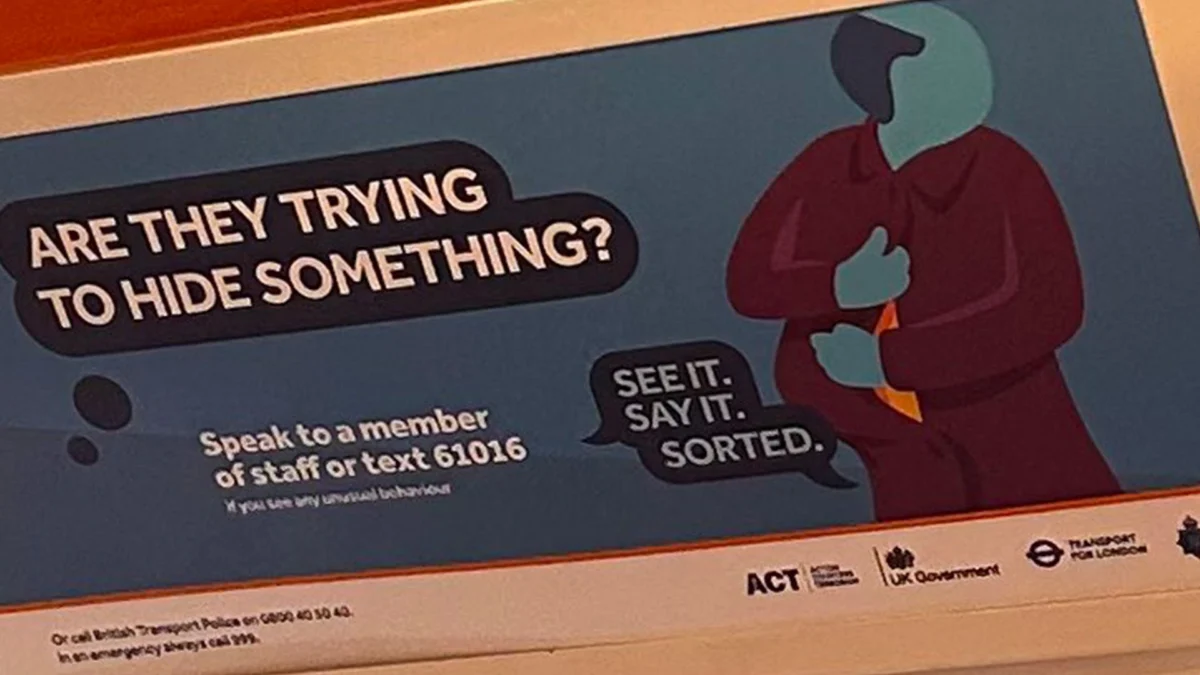
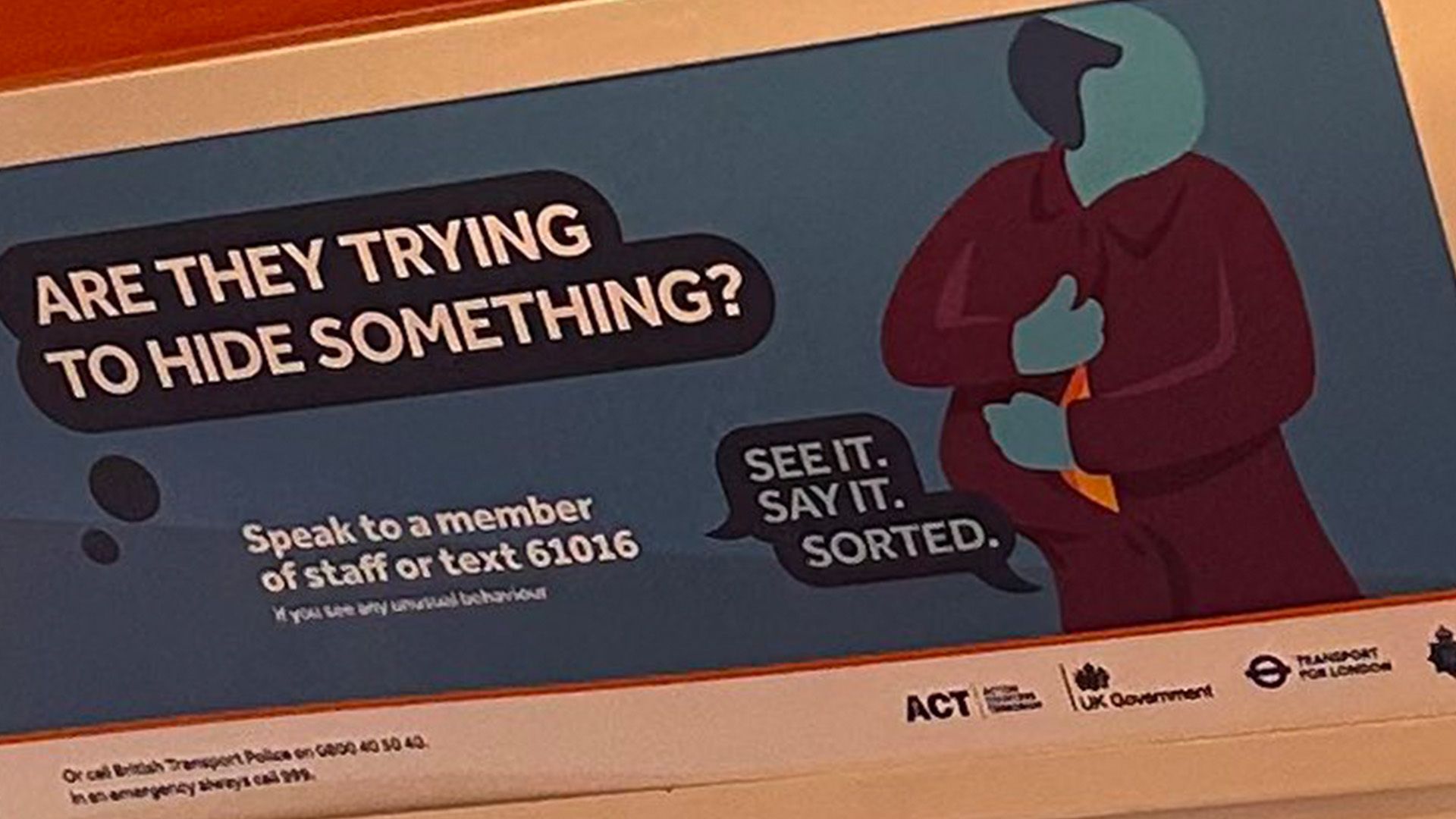
Transport for London (TfL) has found itself at the center of a fierce public relations storm following the appearance of a controversial public safety announcement (PSA) across its vast transit network. The poster, which quickly went viral on social media platforms such as X, featured the provocative headline “Are they trying to hide something?” paired with a minimalist graphic. Due to the ambiguities inherent in the visual style chosen for the campaign, numerous commuters misinterpreted the abstract artwork as depicting a Muslim woman wearing a hijab, triggering immediate accusations of xenophobia, institutional bias, and offensive stereotyping.
The incident has since expanded beyond a localized social media uproar into a broader conversation regarding the risks of abstract graphic design in public messaging, the accountability of transit authorities regarding unauthorized advertising, and the ongoing challenges of maintaining cultural sensitivity in an increasingly polarized digital landscape.
Anatomy of a Misunderstanding: The Corporate Memphis Aesthetic
At the heart of the controversy is the choice of artistic medium. The poster utilized a variation of the widely recognized “Corporate Memphis” illustration style—a flat, highly abstracted design approach characterized by featureless faces, disproportionate limbs, and skin tones rendered in bright, unrealistic colors such as blue, pink, or yellow. While popular among corporate marketers for its supposed inclusivity and universal appeal, critics have long argued that the style often strips human subjects of individual identity, resulting in uncanny or easily misconstrued visuals.
In this specific instance, the artist intended to portray a man looking backward over his shoulder. However, the combination of the stark, featureless silhouette, a curved background element, and the provocative interrogation copy led many observers to a completely different conclusion. Commuters navigating the London Underground network flooded social media with photographs of the poster, expressing profound shock.
“Disgusting insinuation in this campaign. Absolutely appalling,” posted one commuter, directing their grievance at the official accounts of TfL, the Mayor of London, and local authorities. Another user remarked on the dystopian undertones of the visual pairing: “Suspicion, paranoia, and ethnically ambiguous abstract art—1984 is here in full force.”
Others noted the optical illusion element of the design, with one user writing on X, “It took me ages to see the balding man. TfL accidentally created its own version of this image,” comparing the public’s divided perception to famous psychological tests.
Chronology of the Controversy
The unfolding crisis followed a rapid timeline that caught transit officials off guard:
- Initial Discovery: Commuters began spotting the controversial posters onboard London Underground trains and stations, photographing the artwork and sharing it across X and other platforms.
- Viral Amplification: Within 48 hours, initial posts criticizing the campaign garnered hundreds of thousands of impressions, drawing sharp rebukes from civil rights advocates, regular commuters, and public figures.
- Initial TfL Response: Prompted by mounting public pressure, TfL representatives responded directly to concerned users on social media, confirming that the matter was under urgent internal review.
- The Flyposting Claim: TfL subsequently issued a statement claiming the poster had never been part of an official campaign and was instead installed without authorization. The transport body stated it had contacted the British Transport Police (BTP) to report the incident as illegal flyposting.
- Public Skepticism: Independent digital sleuths and news observers quickly pointed out discrepancies in TfL’s defense, noting that variants of the campaign had reportedly been covered by formal news outlets or tied to official security messaging, muddying the waters regarding who was ultimately responsible for the installation.
Shifting Explanations and Official Responses
As public outcry intensified, Transport for London moved to distance itself entirely from the creative direction and execution of the poster. In a formal statement released via social media, TfL asserted that the advertisement was entirely unauthorized.
“Our media partner, our teams, and contractors have been instructed to inspect trains and remove any unauthorised posters that are found on our network. The incident has been reported to the British Transport Police as flyposting is an illegal activity,” TfL stated.
Despite these assurances, skepticism among the traveling public remained high. Observers noted that the visual language and formatting of the poster closely mirrored standard safety and security awareness campaigns frequently run across the TfL network. Critics questioned how unauthorized material of that scale could bypass standard station security and operational oversight to be displayed inside carriages without the knowledge of maintenance or advertising contractors. Further complicating the timeline, digital archivists highlighted that similar design variations had appeared in previous safety pushes, leading to widespread confusion over whether the poster was a rogue act of guerrilla art, an outsourced campaign plagued by poor execution, or an institutional oversight subsequently abandoned amid backlash.
Broader Implications for Public Sector Advertising
The TfL incident highlights the precarious nature of public sector communications, where messaging must navigate diverse, multicultural urban populations without alienating or offending any specific community. Advertising experts note that public safety campaigns rely fundamentally on clarity, trust, and unambiguous intent. When a campaign introduces themes of suspicion—such as asking whether someone is “hiding something”—paired with ambiguous imagery, the margin for misinterpretation narrows dramatically.
In recent years, the advertising industry has faced heightened scrutiny regarding campaign safety and cultural resonance. The backlash against TfL’s poster arrives amid a turbulent period for public-facing media, where brands and public institutions alike have increasingly found themselves managing consumer revolts over tone-deaf messaging, AI-generated art mishaps, and poorly executed social campaigns.
For Transport for London, the fallout serves as a cautionary tale regarding the vulnerabilities inherent in modern out-of-home advertising infrastructure. As transit networks rely increasingly on third-party media agencies, digital printing, and rapid-turnaround contractors, the mechanisms for vetting visual content face mounting strain.
Moving forward, civil society organizations and transport watchdogs have called for a comprehensive review of TfL’s advertising approval processes. Critics argue that regardless of whether the poster was officially commissioned or illicitly pasted, the episode exposes systemic gaps in network monitoring and underscores the critical need for cultural competency in public graphic design. As investigations by transport police and internal auditors continue, the controversy remains a stark reminder of the power of visual communication—and the severe cost of getting it wrong in the public square.