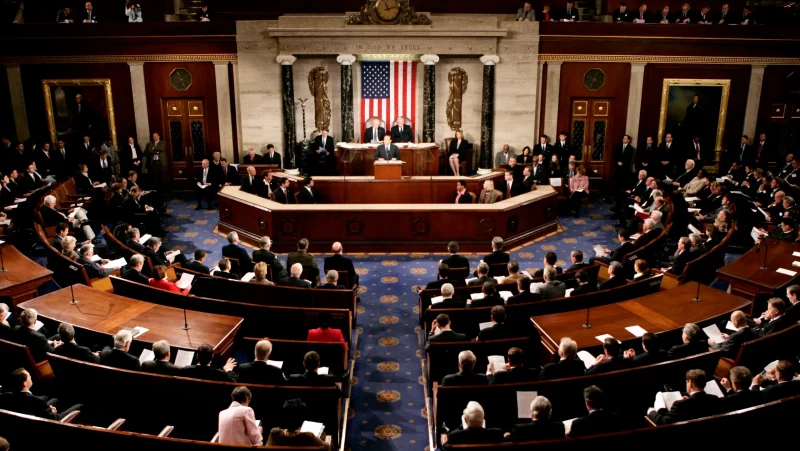
The United States Senate’s failure to advance the Digital Asset Market Clarity Act on Tuesday marks a significant setback for the cryptocurrency industry’s long-standing quest for a unified federal regulatory framework. By falling short of the 60-vote threshold required to invoke cloture on the motion to proceed, the Senate has effectively halted the momentum of one of the most ambitious legislative attempts to define the operational boundaries of digital assets in the United States. This procedural defeat not only underscores the deep-seated ideological divides between the two major political parties regarding the oversight of decentralized finance but also leaves the industry in a state of regulatory ambiguity that is likely to persist through the upcoming 2026 election cycle.
The Procedural Collapse: A Timeline of Stalled Negotiations
The road to Tuesday’s vote was paved with high-stakes maneuvering and last-minute negotiations. Throughout the weekend, Republican lawmakers, led by Senator Cynthia Lummis, sought to build a bridge across the partisan divide. On Sunday, the Senate Republican caucus unveiled a revised version of the Clarity Act, which was explicitly designed to address the primary grievances held by their Democratic counterparts. This iteration of the bill incorporated 126 substantive changes, a move that briefly galvanized investor sentiment and suggested that a bipartisan consensus might finally be within reach.
However, the optimism surrounding these concessions proved short-lived. By late Monday, it became clear that the revisions failed to satisfy the concerns of the Democratic leadership. Democratic objections remained anchored in the bill’s provisions concerning ethics oversight and the scope of enforcement powers granted to state attorneys general. Furthermore, the banking industry maintained its vocal opposition to specific clauses related to stablecoin rewards, arguing that the bill provided insufficient protections against systemic financial risk.
By Tuesday morning, the breakdown was finalized when Republican negotiators rejected a last-minute counterproposal from Senate Democrats. Senator Lummis remarked that the Democratic demands represented a regression to pre-recess positions, effectively nullifying the months of incremental progress made during the late summer and early fall. When the vote arrived, over 40 senators voted against invoking cloture, leaving the legislation dead in the water and signaling a cooling of the legislative appetite for crypto-specific reform.
Market Volatility and the Crypto Selloff
The immediate fallout of the failed vote was a sharp and swift correction across the digital asset landscape. Cryptocurrency markets, which had experienced a bullish surge on Monday in anticipation of a legislative breakthrough, retreated rapidly. Bitcoin, the industry’s bellwether, saw its price slide toward the $76,000 level, erasing a significant portion of the gains that had propelled it toward the $80,000 psychological threshold just twenty-four hours earlier.
The contagion extended to major altcoins, with Ether falling below $2,400, while Solana and XRP experienced similar downward pressure, dropping below $97 and $1.31, respectively. This market reaction is indicative of the "policy premium" that had been priced into these assets over the preceding week. Traders had been positioning themselves for a scenario where regulatory clarity would provide a safer environment for institutional adoption. When that catalyst failed to materialize, the ensuing "long" liquidations compounded the price decline.
Macroeconomic Pressures and the Federal Reserve Context
The failure of the Clarity Act occurred against a fragile macroeconomic backdrop, which likely exacerbated the market’s negative response. Beyond the specific news from Capitol Hill, traders were grappling with broader anxieties regarding the Federal Reserve’s upcoming policy decisions. With US equities trending downward and Treasury yields inching higher, the market environment was already primed for risk-off behavior.
Financial analysts note that the probability of a quarter-point rate increase by the Federal Reserve has become a primary driver of market volatility. The combination of high interest rates and the absence of a federal regulatory safety net creates a "double whammy" for risk assets. Higher yields on traditional government bonds make the speculative volatility of digital assets less attractive to institutional investors who are currently seeking defensive positioning. As such, the failed vote was not merely a political story; it was an intersectional event where legislative uncertainty met restrictive monetary policy, leading to a broader repricing of risk across global markets.
The Regulatory Void: Implications for the Industry
The failure to pass the Digital Asset Market Clarity Act leaves the United States without a comprehensive framework for digital assets, forcing the industry to continue operating under a patchwork of existing laws and enforcement actions. For years, crypto companies have argued that the current regime—frequently defined by the Securities and Exchange Commission (SEC) through litigation—is insufficient and punitive.
Without a federal mandate, the status quo of "regulation by enforcement" is expected to continue. This model creates an environment where companies must navigate a maze of state-level regulations while remaining vulnerable to federal lawsuits. Industry stakeholders have long maintained that this uncertainty discourages domestic innovation, driving capital and talent toward jurisdictions like the European Union or Singapore, where frameworks like MiCA (Markets in Crypto-Assets) provide clearer guidelines for developers and service providers.
Furthermore, the banking sector’s involvement in this debate cannot be overstated. The friction between legacy financial institutions and the crypto industry regarding stablecoins represents a fundamental disagreement on the future of money. By failing to reconcile these interests, the Senate has effectively signaled that a national policy on stablecoins—which many view as the bridge between traditional finance and the digital economy—remains a distant prospect.
Official Reactions and Future Outlook
While there have been no formal statements from the White House regarding the specific vote, the administration has previously emphasized the need for consumer protection and financial stability as the cornerstones of any future crypto regulation. On the other side of the aisle, proponents of the bill have expressed deep disappointment, viewing the failure as a missed opportunity to provide the certainty that the market desperately craves.
The political calendar now dictates the trajectory of future efforts. With the November midterm elections approaching, the window for legislative action has effectively closed. Lawmakers are now expected to pivot their attention toward campaign activities and constituent outreach, leaving little bandwidth for complex, controversial financial reforms.
Looking ahead to 2026, the prospect of a renewed push for market structure legislation remains uncertain. The composition of the Senate following the elections will play a crucial role in determining whether the industry can secure a bipartisan path forward. For now, the crypto industry is left to grapple with the reality that the regulatory landscape will remain fragmented, contested, and largely driven by the courts rather than by elected representatives.
Analytical Summary of the Legislative Impasse
The failure of the Clarity Act serves as a case study in the difficulties of regulating emerging technologies through traditional legislative processes. Three primary factors contributed to the collapse:
- Fundamental Disagreement on Authority: There remains a lack of consensus on whether the Commodity Futures Trading Commission (CFTC) or the SEC should hold primary jurisdiction over digital assets. Without settling this "turf war," comprehensive legislation is functionally impossible.
- Lobbying Disparity: The competing interests of the established banking sector and the burgeoning decentralized finance sector have created a lobbying stalemate. The banking industry, with its significant influence, has successfully lobbied for stricter controls, which the crypto industry views as stifling to the core promise of blockchain technology.
- The Ethics and Enforcement Gap: The specific sticking points—namely the ethics of market participants and the powers of state-level regulators—highlight a broader tension between federal oversight and state autonomy. Democrats have been largely unwilling to cede power to states, fearing a "race to the bottom" in regulatory standards, while Republicans have pushed for more localized control to foster innovation.
As the markets settle after the shock of the failed vote, the focus will likely shift to long-term trends. Institutional adoption of blockchain technology continues to grow, independent of the legislative environment. However, for the average retail investor and the developers building the next generation of financial infrastructure, the lack of a clear federal roadmap remains a significant headwind. Until such time as Congress can bridge the partisan divide, the digital asset sector in the United States will remain in a state of regulatory limbo, characterized by high volatility and an ongoing reliance on judicial precedent to define the rules of the road.
The events of this week have confirmed that while the demand for regulation is universal, the definition of what that regulation should look like remains as polarized as ever. The Senate’s inability to reach a consensus reflects the broader challenges facing the US government as it attempts to integrate a transformative, decentralized technology into a centralized, legacy regulatory framework. For now, the wait for clarity continues.