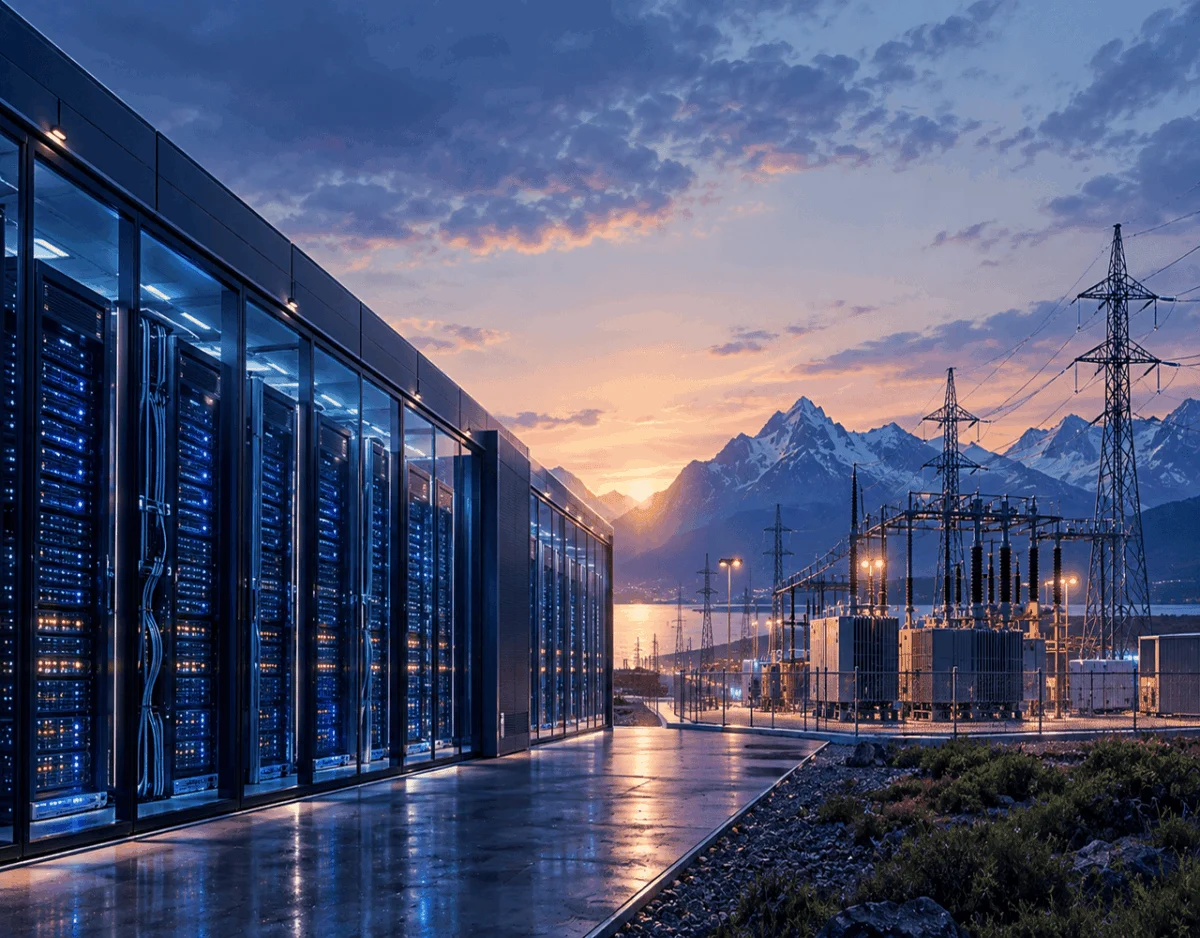
The global artificial intelligence landscape is undergoing a structural transformation, shifting from a pure software race into a fierce, capital-intensive battle for physical resources. While the technology sector has spent the past several years fixated on the acquisition of advanced graphics processing units (GPUs), a more formidable and less forgiving constraint has come to the forefront: power. As data centers scale to accommodate the colossal compute demands of modern large language models, the real limiting factor is no longer simply acquiring chips, but securing the electricity, cooling architectures, and physical land required to run them at scale.
Against this backdrop, European infrastructure firm Clichmont has emerged with a contrarian operational thesis. Led by Chief Executive Officer Alexis Cathalifaud, the company is bypassing the traditional, capital-light model of renting cloud GPU capacity from hyperscalers. Instead, Clichmont is betting its long-term viability on the direct ownership and strategic deployment of physical data-center infrastructure. In a sector dominated by aggressive cloud providers racing to hoard silicon, Clichmont’s approach pivots on a fundamental market realization: chips depreciate rapidly, but power-ready, highly engineered data centers are enduring strategic assets capable of outlasting multiple hardware generations.
The Evolution of the AI Infrastructure Race
To understand Clichmont’s market positioning, one must examine the rapid evolution of the generative AI boom. Following the widespread commercialization of transformer-based models in late 2022, enterprise and venture capital flooded into artificial intelligence, triggering an unprecedented demand spike for high-performance accelerators, most notably NVIDIA’s H100 and upcoming Blackwell architectures.
During the initial phase of this boom, companies scaled operations by relying on rented GPU infrastructure from established cloud giants and specialized providers such as CoreWeave, Lambda, and Crusoe. These firms successfully proved that AI compute represented a massive, secular growth market. However, as cluster sizes scaled from hundreds of GPUs to tens of thousands per training run, structural vulnerabilities in the rental model became apparent. Renting compute forces companies to inherit third-party pricing structures, strict availability schedules, fixed power constraints, and rigid networking architectures.
Recognizing these limitations, a secondary wave of infrastructure developers began to look beyond the chip itself. By 2024, industry analysts and energy grid operators alike started warning of looming power crunches, particularly in major tech hubs across Northern Virginia, Dublin, and Frankfurt. Power grids faced unprecedented strain, with wait times for new electrical substations stretching into years. This macro environment laid the groundwork for Clichmont’s core philosophy: while GPU access grants short-term compute, infrastructure ownership grants absolute control over the underlying economics of artificial intelligence.
The Economics of Ownership Versus Rental
The core architectural distinction of Clichmont’s business model lies in asset durability. Modern GPUs experience rapid technological iteration, often becoming economically uncompetitive or obsolete within a span of three to four years. Consequently, businesses tied exclusively to a specific rental model or hardware generation face continuous margin compression as they amortize short-lived assets.
Clichmont’s infrastructure-first model decouples the physical facility from the specific hardware residing within it. By owning the underlying real estate, high-voltage electrical grid connections, specialized liquid-cooling systems, and dark-fiber network pathways, the company constructs a long-lived asset. Cathalifaud notes that while acquiring 10,000 advanced GPUs presents a formidable procurement challenge, securing the tens of megawatts of continuous, reliable electricity required to power them is an entirely separate and increasingly scarce hurdle.
By maintaining direct control over facility engineering, Clichmont dictates deployment density, upgrade cycles, and thermal management strategies. This flexibility allows a single facility to seamlessly transition from one generation of AI accelerators to the next, insulating the company from the sudden obsolescence cycles that plague pure-play cloud renters.
Strategic Site Selection: From Alicante to Bodo
Clichmont’s operational strategy is vividly demonstrated through its geographically diverse site selection process. Rather than clustering facilities in saturated, high-cost metropolitan data-center markets, the firm targets locations where specific environmental and energy fundamentals converge.
A prime example is the company’s solar-powered facility in Alicante, Spain, which capitalizes on Southern Europe’s abundant solar energy profile to optimize sustainability and power costs. Conversely, Clichmont has established a new build in Bodo, Norway, leveraging Northern Europe’s cold climate to maximize natural air cooling efficiency while tapping into a robust, green energy grid.
According to Cathalifaud, site selection operates through a rigorous multi-stage filtering process. Power availability and time-to-power serve as the primary screening filters. Once a location clears the energy threshold, engineers evaluate local climate parameters for thermodynamic cooling efficiency, fiber optic connectivity, municipal permitting landscapes, and physical expansion potential. The overarching strategy dictates that compute must travel to the energy source, rather than attempting to transport gigawatts of power across inefficient long-distance transmission lines.
Navigating the Software-to-Hardware Execution Gap
Scaling physical infrastructure introduces operational challenges that often catch entrepreneurs rooted purely in software development off guard. In the software domain, scaling is elastic; doubling user demand typically requires provisioning additional server instances via cloud APIs, a process completed in minutes.
Physical infrastructure, by contrast, operates on entirely different temporal and financial scales. Every additional megawatt of data center capacity is bound by physical dependencies: heavy electrical transformers, complex switchgear, specialized cooling loops, municipal zoning permits, and long-lead construction timelines. These components rarely move in parallel. A developer may secure the land yet face a multi-year queue for electrical grid interconnection. Alternatively, a completed building may sit idle awaiting specialized cooling hardware.
Furthermore, software mistakes are easily remedied with an overnight code patch. Capital misallocations in heavy infrastructure—such as designing a sub-optimal 50-megawatt electrical distribution system or miscalculating future cooling densities—are expensive, structurally permanent errors. Success in the physical AI infrastructure sector therefore demands exceptional execution discipline, perfectly sequencing capital expenditure, construction milestones, and customer demand so that assets become operational precisely when the market requires them.
The Role of the $CLAI Token in a Traditional Infrastructure Ecosystem
In addition to its heavy asset footprint in real estate and energy, Clichmont incorporates a digital token, designated as $CLAI, into its broader economic ecosystem. This integration has drawn skepticism from market observers questioning the necessity of a tokenized asset within a traditional industrial and computing business model.
Addressing these concerns, company leadership acknowledges that skepticism is entirely justified. A digital token cannot be justified solely by operating within the artificial intelligence sector. Clichmont maintains that the core physical business—building and operating heavy compute infrastructure—must operate entirely independently of the token.
Instead of serving merely as a financing wrapper or speculative vehicle, $CLAI is structured to function as a digital economic layer designed to support on-chain participation, treasury management, and community governance. The definitive standard for the token is utilitarian: it must perform transparent, measurable functions that could not be executed as efficiently via traditional corporate equity structures or conventional databases. If the token fails to provide distinct, verifiable utility, the market’s skepticism remains fully warranted.
Broader Market Implications and Future Outlook
Looking forward across a three-year horizon, Clichmont does not aim to displace massive hyper-scale cloud providers such as CoreWeave or Nebius. Attempting to match the sheer capital mobilization and colossal scale of industry giants would run counter to the company’s targeted operational strategy.
Instead, Clichmont’s strategic objective is to solidify its position as one of the most efficient, independent AI infrastructure operators in Europe. By focusing on disciplined site selection, highly optimized energy economics, and flexible, high-density compute facilities capable of serving enterprise AI and high-performance computing (HPC) clients, the firm is carving out a distinct market niche.
The broader implications of Clichmont’s model point toward a maturing artificial intelligence industry. As venture capital becomes more discerning and the true cost of scaling model training becomes clear, the industry is entering an era where infrastructure mastery dictates competitive advantage. Companies that control their energy supply chains and physical facilities will likely weather market volatility far better than those entirely dependent on rental arbitrage. Whether Clichmont’s ambitious infrastructure bet successfully scales will depend entirely on its ongoing execution discipline, proving that in the new era of artificial intelligence, mastering the physical world is just as critical as mastering the code.