
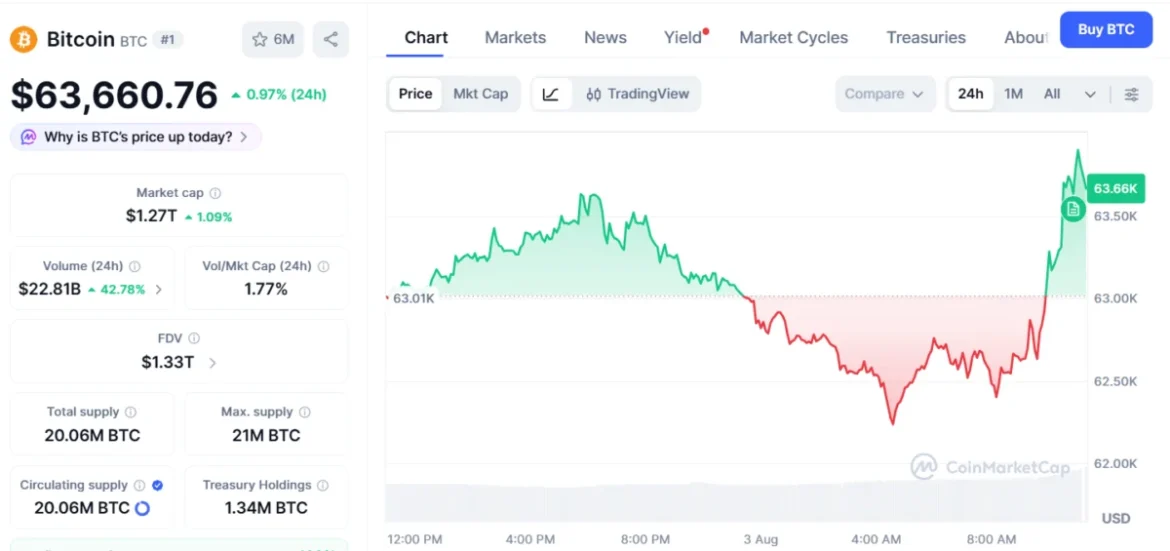
In a striking inversion of traditional financial market behavior, the global macroeconomic landscape is currently witnessing an unusual divergence between risk-free sovereign debt and speculative digital assets. While the U.S. Treasury market is experiencing a profound bout of turbulence—driven by surging yields, shifting monetary policy expectations, and macroeconomic anxiety—Bitcoin, an asset historically renowned for its extreme price swings, is exhibiting remarkable tranquility. This juxtaposition has caught the attention of institutional analysts, macroeconomic strategists, and options traders worldwide, prompting a rigorous re-examination of how cross-asset volatility correlations operate in the current economic cycle.
The focal point of this market anomaly is the sharp ascent of the MOVE index, a leading gauge of U.S. Treasury market volatility. In recent sessions, the index climbed rapidly from approximately 80 to roughly 104, marking its highest reading since March. This notable spike reflects mounting investor nervousness regarding government debt, driven by persistent inflation concerns, fluctuating energy commodities, and shifting timelines for Federal Reserve interest rate decisions. Conversely, the digital asset ecosystem is telling a markedly different story. Bitcoin options traders are currently pricing in historically subdued turbulence, with implied volatility measures sitting near the lowest levels observed in recent years.
This unexpected calm in the cryptocurrency sector stands in stark contrast to the historical norm, where sharp movements in sovereign debt yields typically trigger immediate, magnified liquidations and price corrections across high-beta risk assets. Financial analysts are now dissecting the mechanics behind this decoupling, weighing whether the current calm in crypto represents a maturing asset class or merely a temporary divergence before macroeconomic pressures inevitably catch up to digital currencies.
Tracing the Anatomy of the Bond Market Shock
To understand the current tension in the financial system, one must examine the chronology of events that pushed the U.S. Treasury market to the edge. Over the preceding weeks, fixed-income markets have been battered by a confluence of sticky macroeconomic data and shifting fiscal forecasts. Inflation prints have repeatedly challenged the narrative of a smooth descent toward central bank targets, forcing market participants to recalibrate their expectations for benchmark borrowing costs.
As inflationary pressures lingered and supply dynamics for long-dated government debt faced increased scrutiny, selling pressure intensified in the secondary bond market. This downward pressure on bond prices translated directly into surging yields. Most notably, the benchmark U.S. 10-year Treasury yield breached critical psychological resistance, touching approximately 5.2% before experiencing a modest pullback.
This rapid tightening of financial conditions carries profound implications for the broader economy. Higher yields elevate the risk-free rate of return, making government debt exceptionally attractive relative to risk-on alternatives. Simultaneously, they drive up financing costs for corporate borrowers, consumers, and leveraged market participants. Historically, such swift adjustments in the fixed-income complex trigger cross-asset contagion, spilling over into equities, commodities, and digital assets. However, while the equity market’s expected volatility gauge—the Cboe VIX—remains relatively subdued near its yearly lows around 14, the MOVE index’s surge to 104 highlights a unique concentration of anxiety specifically within sovereign debt instruments.
Bitcoin Volatility Defies Macro Pressures
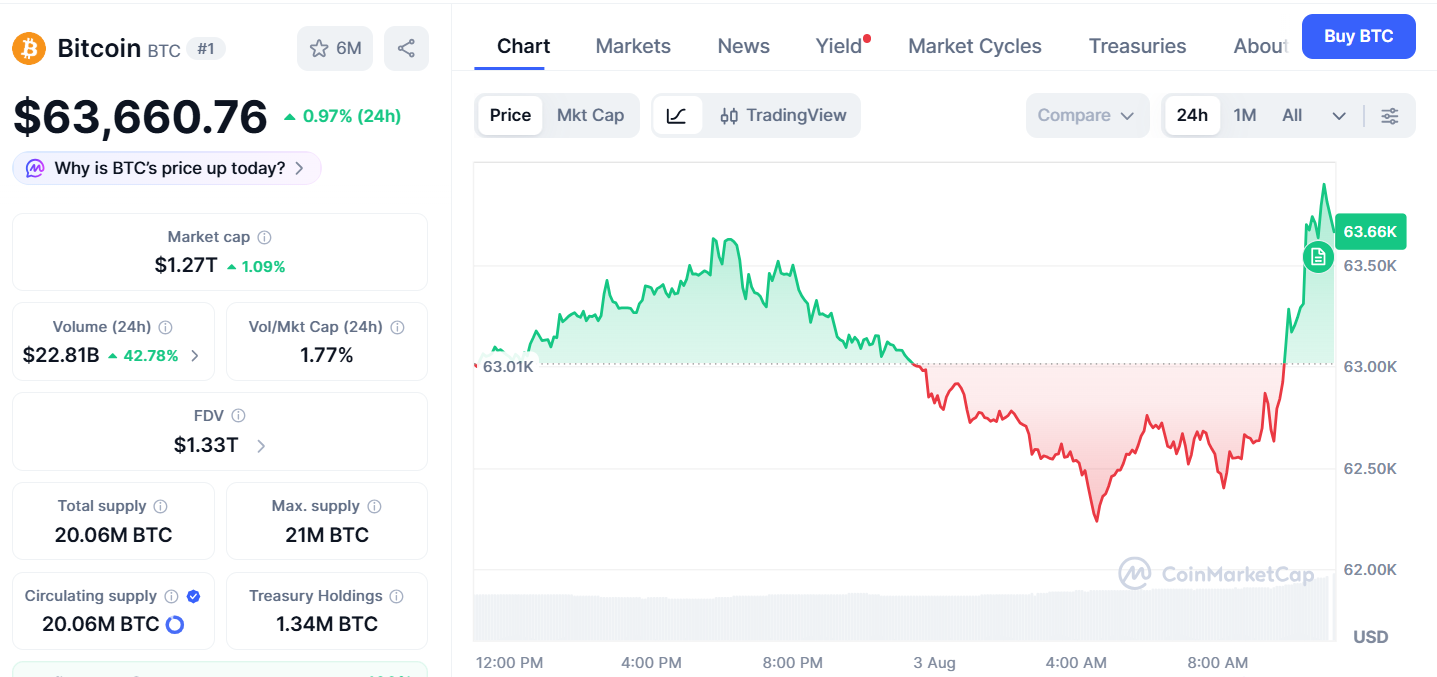
Against this backdrop of heightened fixed-income stress, the digital asset market has displayed an uncharacteristic level of resilience. Volmex’s 30-day Bitcoin implied volatility index, known as BVIV, has been hovering tightly around the 37 mark, sitting just a few points above its multi-year low of approximately 35.
This compression in expected volatility indicates that options traders are not positioning for outsized, violent price swings in the near term. This dynamic is particularly fascinating when evaluating Bitcoin’s immediate reaction to the bond market’s turbulence. As 10-year yields surged toward 5.2%, Bitcoin’s own spot market rally momentarily stalled, demonstrating that the cryptocurrency has not entirely decoupled from broader macro liquidity trends. Higher yields inherently increase the opportunity cost of holding non-yielding assets, placing a natural ceiling on speculative momentum.
Yet, despite this technical pause in its upward trajectory, the derivatives market has refrained from pricing in panic. The contrast becomes even starker when analyzing historical correlations. Recently, statistical correlations between the MOVE index and the volatility of both traditional equities and Bitcoin have turned negative or hovered close to zero. This statistical shift signifies that the traditional playbook—whereby bond market stress reliably bleeds into cryptocurrency sell-offs—is currently experiencing a significant breakdown.
Expert Perspectives and Market Implications
Market participants and institutional strategists have offered varied interpretations of this evolving dynamic. From a structural perspective, some analysts argue that the muted volatility in Bitcoin reflects a maturing market participant base. As institutional capital, exchange-traded funds (ETFs), and corporate balance sheet allocations become more deeply integrated into the digital asset ecosystem, the marginal influence of reactive retail speculation diminishes. Consequently, structural liquidity providers and sophisticated options desks may be adopting more methodical, hedged approaches to macro data releases rather than engaging in panic-driven repositioning.
Conversely, seasoned risk managers urge caution, warning that a low-volatility environment in crypto should not be misinterpreted as an outright immunity to macroeconomic shocks. The fact that traders in the bond market and the cryptocurrency market are currently pricing vastly different degrees of uncertainty does not guarantee permanent insulation. Should Treasury yields resume their upward trajectory or force a broader liquidity squeeze within the traditional banking and shadow-banking sectors, the lagged effects could eventually permeate risk-on asset classes, including Bitcoin.
Furthermore, the divergence underscores the complex interplay between fiscal policy, monetary authority interventions, and alternative monetary assets. While Treasuries bear the immediate brunt of fiscal deficit concerns and supply-demand imbalances, Bitcoin continues to occupy a unique speculative and structural niche. For years, the digital asset was reflexively categorized as the ultimate high-beta volatility trade, frequently leading the market in both euphoric upside rallies and severe drawdowns. Today, the reversal of roles—where institutional fixed-income portfolios display acute nervousness while digital asset options price relative tranquility—suggests that market perceptions of systemic risk are undergoing a subtle yet profound evolution.
Looking ahead, financial institutions and macroeconomic forecasters will closely monitor the trajectory of central bank communications, upcoming employment and inflation prints, and sovereign debt auctions. Whether Bitcoin’s current calm proves to be a durable sign of asset maturation or merely the quiet before the storm will depend heavily on the resilience of global liquidity channels and the broader financial system’s ability to absorb persistently elevated borrowing costs.
