
ix Out From the Shadows Q2 Roadmap Update and Ethereum Mainnet Perps Expansion
The decentralized finance landscape continues to evolve as protocols transition from experimental beta environments to robust, institutional-grade venues designed to rival centralized exchanges. Synthetix, a prominent liquidity protocol native to the Ethereum ecosystem, has officially announced the broad rollout and scaling of Synthetix Perps on Ethereum Mainnet, marking a critical milestone in its ambitious 2026 strategic roadmap.
Following four months of intensive, under-the-radar development and private alpha testing, the protocol has established a scalable trading infrastructure capable of processing substantial market volume without relying on superficial incentive models or temporary point-farming schemes. This operational update highlights the protocol’s deliberate shift from a conceptual rebuild to a fully functioning, high-performance decentralized derivatives exchange.
The Private Alpha Phase: Building from the Ground Up
The foundational months of 2026 were characterized by what developers describe as necessary, unglamorous engineering. Eschewing public marketing campaigns and token incentives, the private alpha phase of Synthetix Perps prioritized organic usage and stress-testing under real-world market conditions. Every trade executed on the platform during this preliminary phase originated from vetted, invited market participants operating in a live trading environment.
This cautious approach allowed the development team to isolate operational bottlenecks, refine risk parameters, and optimize order execution pathways. By avoiding the common trap of premature public scaling, Synthetix ensured that its underlying architecture could withstand unexpected volatility spikes and heavy transaction loads. The data gathered during this four-month incubator period provided the empirical backing necessary to greenlight the current expansion phase, paving the way for broader public access and deeper liquidity pools.
Expanding Market Offerings: From Crypto to Traditional Asset Classes
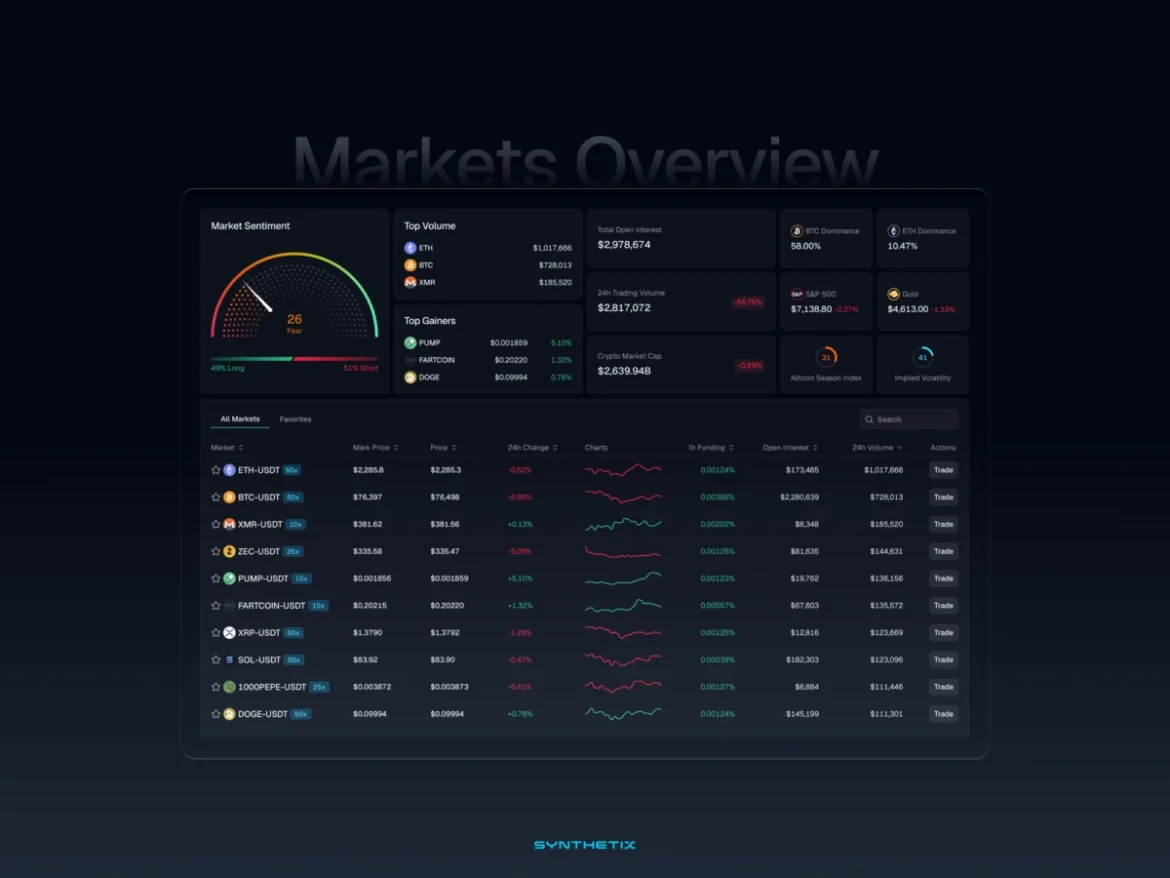
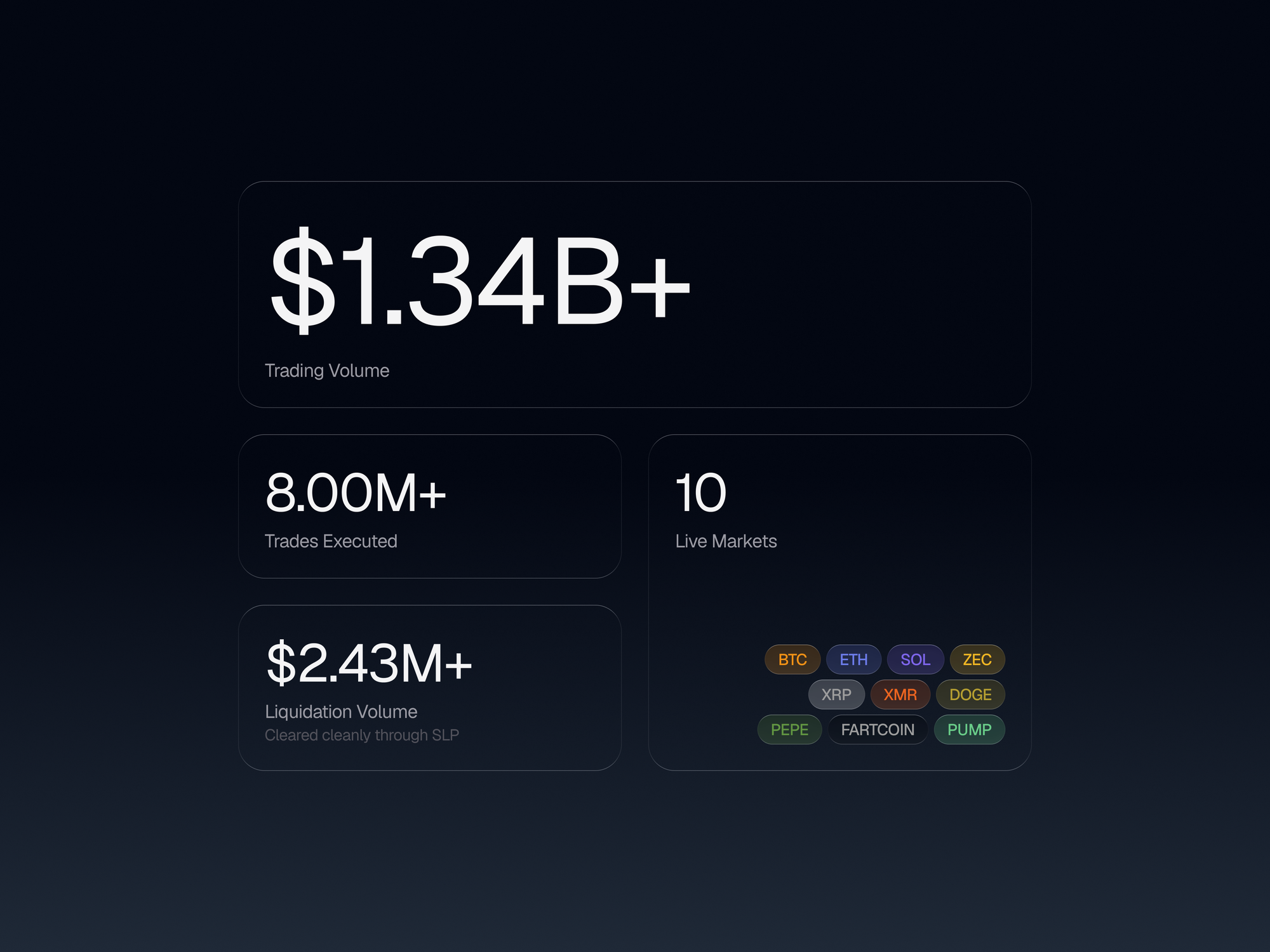
A cornerstone of the 2026 roadmap is the aggressive expansion of tradable assets, moving beyond standard cryptocurrency pairs into Real-World Assets (RWAs). At the start of the year, the platform supported just three live markets. By the end of April, that number expanded to ten cryptocurrency perpetual contracts, including major digital assets such as Bitcoin (BTC), Ethereum (ETH), Solana (SOL), Zcash (ZEC), XRP, Dogecoin (DOGE), Monero (XMR), Pepe (PEPE), Fartcoin, and Pump.
However, the more significant architectural leap involves the introduction of commodity markets. Unlike crypto assets, which trade continuously on a 24/7 basis, commodities operate on strict session schedules and require specialized oracle pricing mechanisms that reflect traditional financial market rhythms.
Engineering a platform capable of handling these distinct operational parameters required sophisticated session-handling logic and robust pricing designs for periods when traditional markets close. The integration of West Texas Intermediate (WTI) crude oil marks the protocol’s first major foray into commodity derivatives, with forex and additional localized market segments scheduled for release in June.
Multi-Collateral Integration and Capital Efficiency
A primary technical achievement of the current roadmap phase is the deployment of multi-collateral support. Historically, decentralized perpetual platforms often required users to convert their holdings into specific stablecoins before opening leveraged positions, introducing unnecessary friction and capital inefficiency.
The newly deployed multi-collateral framework allows traders to deposit idle Bitcoin and Ethereum directly onto the Mainnet protocol as productive trading capital. By utilizing existing asset holdings without requiring an initial swap into stablecoins like USDT, traders can unlock billions of dollars in dormant liquidity.
Industry analysts note that this capability serves as a critical gateway for upcoming product iterations, including basis trade vaults, the public launch of the Synthetix Liquidity Provider (SLP) vault, and the realization of the "Digital Dollars" vision for sUSD, which aims to establish a delta-hedged stablecoin ecosystem.
Risk Management, Reliability, and Security Infrastructure
In the derivatives sector, platform reliability often dictates long-term survival. During the first four months of live trading, Synthetix reported zero critical incidents resulting in user fund losses, zero unscheduled downtimes affecting order entry, and absolute accounting accuracy across all open positions.
This operational stability is the result of rigorous engineering focused on halt protocols, comprehensive administrative controls across microservices, dead-letter messaging queues, and exhaustive hot-path observability. Furthermore, developers emphasize the inherent structural advantages of operating on Ethereum Mainnet compared to centralized counterparts. Unlike centralized exchanges that can enforce arbitrary withdrawal freezes during maintenance or insolvency events, the non-custodial nature of Ethereum Mainnet ensures that user collateral remains secure within smart contracts, allowing for unhindered withdrawals even during scheduled protocol halts.
The Synthetix Liquidity Provider (SLP) and Future Outlook
At the center of the protocol’s market-making and liquidation framework is the Synthetix Liquidity Provider (SLP) vault. Operating privately during the initial alpha phase, the SLP vault has maintained a steady annualized percentage yield (APY) of approximately 20% while developers fine-tune its underlying strategies.
The public rollout of the SLP vault, slated for the second quarter, has been managed with deliberate patience. Because the SLP acts as the primary counterparty for trader liquidations and provides critical market depth, leadership insisted on exhaustive stress-testing before opening participation to the wider public.
As the protocol transitions from its historical pivot to an operational trading venue, upcoming integrations with prominent wallets and aggregators—including ongoing developments with Infinex—are expected to drive organic volume. While the roadmap for the remainder of 2026 remains demanding, the successful execution of the early-year milestones suggests that decentralized derivatives on Ethereum Mainnet are entering a mature, highly competitive era capable of challenging centralized hegemony.
