
The global cryptocurrency exchange landscape is undergoing a profound structural transformation, driven by an evolving matrix of regulatory pressures, institutional adoption, and shifting liquidity metrics. According to comprehensive data released by CoinGecko, CoinMarketCap, and prominent on-chain analytics firms, the industry is seeing a distinct divergence in how centralized exchanges operate, manage risk, and capture market share. While regulatory compliance and institutional custody solutions have propelled platforms like Coinbase to the forefront of trust-based rankings, liquidity concentration and derivatives dominance continue to favor global giants like Binance. This duality underscores a broader maturation within the digital asset economy, where platforms must balance aggressive user acquisition with rigorous compliance frameworks to survive in an increasingly scrutinized market.
Trust Scores and Exchange Hierarchies: The CoinGecko Metrics
The architecture of cryptocurrency exchange evaluation has grown increasingly sophisticated. According to CoinGecko’s exchange ranking metrics, Coinbase Exchange secured the top position, with Binance following closely in second place. The top tier is rounded out by established heavyweights including Kraken, OKX, and Gate.io, all of which achieved top-tier Trust Scores out of a maximum rating of 10. Meanwhile, platforms such as Bitget are publicly recognized with varying Trust Score designations, while exchanges like Bitstamp (by Robinhood), MEXC, Crypto.com Exchange, and KuCoin populate the upper-to-middle echelons.
Understanding the methodology behind these Trust Scores is essential for contextualizing the divergence between trading volume and platform reliability. CoinGecko’s evaluation model weighs liquidity (50%), scale of operations (20%), cybersecurity provisions (15%), historical team data (10%), and proof of reserves (5%). While Coinbase and Binance achieve top marks due to their immense scale and verified proof of reserves, platforms like Bitget have faced scrutiny regarding the transparency of their operational reserves outside of spot market metrics. Furthermore, regional compliance heavily influences these rankings; Japanese-regulated entities such as bitbank, GMO Coin Japan, and OKJ maintain stringent adherence to local financial services agency (FSA) guidelines, positioning them as safe havens within specific geographic jurisdictions, albeit with more modest global volume footprints.
Spot Market Volumes and Liquidity Shifts
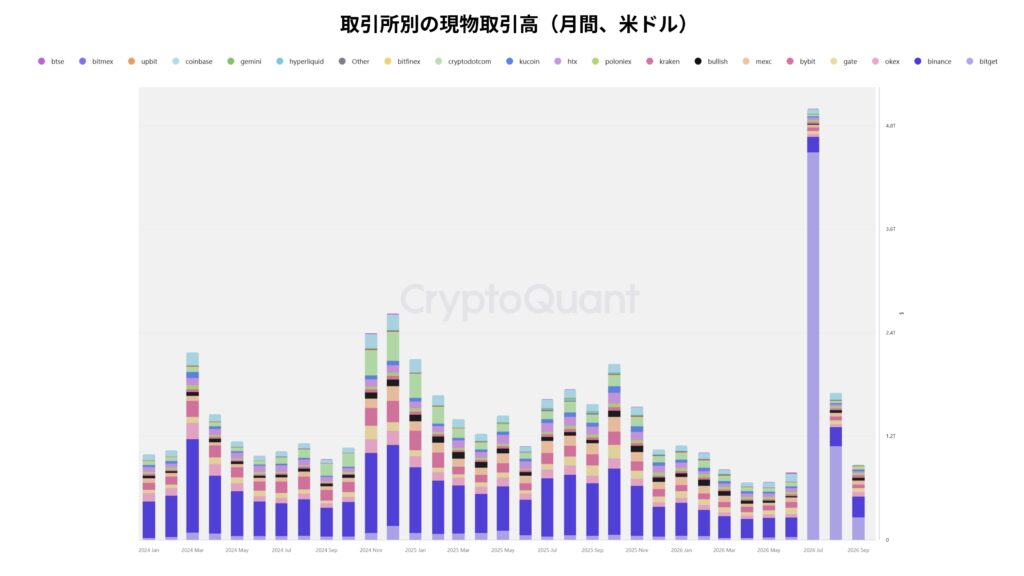
On-chain analytics provided by CryptoQuant and Kaiko illustrate a dynamic tug-of-war for spot market dominance. Binance continues to command the lion’s share of total global spot trading volume, maintaining a commanding lead over its nearest competitors. However, the concentration of liquidity has experienced notable fluctuations through 2024, 2025, and into September 2026.
Data from CoinMarketCap reveals that across the top spot exchanges, monthly trading volumes have experienced significant expansion following broader macroeconomic shifts and institutional inflows into spot Bitcoin and Ethereum exchange-traded funds (ETFs). Binance’s spot volume regularly eclipses that of its competitors, yet its percentage share of total market volume has faced localized contractions as institutional investors increasingly route their trades through regulated custody-integrated platforms like Coinbase Prime.
This trend highlights a bifurcated market: retail traders and high-frequency speculators often gravitate toward platforms offering diverse altcoin pairings and deep derivatives liquidity, whereas institutional participants prioritize regulatory certainty, robust insurance funds, and bankruptcy-remote asset segregation. Consequently, spot volume metrics alone no longer tell the whole story of an exchange’s long-term viability; instead, liquidity quality, reserve transparency, and regulatory alignment have become the primary determinants of industry leadership.
Derivatives Trading and Perpetual Futures Dominance
While spot markets are critical for price discovery and asset accumulation, the derivatives sector remains the engine of high-volume speculative trading in the cryptocurrency ecosystem. Perpetual futures, options, and leveraged instruments account for the vast majority of daily trading volume across the industry.
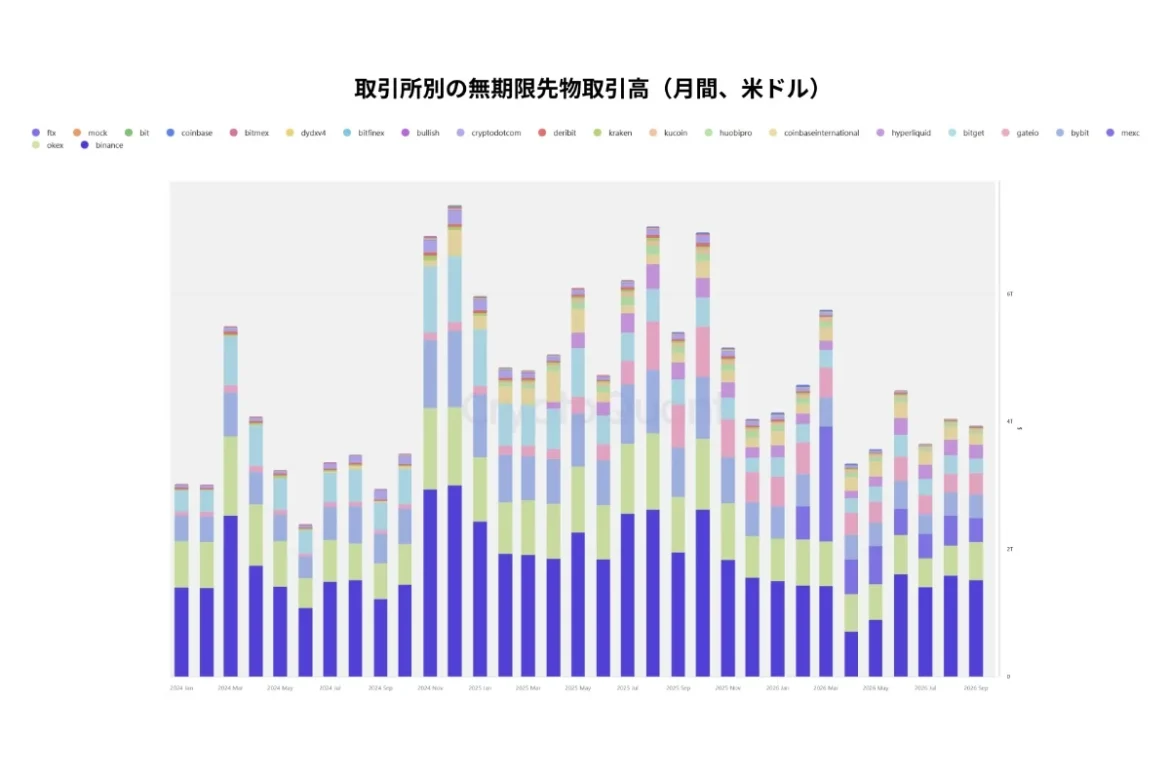
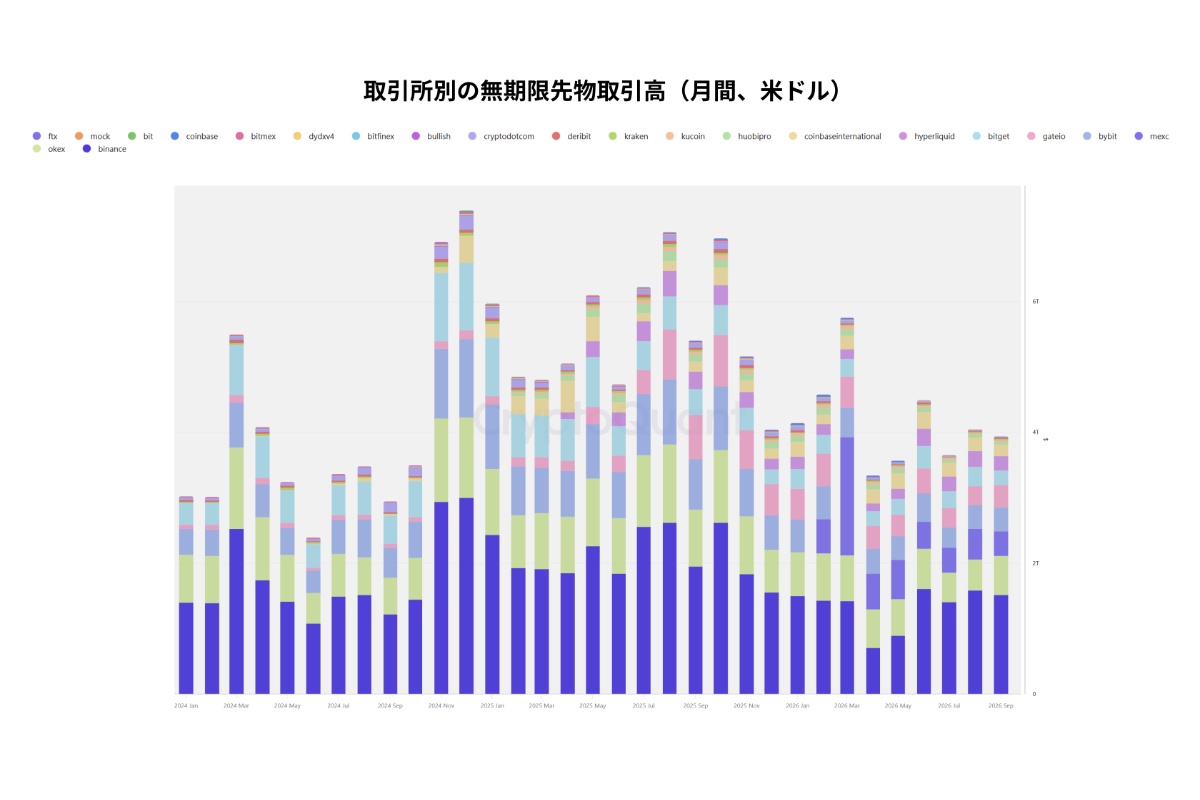
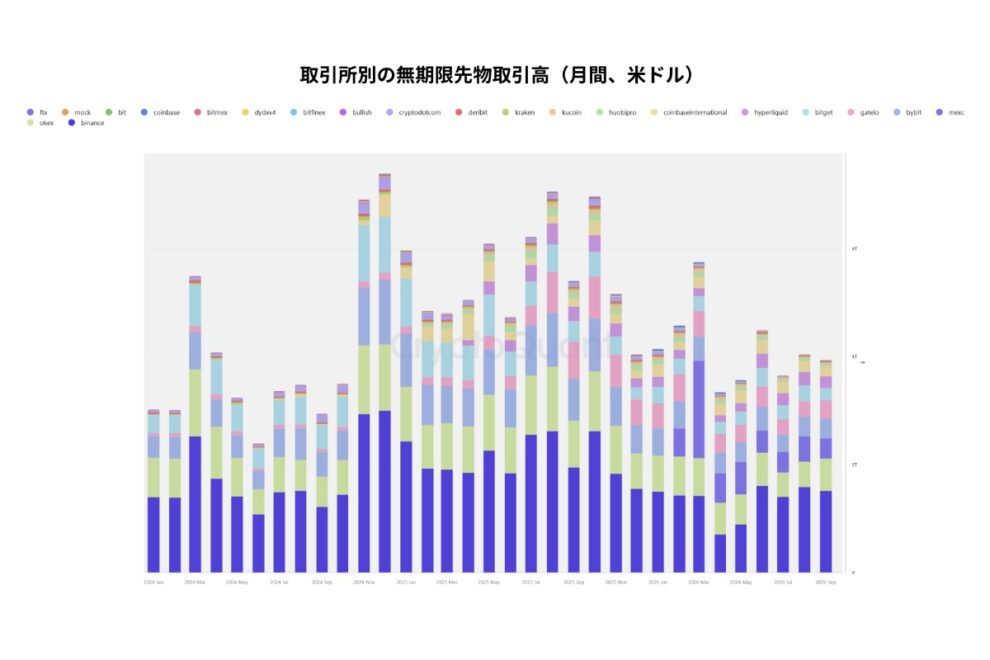
Data compiled by institutional analytics providers shows that Binance, OKX, and Bybit continue to dominate the perpetual futures landscape. Despite aggressive regulatory actions targeting offshore derivatives operations in various jurisdictions, global demand for leveraged exposure has remained resilient. Open interest figures across major derivatives exchanges have scaled new highs, reflecting increased participation from sophisticated trading desks, quantitative funds, and macro hedge funds.
However, the regulatory tightening surrounding derivatives has created distinct operational challenges. Exchanges that fail to implement robust know-your-customer (KYC) and anti-money laundering (AML) protocols face severe restrictions or outright bans in key economic zones. Platforms that have successfully integrated compliance into their derivatives offerings—such as ensuring margin requirements align with institutional risk management standards—are better positioned to capture long-term institutional capital.
Regulatory Pressures and Compliance Evolution at Binance
Binance’s journey over recent years has been characterized by a decisive pivot toward regulatory compliance. Facing intense scrutiny from global regulators, the world’s largest cryptocurrency exchange by volume has systematically restructured its operations. The platform has intensified its cooperation with law enforcement agencies, significantly expanded its compliance headcount, and implemented strict KYC and AML mandates across all supported jurisdictions.
Market intelligence from firms like Kaiko indicates that Binance’s strategic evolution has helped stabilize its market share following periods of intense regulatory turbulence. By partnering with institutional custody providers such as Anchorage Digital, Binance has sought to reassure institutional clients that their assets are managed under rigorous security frameworks. These partnerships enable institutional traders to execute large trades on Binance while keeping their underlying assets safely sequestered with qualified custodians, thereby mitigating counterparty risk.
Despite these advancements, Binance continues to navigate a complex patchwork of global regulations. While its spot and derivatives volumes remain unmatched, the exchange’s ongoing adaptation serves as a case study in the broader industry’s transition from an unregulated frontier to a mature, highly monitored financial ecosystem.
Coinbase and the Institutional Custody Advantage
Coinbase operates under a fundamentally different strategic model compared to its offshore competitors. Positioned as a regulated US entity, Coinbase emphasizes compliance, transparency, and institutional-grade security above rapid, unvetted asset listings.
Coinbase Prime and Coinbase Custody Trust Company operate under stringent regulatory supervision, holding SOC 1 Type II and SOC 2 Type II certifications. This institutional focus has made Coinbase the primary custodian for the vast majority of US-based spot Bitcoin and Ethereum ETFs. By bridging the gap between traditional finance and digital assets, Coinbase provides a secure gateway for asset managers, pension funds, and corporate treasuries.
The platform’s financial metrics reflect this institutional backing. During peak market quarters, Coinbase’s institutional volume has regularly challenged or exceeded retail-driven activity. Furthermore, Coinbase’s custody of USD Coin (USDC)—the second-largest stablecoin by market capitalization—cements its role as a foundational pillar of the digital dollar economy. While its retail trading fees are often higher than those of offshore competitors, its users are willing to pay a premium for the legal certainty and asset protection afforded by a publicly traded US company.
Comparative Analysis: Strategic Divergence and Market Outlook
The contrasting trajectories of Binance and Coinbase highlight the dual pillars upon which the modern cryptocurrency economy rests. Binance exemplifies global liquidity, high-frequency trading efficiency, and expansive product offerings, while Coinbase represents regulatory compliance, institutional trust, and secure custody infrastructure.
As regulatory frameworks continue to solidify globally, the distinction between onshore and offshore exchanges is expected to sharpen. Compliance costs are rising industry-wide, putting pressure on smaller exchanges that lack the capital to maintain robust legal and risk management departments. Conversely, tier-one exchanges with strong balance sheets and proactive regulatory strategies are well-positioned to consolidate their market share.
Ultimately, the maturation of the cryptocurrency exchange landscape benefits the broader ecosystem. Enhanced transparency, proof-of-reserves auditing, and institutional-grade custody solutions reduce systemic risk and pave the way for sustainable, long-term adoption of digital assets. Whether through the global reach of Binance or the regulated framework of Coinbase, the infrastructure of the crypto economy is rapidly evolving to meet the demands of a global financial marketplace.
