

The landscape of 3D modeling and digital content creation is undergoing a profound paradigm shift, driven by the rapid integration of artificial intelligence into traditional software pipelines. Maxon, a premier developer of professional software solutions for animators, filmmakers, and motion designers, has officially announced native support for third-party artificial intelligence assistants within Cinema 4D, its flagship 3D animation and modeling suite. By introducing a built-in Model Context Protocol (MCP) server, the company is empowering users to leverage industry-leading language models such as Anthropic’s Claude, OpenAI’s ChatGPT, and specialized coding assistants like Codex to manage complex workflows directly from their local desktop environments.
This strategic development follows a series of aggressive moves across the creative software industry to harness generative AI. Earlier in the year, tech giant Adobe integrated its proprietary AI assistant into Photoshop, transforming how digital artists interact with raster graphics through natural language prompts. Maxon’s iteration, however, takes a distinct architectural approach. Rather than developing a proprietary, closed-ecosystem chatbot, Maxon has opted for an open, flexible integration method via MCP, allowing digital artists to interface their preferred third-party intelligence directly with Cinema 4D’s native API.
The feature, rolled out in Cinema 4D 2026.4 and subsequent versions for both Windows and macOS, represents a deliberate effort to mitigate the friction of repetitive, procedural tasks without stripping control away from the human creator. As the demand for rapid prototyping and high-volume asset generation continues to surge within the media and entertainment industries, software developers are racing to find the delicate balance between automation and artistic integrity.
Understanding the Model Context Protocol in 3D Workflows
At the core of Maxon’s new AI integration is the Model Context Protocol, an open standard designed to secure and structure how external AI models interact with local software applications and databases. In the context of Cinema 4D, the MCP server acts as a secure translator and executor. When an artist issues a natural language instruction—such as requesting the organization of a chaotic imported CAD file or the generation of dozens of material variations—the third-party AI assistant interprets the command and communicates with Cinema 4D via the application programming interface.

Unlike traditional AI generation tools that produce flat, static image outputs or non-editable meshes, the MCP-driven framework operates directly within the artist’s active scene. Every command executed by the AI utilizes Cinema 4D’s native tools, meaning the resulting modifications are stored as standard scene data. This distinction is critical for professional pipelines, as it allows creators to retain complete ownership and granularity over the asset’s geometry, hierarchy, and animation curves.
Maxon’s implementation is explicitly tailored to absorb the administrative and structural overhead that typically bogs down large-scale 3D projects. Among the routine tasks identified by Maxon as prime candidates for AI automation are:
- Scene Organization and Hierarchy Management: Sorting massive batches of imported assets into structured, logical directory trees and naming conventions.
- Material and Object Variations: Rapidly generating multi-item permutations based on data sets, such as populating an architectural visualization using parameters imported from CSV files.
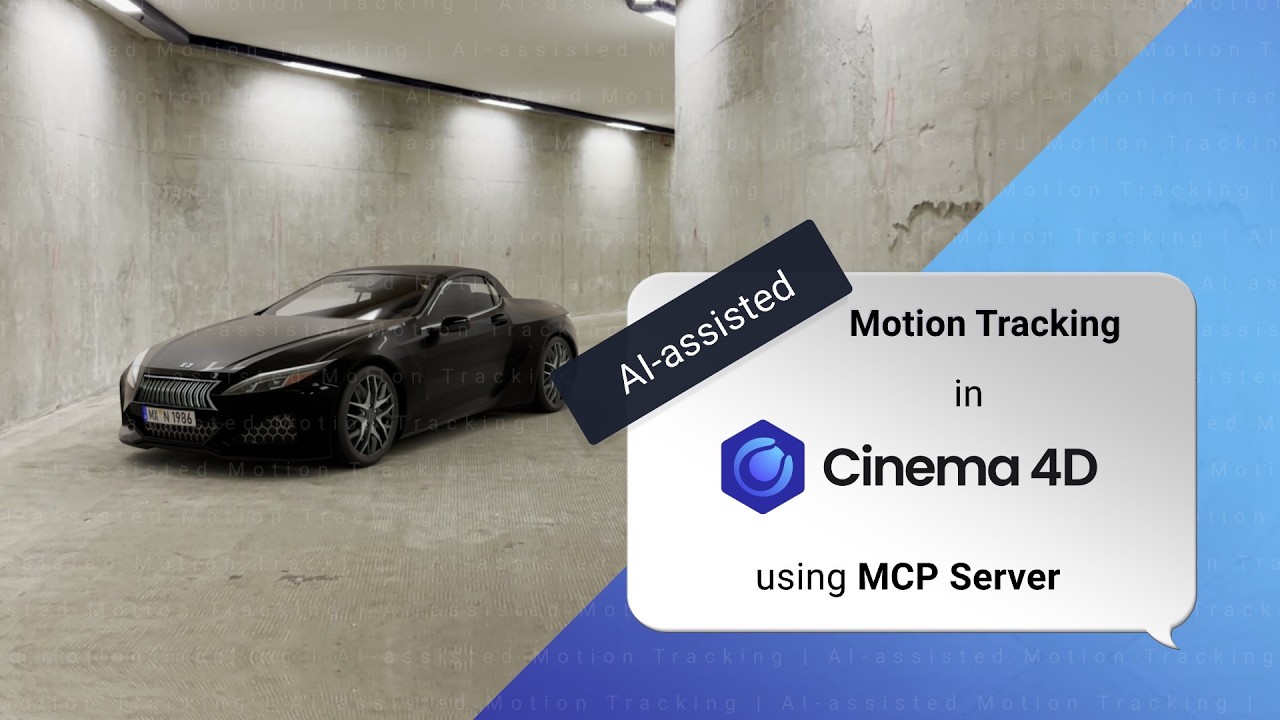
- Pipeline Preparation: Automating the setup of complex multipass render settings, basic UV mapping assignments, and initial 3D camera tracking tracks.
- Rigging and Animation Foundations: Establishing preliminary skeletal hierarchies and basic kinematic setups before manual weight painting and keyframing take place.
Demonstration materials released alongside the update highlight practical applications, including automated motion-tracking pipelines and the batch generation of render queue jobs linked to external spreadsheet data. These capabilities aim to reduce the time spent on technical execution, allowing artists to redirect their cognitive energy toward high-level artistic direction and aesthetic refinement.
Security, Privacy, and Creative Control
The integration of cloud-connected artificial intelligence into professional software environments frequently raises legitimate concerns regarding data privacy, intellectual property protection, and creative autonomy. Recognizing these industry sensitivities, Maxon has built the Cinema 4D MCP server with stringent local safeguards designed to keep artists firmly in control of their proprietary assets.
Crucially, the MCP server is disabled by default upon installation. Users must consciously choose to enable the functionality, ensuring that no external AI model can interface with local projects inadvertently. Furthermore, the connection is guarded by a secure MCP adapter access token. Artists retain granular permission controls, dictating precisely which groups of Cinema 4D tools and system functionalities their chosen assistant is permitted to access and manipulate.
To address accountability and error recovery, Maxon has engineered the system to integrate seamlessly with Cinema 4D’s native undo architecture. Every batch of changes driven by an MCP command is distinctly broken down within the user’s undo history, enabling creators to step backward through modifications or completely revert automated actions with a single keystroke. Additionally, all commands issued by the AI assistant are systematically recorded in a local audit log, providing complete transparency into the automated steps taken during a session.
This local execution model ensures that proprietary studio assets are not indiscriminately vacuumed into third-party training datasets, addressing one of the most contentious issues currently facing commercial design agencies and visual effects houses.
The Broader AI Strategy and Ecosystem Expansion
Maxon’s embrace of external artificial intelligence tools is part of a broader, multi-pronged technological roadmap. This approach was previewed earlier when the company announced the forthcoming release of Cinema 4D for iPad, which includes native integration with Tencent’s HY 3D AI engine for rapid 3D model generation. By combining cloud-based generative model integration on mobile hardware with desktop-class local automation via MCP, Maxon is positioning its ecosystem to adapt to diverse institutional workflows.
The commercial landscape for 3D digital content creation software has become fiercely competitive. Studios are under constant pressure to deliver higher fidelity content in shorter production windows. Software suites like Blender, Autodesk Maya, SideFX Houdini, and Maxon’s Cinema 4D are perpetually evaluating how artificial intelligence can be folded into their respective architectures without alienating professional users who rely on precise, deterministic outcomes.
By avoiding the creation of a proprietary, walled-garden AI assistant, Maxon is betting that its user base prefers flexibility. Artists are not locked into a single language model or billing tier dictated by the software vendor; instead, they can plug in the specific LLM that best suits their personal preference or studio infrastructure, whether that is OpenAI’s ecosystem, Anthropic’s constitutional AI models, or specialized developer coding tools.
Industry Implications and Future Outlook
The launch of native MCP support in Cinema 4D 2026.4 marks a significant milestone in the maturation of AI-assisted professional software. As creative suites evolve from passive tools into active collaborators, the skill set required of digital artists is shifting. Technical proficiency in manual menu navigation and repetitive pipeline setup is gradually being supplanted by skills in prompt engineering, workflow orchestration, and systemic technical direction.
Industry analysts note that while tools like the Cinema 4D MCP server drastically lower the barrier to entry for complex technical tasks, their primary value proposition lies in efficiency for senior professionals. By offloading the tedious geometry grouping, file renaming, and data-driven scene population to an AI chatbot via natural language, veteran motion designers can drastically compress turnaround times on commercial projects.
As the software rolls out across Windows and macOS platforms—with the dedicated Cinema 4D iPad application expected to launch before the conclusion of the year—industry observers will be watching closely to see how studio pipelines adapt. The success of Maxon’s open-protocol approach may well establish a new industry standard for how professional creative applications interface with the rapidly expanding universe of generative artificial intelligence, proving that automation and creative autonomy can successfully coexist within the same workspace.


