
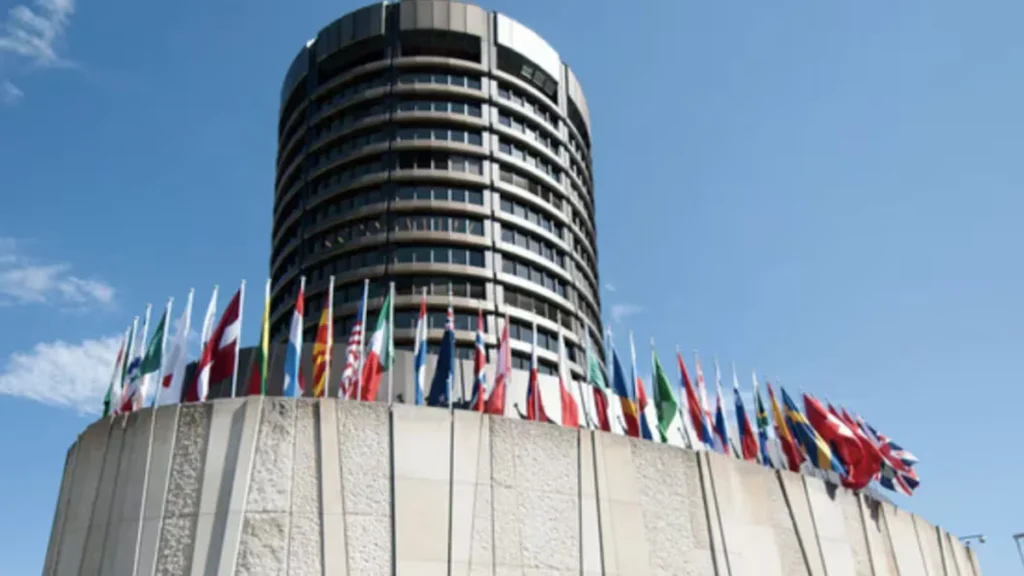
The Bank for International Settlements (BIS) has released a comprehensive research report detailing how dollar-pegged stablecoins are increasingly utilized in emerging market economies to circumvent national capital controls, effectively creating a new era of "digital dollarization." According to the findings, these digital assets allow residents in countries with restrictive financial regulations to access the U.S. dollar, bypassing traditional banking systems and the oversight of local regulatory authorities. The report underscores a growing concern among global financial architects: the traditional tools used to manage national economies—such as foreign exchange (FX) restrictions and capital flow management—are proving significantly less effective against the decentralized nature of blockchain-based stablecoins.
The Rise of Digital Dollarization in Emerging Markets
The phenomenon of "dollarization" is not new. For decades, citizens in countries experiencing high inflation or political instability have sought refuge in the U.S. dollar. Traditionally, this involved holding physical cash or opening foreign currency bank accounts. However, the BIS highlights that the advent of stablecoins—cryptocurrencies designed to maintain a 1:1 peg with the dollar—has revolutionized this practice. By converting local fiat currency into assets like Tether (USDT) or USD Coin (USDC), users can hold and transfer value across borders with a level of ease that traditional systems do not permit.
The BIS research, which analyzed data from over 130 countries, indicates that while traditional foreign currency deposits are subject to stringent capital controls and reporting requirements, stablecoin inflows remain largely unresponsive to these measures. In many emerging markets, governments impose limits on how much foreign currency an individual can purchase or transfer abroad to prevent capital flight and protect the value of the local currency. Stablecoins, operating on public blockchains, exist outside this traditional "regulatory perimeter," allowing capital to flow out of a country even during periods of heavy restriction.
Comparative Analysis: Traditional Deposits vs. Stablecoins
A key finding of the BIS study is the divergence in behavior between traditional bank-based foreign currency deposits and stablecoin holdings. Under normal economic conditions, both tend to follow similar trends; however, during periods of macroeconomic stress or heightened volatility, the differences become stark.
- Response to Capital Controls: In countries with strict capital controls, traditional foreign currency deposits are often capped or heavily taxed. The BIS found that these regulations effectively dampen the growth of traditional dollar holdings. In contrast, stablecoin adoption in these same regions often continues unabated or even accelerates, as users leverage peer-to-peer (P2P) platforms and decentralized exchanges (DEXs) to bypass official channels.
- Sensitivity to Interest Rates: Traditional deposits are highly sensitive to interest rate differentials between the local currency and the U.S. dollar. Stablecoins, while influenced by the broader crypto market, are often driven more by the need for a stable "store of value" and "medium of exchange" in environments where the local currency is failing.
- Liquidity and Accessibility: Unlike bank accounts, which require formal identification and may be subject to government freezes, stablecoins can be held in non-custodial wallets. This provides a level of financial autonomy that is particularly attractive in jurisdictions with weak property rights or unstable legal frameworks.
Market Dominance and the $160 Billion Milestone
The global stablecoin market has seen explosive growth over the last several years. According to current market data, the total market capitalization of stablecoins has reached approximately $160 billion, a significant increase from previous years. The BIS report notes that two major players, Tether (USDT) and USD Coin (USDC), account for more than 80% of this total market share.
Tether, in particular, has become a staple in emerging markets. Its high liquidity and widespread acceptance on various exchange platforms make it the preferred vehicle for digital dollarization. While USDC is often viewed as more transparent and "regulated" due to its U.S.-based issuer (Circle), USDT remains the dominant force in international trade and P2P transfers within the developing world. The BIS points out that the sheer scale of these assets means that they are no longer just a niche interest for crypto enthusiasts but have become systemically relevant to the global financial system.
Chronology of the Stablecoin Evolution
To understand the current state of digital dollarization, it is necessary to look at the timeline of stablecoin development and its intersection with global policy:
- 2014-2017: The Genesis Period. Tether (USDT) is launched, providing a way for traders to stay "in the market" without having to off-ramp into fiat currency. Usage is largely confined to crypto-to-crypto trading.
- 2018-2020: Diversification and Institutional Interest. The launch of USDC and other regulated stablecoins brings a veneer of legitimacy to the sector. Institutional investors begin using stablecoins for settlement.
- 2021-2022: The Emerging Market Surge. Amidst the COVID-19 pandemic and subsequent global inflation, citizens in Turkey, Argentina, and Nigeria turn to stablecoins in record numbers to protect their savings from devaluing local currencies.
- 2023: Regulatory Reckoning. Following the collapse of the Terra/Luna algorithmic stablecoin in 2022, global regulators (including the FSB and BIS) begin drafting rigorous frameworks for "Fiat-Backed Stablecoins."
- 2024: The BIS Report. The BIS confirms that stablecoins are actively undermining sovereign capital controls, signaling a shift in focus from "investor protection" to "monetary sovereignty."
Macroeconomic Implications and Financial Stability
The ability of citizens to easily opt out of a local currency poses a significant threat to a central bank’s ability to conduct monetary policy. When a large portion of a country’s wealth is held in digital dollars, the central bank loses its "seigniorage"—the profit made from issuing currency—and its ability to influence the economy through interest rate adjustments is diminished.
Furthermore, the BIS warns of the "contagion risk." If a major stablecoin issuer were to face a run or a failure in its reserve management, the impact would not be limited to the crypto markets. In a highly dollarized digital economy, a stablecoin de-pegging event could lead to a sudden and catastrophic loss of purchasing power for millions of people in emerging markets, potentially triggering social unrest or broader financial crises.
Official Responses and the Path Forward
The BIS report suggests that policy authorities are at a crossroads. Traditional enforcement mechanisms, such as auditing banks and monitoring wire transfers, are insufficient for a tokenized financial system. Several potential responses are being discussed among international finance ministers and central bank governors:
- Enhanced Monitoring of P2P Platforms: Regulators may look to impose stricter Know Your Customer (KYC) and Anti-Money Laundering (AML) requirements on the "on-ramps" and "off-ramps" where fiat is converted to stablecoins.
- Central Bank Digital Currencies (CBDCs): Some nations are accelerating the development of their own CBDCs to provide a regulated, digital alternative to private stablecoins. The goal is to offer the benefits of digital payments while retaining sovereign control over the monetary system.
- International Cooperation: Since stablecoins are inherently borderless, the BIS emphasizes that no single country can regulate them effectively in isolation. Harmonized global standards are required to prevent "regulatory arbitrage," where issuers set up shop in jurisdictions with the most lenient rules.
Analysis of Long-term Impacts
The BIS findings represent a watershed moment in the relationship between decentralized finance and the state. For decades, capital controls were the "last line of defense" for fragile economies. If stablecoins have rendered these defenses obsolete, the very nature of the nation-state’s control over its economy must be re-evaluated.
From a humanitarian perspective, digital dollarization provides a lifeline for individuals living under regimes with failed economic policies. It offers a way to preserve the fruits of their labor when the local currency becomes worthless. However, from a systemic perspective, the "unregulated" nature of this outflow can drain a country of the foreign reserves it needs to pay for essential imports like fuel and medicine, potentially worsening the very economic crises that drove people to stablecoins in the first place.
As the market cap of these assets continues to climb toward $200 billion and beyond, the pressure on the G20 and other international bodies to implement a "Global Stablecoin Framework" will only intensify. The BIS report serves as a stark reminder that the digital and physical financial worlds are no longer separate; they are now inextricably linked, with the stability of one increasingly dependent on the regulation of the other. The challenge for the coming decade will be finding a balance between the innovative potential of blockchain technology and the fundamental need for sovereign monetary stability.
