
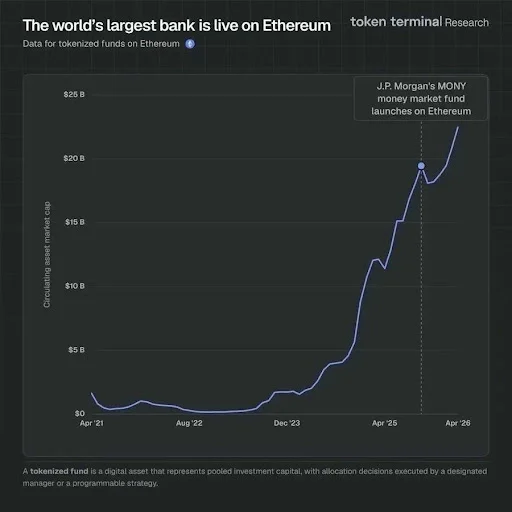
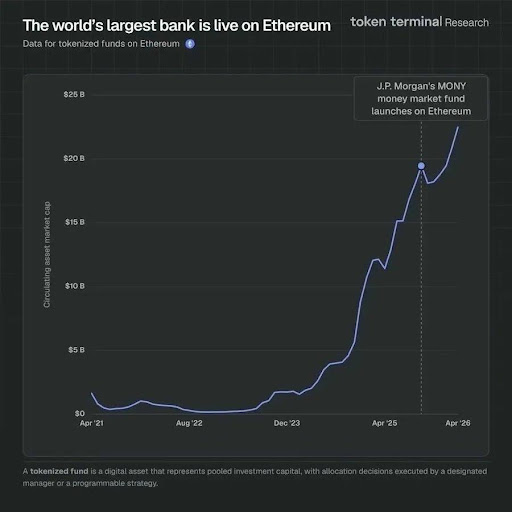
Ethereum is rapidly emerging as the undisputed leader in the burgeoning race to tokenize real-world assets (RWAs), with tens of billions of dollars already migrating onto its robust network. This transformative shift encompasses a wide array of traditional financial instruments, from tokenized bonds and institutional funds to real estate and government treasuries, firmly establishing Ethereum as the preferred infrastructure for institutions seeking to bridge the gap between conventional finance and blockchain technology. The network’s proven security, extensive developer ecosystem, and established liquidity have positioned it as the cornerstone for the next generation of financial markets.
The Accelerating Influx of Institutional Capital
The momentum behind Ethereum’s ascendancy in RWA tokenization is undeniable, driven by a confluence of technological advancements and increasing institutional confidence. According to recent analyses, Ethereum has swiftly become the dominant layer for tokenized treasury products, accounting for over $22.5 billion in fund assets already on-chain. This figure represents a commanding 71.9% of the total market share across all blockchain networks, underscoring Ethereum’s unparalleled traction in this critical sector. The Etherealize, a prominent blockchain analytics platform, highlighted this significant milestone in a recent post, emphasizing the network’s pivotal role in redefining asset management.
This institutional embrace is spearheaded by global financial behemoths. JPMorgan Chase, a titan in the banking industry, notably launched its MONY market fund on the Ethereum network in early 2026. This move signaled a significant validation of Ethereum’s capabilities for institutional-grade products. JPMorgan’s initiative joins an expanding roster of established offerings, including BlackRock’s groundbreaking BUIDL fund and Franklin Templeton’s pioneering on-chain money fund. These are not merely experimental ventures but sophisticated treasury management products designed for high-value operations. They cater specifically to autonomous agents and institutional entities with idle capital, providing them with secure, efficient, and permissionless access to a system that bypasses traditional brokerage accounts. This direct access significantly reduces friction and enhances operational efficiency, critical factors for large-scale financial operations.
Ethereum as the Viable Financial Layer for Autonomous Capital

The evolution of Ethereum into a viable financial layer for autonomous agents managing substantial capital is a testament to its inherent strengths. The Etherealize further elaborated on the specific needs of such entities, citing the example of an autonomous agent with a $500,000 treasury. Such an agent requires a stable money market fund characterized by predictable yields, deep liquidity, minimal smart contract risk, and crucially, the absence of a centralized counterparty capable of freezing or seizing assets. It is within these stringent criteria that the Ethereum DeFi ecosystem truly distinguishes itself.
While the broader cryptocurrency landscape has, at times, been associated with volatility and security incidents, the core applications within the Ethereum ecosystem have demonstrated remarkable resilience. Although hacks and losses occasionally occur, they are increasingly rare and predominantly concentrated at the more speculative fringes of the ecosystem. A stable core of applications has proven robust through multiple stress events and market cycles, a track record that other emerging chains have yet to replicate. This growing stability is quantitatively reflected in the declining share of DeFi losses relative to the total value locked (TVL) on the Ethereum mainnet, indicating a maturation of the network’s security posture and the reliability of its foundational protocols.
The Maturation of Institutional DeFi: Beyond Experimentation
The tokenization of finance is poised for a defining moment, one whose full impact on global markets may only be appreciated in hindsight. This transition is being catalyzed by major traditional finance players, moving institutional decentralized finance (DeFi) far beyond mere experimentation into practical, large-scale implementation. Marc Baumann, the Founder of fiftyonexyz, highlighted several pivotal developments illustrating this shift.
Broadridge Financial Solutions, a global fintech leader, has already processed an astounding $8 trillion per month in tokenized repo settlements. This colossal volume underscores the operational efficiency and reliability of blockchain technology for core financial functions. More recently, Broadridge has taken an even more critical step, moving beyond mere settlement by enabling real on-chain governance for tokenized equity. This development signifies a profound evolution, allowing shareholder voting and corporate actions to be executed directly on the blockchain, introducing unprecedented transparency and efficiency to corporate governance.
Concurrently, Galaxy Digital, a prominent financial services and investment management firm in the digital asset sector, is serving as the staking provider for BlackRock’s ETHB staked Ethereum ETF. This strategic partnership directly links institutional capital to the underlying blockchain infrastructure, enabling investors to gain exposure to Ethereum’s native yield generation mechanisms through a regulated, traditional investment vehicle. Together, these firms are not just building but actively implementing the foundational elements for the first on-chain shareholder vote for tokenized equity, a landmark achievement in the convergence of TradFi and blockchain.

Baumann further emphasized the scale of this disruption, noting that the traditional proxy voting market is estimated at a staggering $200 billion. He urged traditional players—custodians, transfer agents, and proxy solicitors—to pay close attention, as the infrastructure for a new financial layer of institutional DeFi is being meticulously constructed by the very firms that already form the backbone of Wall Street. This transformation is not primarily emerging from nascent, crypto-native startups but is being driven by established companies that process everything from 401(K)s to global repo transactions, lending it unparalleled legitimacy and scale.
Broader Context: The Trillion-Dollar Opportunity of RWA Tokenization
The move towards RWA tokenization is not merely a niche application of blockchain but represents a paradigm shift with multi-trillion-dollar potential. Leading financial institutions and consulting firms have issued bullish projections for this sector. Boston Consulting Group (BCG) and ADDX, for instance, predict that the market for tokenized illiquid assets alone could reach $16 trillion by 2030. Similarly, Citi, another global banking giant, projects that tokenization could unlock $4-5 trillion in value by 2030 across various use cases. These forecasts provide a crucial backdrop to the current developments on Ethereum, indicating that the $22.5 billion already flowing onto the network is just the beginning of a much larger trend.
The appeal of RWA tokenization stems from its ability to address several inefficiencies inherent in traditional financial systems. By representing assets on a blockchain, tokenization enables:
- Fractional Ownership: Making high-value assets like real estate or fine art accessible to a broader range of investors.
- Increased Liquidity: Facilitating 24/7 trading and faster settlement times, dramatically reducing the friction and delays associated with traditional asset transfers.
- Enhanced Transparency: Providing an immutable and auditable record of ownership and transactions.
- Reduced Intermediaries: Streamlining processes by removing multiple layers of brokers, custodians, and clearing houses, thereby lowering costs and improving efficiency.
- Global Accessibility: Enabling seamless cross-border transactions and investment opportunities.
The Ethereum Advantage: Security, Composability, and Ecosystem
Ethereum’s dominance in RWA tokenization is not accidental but a result of its architectural advantages and the robust ecosystem it has cultivated over nearly a decade.
- Security: Following its transition to Proof-of-Stake (PoS) with The Merge, Ethereum has significantly enhanced its energy efficiency and security model. The vast network of validators and the economic finality provided by its consensus mechanism offer a level of security that is paramount for institutional capital.
- Composability: Ethereum’s open-source nature and smart contract capabilities allow for the seamless integration and interaction of various DeFi protocols. This "money Lego" effect enables institutions to build complex financial products and services that leverage existing liquidity and functionality, such as automated treasury management or collateralized lending against tokenized assets.
- Developer Ecosystem: Ethereum boasts the largest and most active developer community in the blockchain space. This vibrant ecosystem continually innovates, developing new tools, protocols, and standards (like ERC-20 for fungible tokens and ERC-721/ERC-1155 for non-fungible tokens) that are essential for the diverse applications of RWA tokenization.
- Network Effect and Liquidity: As the most established smart contract platform, Ethereum benefits from a powerful network effect. Its deep liquidity pools across various decentralized exchanges (DEXs) and lending protocols provide unparalleled market depth for tokenized assets, a critical factor for institutional participants.
Challenges and the Path Forward
Despite the rapid progress, the full realization of RWA tokenization on Ethereum faces several challenges that require ongoing attention.
- Regulatory Clarity: The lack of harmonized global regulatory frameworks for digital assets, particularly tokenized securities, remains a significant hurdle. Institutions require clear legal guidelines regarding ownership, custody, and trading of these assets to ensure compliance and mitigate legal risks.
- Interoperability: While Ethereum leads, the broader blockchain landscape is fragmented. Achieving seamless interoperability between different blockchains and traditional financial systems is crucial for scaling RWA tokenization across diverse assets and markets.
- Scalability: While Ethereum’s Layer 2 solutions (e.g., Optimism, Arbitrum, zkSync) are significantly enhancing its transaction throughput and reducing gas fees, continued innovation in scaling is necessary to accommodate the immense volume of transactions anticipated with widespread institutional RWA adoption.
- Oracle Reliability: Accurate and reliable real-world data feeds (oracles) are essential for many RWA tokenization applications, particularly those involving dynamic pricing or external events. Ensuring the integrity and decentralization of these oracles is vital.
Conclusion: A New Era of Finance Defined by Ethereum
The current trajectory indicates that Ethereum is not just participating in the evolution of finance but is actively defining its future. The significant institutional capital already committed, coupled with the ongoing development of sophisticated on-chain governance and asset management solutions, paints a clear picture: Ethereum is becoming the default settlement layer for a new, digitally native financial system. The convergence of traditional finance with Ethereum’s permissionless, programmable infrastructure promises to unlock unprecedented efficiency, liquidity, and accessibility across global markets. As firms like Broadridge and Galaxy Digital, deeply embedded in the fabric of Wall Street, continue to build and deploy solutions on Ethereum, the transition from an experimental phase to a mainstream financial paradigm is well underway, setting the stage for a truly transformative era in asset management and capital markets.