
The landscape of organizational management is undergoing a fundamental shift as the concept of the Decentralized Autonomous Organization, or DAO, moves from the fringes of blockchain development into the center of global economic discourse. Representing the organizational pillar of the Web3 movement, a DAO is defined as a group that operates without a central governing body, instead relying on smart contracts and blockchain technology to enforce rules and execute decisions. This model challenges centuries of corporate tradition, which has historically relied on top-down hierarchies, centralized boardrooms, and opaque decision-making processes. As digital ecosystems become increasingly complex, the DAO offers a blueprint for collective action that is transparent, borderless, and programmatically fair.
Understanding the Conceptual Framework of Decentralized Governance
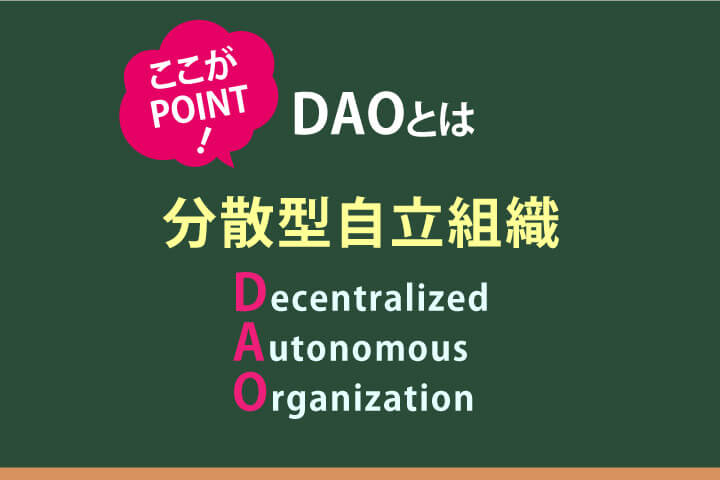
To grasp the significance of a DAO, one must dissect its three constituent components: decentralization, autonomy, and organization. Decentralization refers to the distribution of authority away from a single individual or small executive committee. In a traditional corporation, a CEO or a board of directors holds the ultimate power to dictate the company’s direction. In contrast, a DAO distributes this power among its members, typically through the ownership of governance tokens. This ensures that no single point of failure—or single point of corruption—can jeopardize the entire entity.
The element of autonomy is facilitated by smart contracts—self-executing pieces of code hosted on a blockchain, most commonly Ethereum. These contracts are pre-programmed with the organization’s rules. When certain conditions are met, the code executes automatically without the need for human intervention or a third-party intermediary. For instance, if a DAO votes to release funds for a specific project, the smart contract can be programmed to transfer those funds the moment the vote passes, bypassing the delays and potential vetoes inherent in traditional banking and corporate approvals.

Finally, the organization aspect represents the human element: a group of individuals united by a common mission. Whether the goal is to develop a decentralized finance (DeFi) protocol, manage an NFT collection, or coordinate environmental conservation efforts, the DAO provides the social and technical infrastructure for these individuals to collaborate globally without ever having to meet in person or trust one another in the traditional sense.
A Chronology of DAO Development: From Bitcoin to the Modern Era
The history of DAOs is inextricably linked to the history of blockchain itself. While the term "DAO" gained popularity with the rise of Ethereum, the first true example of a decentralized autonomous organization was Bitcoin, launched in 2009. Bitcoin operates on a set of rules defined by its protocol; it has no headquarters, no employees, and no CEO, yet it manages a multi-billion dollar network through the decentralized efforts of miners and node operators who are incentivized to follow the rules of the code.

The concept evolved significantly in 2014 when Vitalik Buterin, the co-founder of Ethereum, expanded on the idea of "Decentralized Autonomous Corporations" in the Ethereum Whitepaper. This paved the way for the creation of "The DAO" in 2016, an ambitious venture capital fund built on the Ethereum blockchain. The DAO raised approximately $150 million in Ether, making it the largest crowdfunding project at the time. However, its history serves as a cautionary tale; a vulnerability in its smart contract was exploited, leading to a theft of $50 million and a subsequent hard fork of the Ethereum network.
Despite this early setback, the period between 2020 and 2022, often referred to as "DeFi Summer" and the "NFT Boom," saw a massive resurgence in DAO structures. Projects like Uniswap, Compound, and MakerDAO proved that decentralized governance could manage billions of dollars in assets. Today, the ecosystem has matured to include "Social DAOs," "Investment DAOs," and even "Philanthropy DAOs," each refining the tools used for collective decision-making.
The Three Pillars of DAO Superiority: Decentralization, Transparency, and Incentivization
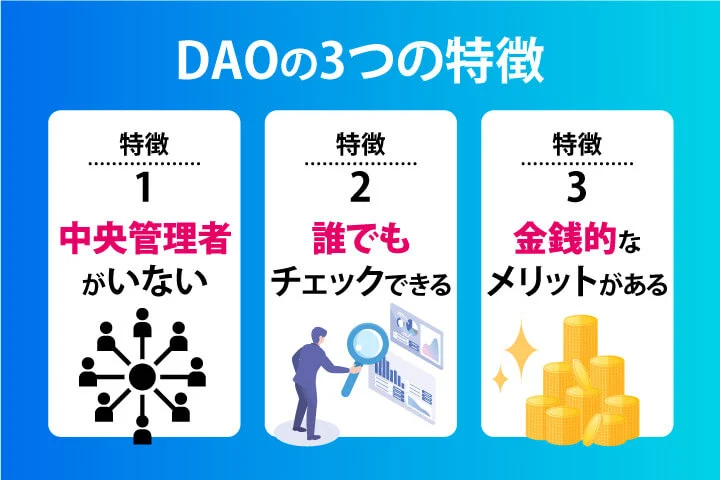
The primary appeal of the DAO model lies in its ability to address the "Principal-Agent Problem," a dilemma in traditional economics where the agents (managers) act in their own interests rather than the interests of the principals (shareholders). DAOs solve this through three core characteristics.
First is the absence of a central administrator. By distributing governance power through tokens, the DAO ensures that those who have "skin in the game" are the ones making the decisions. This prevents the concentration of power that often leads to systemic corruption or mismanagement in centralized institutions.
Second is the unprecedented level of transparency and trust. Every transaction, every vote, and every movement of funds within a DAO is recorded on a public ledger. In a traditional firm, an employee or shareholder might never know how the company’s treasury is truly being spent. In a DAO, anyone can audit the organization’s finances in real-time. This radical transparency builds a level of trust that is impossible to achieve in "black box" corporate environments.
Third is the implementation of economic incentives, often referred to as "Tokenomics." DAOs reward contributors with tokens that represent a stake in the organization’s future. If the organization succeeds, the value of the token increases, directly benefiting the contributors. This aligns the motivations of every participant, from the lead developer to the community moderator, ensuring that everyone is working toward the same goal. Unlike traditional employment, where a fixed salary may not reflect the company’s overall success, DAO participation offers a direct correlation between contribution and reward.

Current Market Data and the Expanding DAO Ecosystem
The scale of the DAO movement is reflected in contemporary data. According to DeepDAO, a leading analytics platform for the industry, the total value locked (TVL) in DAO treasuries has fluctuated between $10 billion and $25 billion over the past year, depending on market conditions. As of late 2023, there are over 10,000 active DAOs managing assets ranging from small community funds to multi-billion dollar protocols.
Furthermore, the "voter participation" metric highlights a growing engagement in decentralized governance. While traditional shareholder meetings often suffer from low turnout, major DAOs frequently see thousands of unique wallet addresses participating in key votes. This high level of engagement is supported by a "governance stack" of tools including Snapshot for off-chain voting, Tally for on-chain execution, and Discord for community discussion.

Challenges to Widespread Adoption: Legal and Operational Hurdles
Despite their potential, DAOs face significant challenges that prevent them from replacing traditional corporations entirely. The most pressing issue is the lack of a clear legal and regulatory framework. In most jurisdictions, a DAO has no legal personality. This means it cannot easily enter into contracts, own physical property, or be held liable in a court of law. This legal "gray area" poses a risk to participants, who may be found personally liable for the actions of the organization.
However, some progress is being made. The U.S. state of Wyoming was a pioneer in passing legislation that allows DAOs to be recognized as Limited Liability Companies (LLCs). Similarly, the Marshall Islands has moved to recognize DAOs as legal entities. In Japan, the government has begun exploring the "DAO Act" to provide a legal structure for decentralized organizations, recognizing their potential to revitalize local economies and promote innovation.

Operational efficiency is another major drawback. Centralized organizations are fast; a CEO can make a decision in seconds. In a DAO, every major decision must go through a proposal process, a discussion period, and a voting phase. This "slow governance" can be a disadvantage in fast-moving markets or in times of crisis. Furthermore, the "tragedy of the commons" can lead to voter apathy, where a small number of "whales" (large token holders) end up dominating the vote, leading to a new form of centralization.
Broader Impact and the Future of Work
The rise of the DAO represents more than just a new way to manage money; it represents a new way to work. We are entering an era of "Liquid Employment," where individuals do not work for a single company for 40 years, but instead contribute to multiple DAOs simultaneously based on their skills and interests. This shift empowers the global workforce, allowing a developer in Vietnam to contribute to a Silicon Valley-based DAO as an equal peer.

As the technology matures and legal frameworks catch up, we can expect to see DAOs move into traditional sectors. We may see decentralized insurance cooperatives, community-owned utility companies, and global research consortia that operate entirely on-chain. The transition from Web 2.0 to Web 3.0 is not just about changing the technology we use to browse the internet; it is about changing the structures we use to organize society.
In conclusion, while the Decentralized Autonomous Organization is still in its nascent stages, its core principles of decentralization, transparency, and aligned incentives offer a compelling alternative to the centralized models of the past. As we move forward, the challenge will be to balance the ideals of decentralization with the practical needs of efficiency and legal compliance. The organizations that succeed in finding this balance will likely be the ones that define the economic landscape of the next century. The next phase of this digital evolution will be the integration of these organizations with Decentralized Finance (DeFi), a topic that promises to further disrupt the global financial infrastructure.