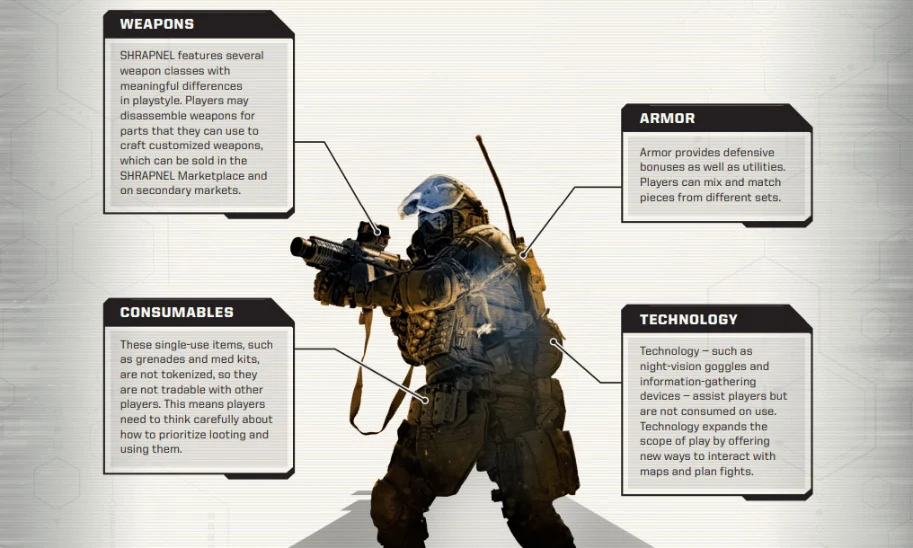
The blockchain gaming sector is witnessing a significant shift from speculative "play-to-earn" models toward high-fidelity, "play-and-own" experiences, with the upcoming title Shrapnel emerging as a primary catalyst for this evolution. Developed by Neon Machine, a studio comprised of industry veterans with pedigrees from HBO, Electronic Arts, and Xbox, Shrapnel is positioned as the world’s first moddable AAA extraction shooter built on blockchain technology. By combining the graphical prowess of Unreal Engine 5 with a sophisticated decentralized economy, the project aims to attract traditional first-person shooter (FPS) enthusiasts while providing a robust framework for digital asset ownership and user-generated content (UGC).
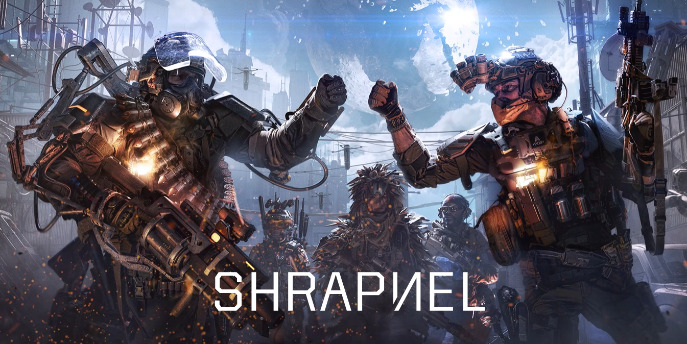
The Core Gameplay Experience: High-Stakes Extraction
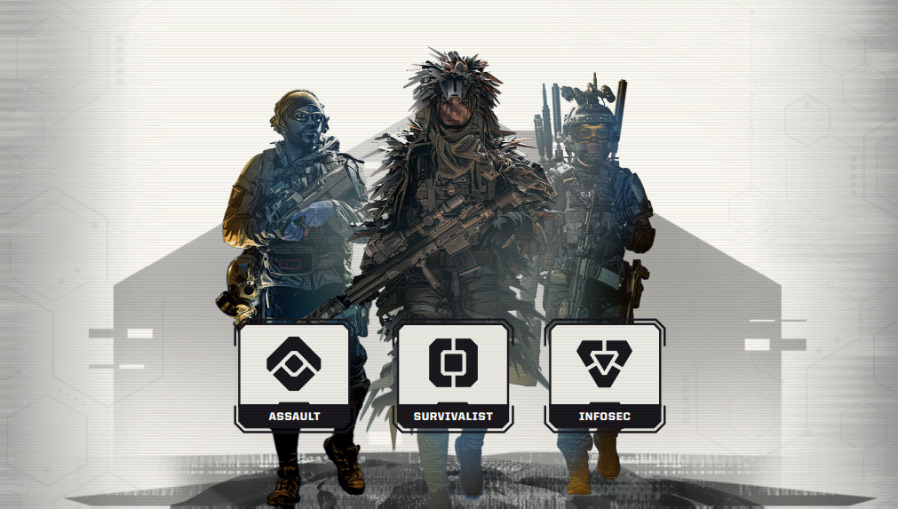
At its architectural core, Shrapnel is an extraction shooter, a sub-genre popularized by titles such as Escape from Tarkov and Hunt: Showdown. In Shrapnel, players take on the role of "Operators" deployed into a high-risk environment known as "The Zone." The primary objective is to locate and secure valuable resources, specifically "Sigma" fragments, and navigate to an extraction point before being eliminated by rival players or environmental hazards.
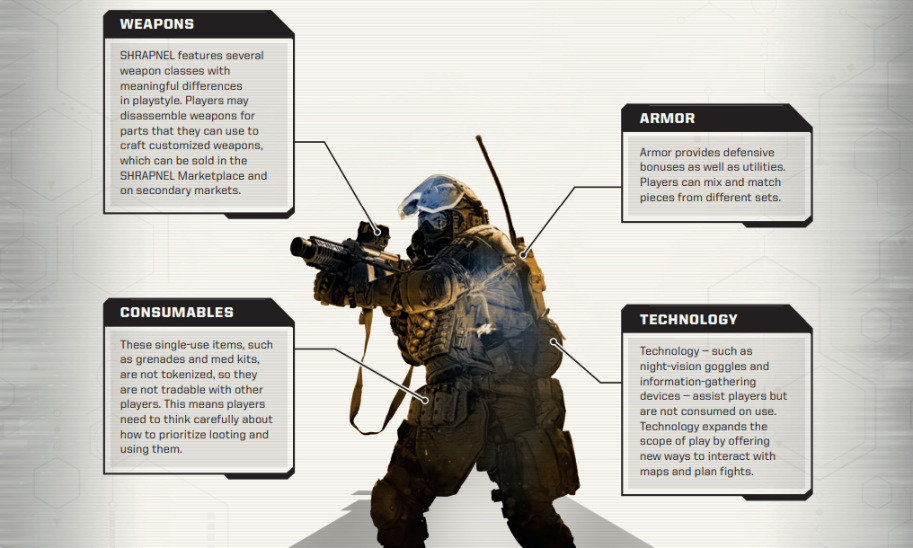
The game’s tension is derived from its "permadeath" loot mechanics. When players enter a match equipped with non-fungible token (NFT) gear, they face the genuine risk of losing those assets upon death. Conversely, successful players who defeat opponents can loot their equipment, creating a high-stakes competitive loop that gives tangible value to every tactical decision. To mitigate the barrier to entry for new players, the developers have confirmed the inclusion of "safe" characters and training modes where assets are not at risk, allowing users to acclimate to the mechanics before engaging in the full-stakes economy.
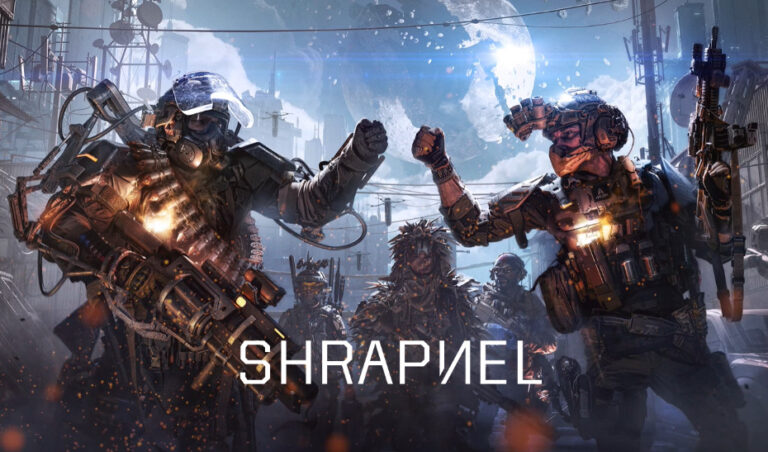
Technical Foundation and Unreal Engine 5 Integration
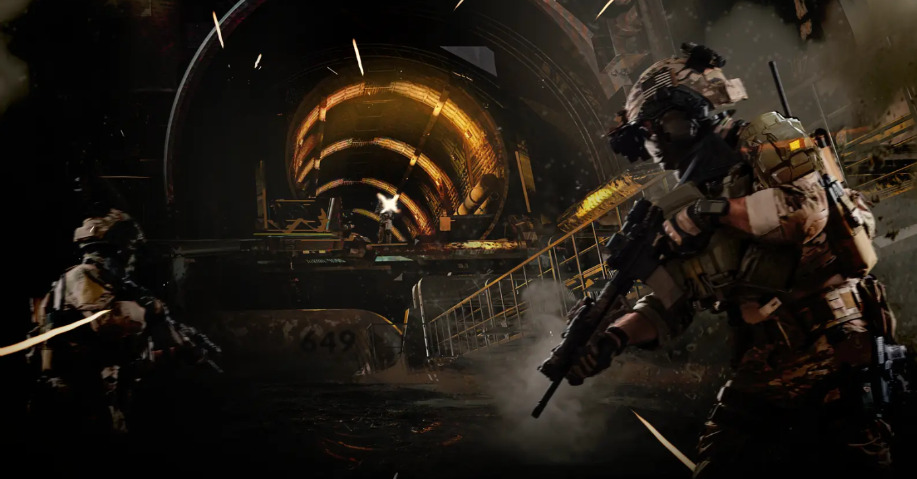
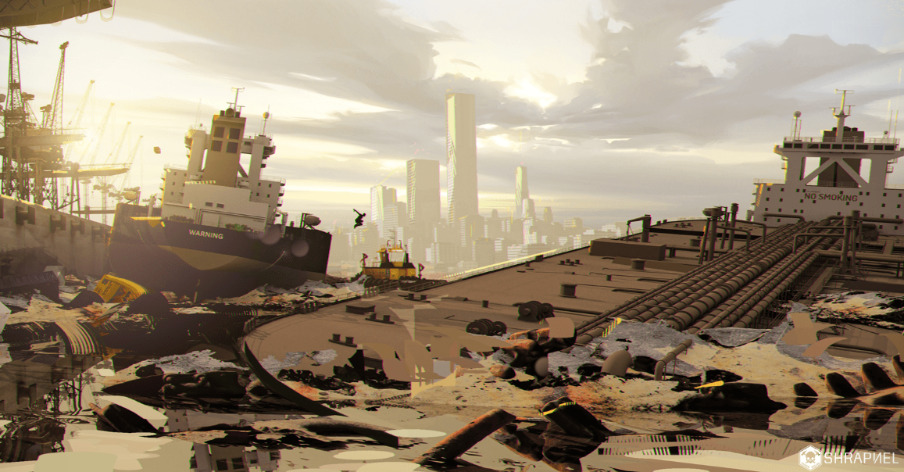
One of the most significant differentiators for Shrapnel is its use of Unreal Engine 5 (UE5). Most early-stage blockchain games were limited by browser-based engines or lower-tier mobile frameworks, leading to a perceived "quality gap" between Web3 and mainstream gaming. Shrapnel’s deployment of UE5 brings Lumen lighting, Nanite geometry, and high-fidelity physics to the blockchain space, ensuring that the visual experience is indistinguishable from top-tier traditional shooters.
The choice of blockchain infrastructure is equally critical. While early reports associated the project with various ecosystems, the development team has focused on a high-throughput environment capable of handling the rapid transactions required for an FPS marketplace. By utilizing a dedicated subnet on the Avalanche network, Shrapnel ensures low-latency transactions and minimal gas fees for players when they mint, trade, or customize their digital assets. This technical synergy allows for a seamless "invisible blockchain" experience where the technology supports the gameplay without obstructing it.
The $SHRAP Token and Ecosystem Economy
The economic engine of the game is powered by the $SHRAP token, an ERC-20 utility token that serves multiple functions within the ecosystem. Unlike many GameFi projects that suffered from inflationary "dual-token" models, Shrapnel utilizes $SHRAP as a single, multi-purpose currency designed for:
- Governance: Token holders can participate in voting on game balance, map features, and ecosystem development.
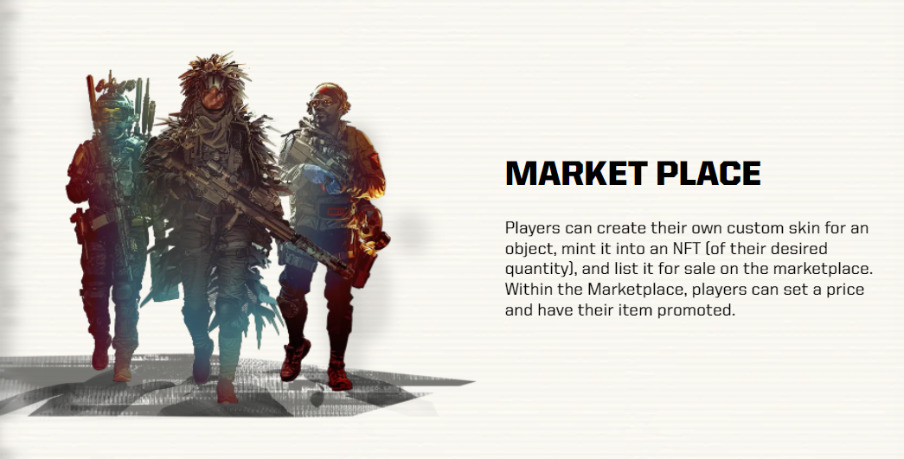
- Marketplace Transactions: All in-game gear, skins, and blueprints are traded using $SHRAP.
- Creator Rewards: Players who design maps, vanity items, or skins can monetize their creations, receiving $SHRAP based on the popularity and usage of their content.
- Staking and Curation: Users can "stake" their tokens on specific maps or creators they believe will be successful. If those maps become popular, the stakers receive a portion of the rewards, creating a decentralized discovery engine for content.
To maintain economic stability, the developers have outlined a treasury management strategy. This includes a mechanism to balance the supply of NFTs; if asset prices inflate too rapidly, new mints are introduced, and if prices crater, the treasury utilizes buy-back-and-burn protocols to stabilize the floor price. This proactive approach to "tokenomics" reflects a growing sophistication in Web3 game design.
User-Generated Content and the Creator Economy
Shrapnel distinguishes itself from traditional FPS titles by handing the creative tools back to the community. The game features a comprehensive "Creator Suite" that allows players to build their own maps and vanity items using the same professional-grade assets used by the developers.
This moddable nature is central to the game’s longevity. In traditional gaming, mods are often relegated to grey-market websites or community forums with no path to monetization. In Shrapnel, a map creator can earn a percentage of the $SHRAP spent by players entering their map or purchasing assets within it. This transforms the player base from a passive audience into an active development partner, potentially leading to an infinite variety of gameplay experiences beyond the core extraction mode.
Development Timeline and Project Milestones
The journey of Shrapnel began in earnest in late 2021, with the team successfully raising $10.5 million in a seed round led by Griffin Gaming Partners and Polychain Capital. This was followed by additional funding rounds, bringing their total capital to approximately $37.5 million, providing the runway necessary to compete with AAA studios.
- 2022-2023: Focus on core engine development, Operator NFT sales, and the release of the "Sigma Containment Unit" (SCU) and early gameplay trailers.
- 2024: Commencement of "STX" (Shrapnel Training Exercises), providing early access to holders of "Extraction Packs." This phase allowed for community stress-testing of server stability and weapon balance.
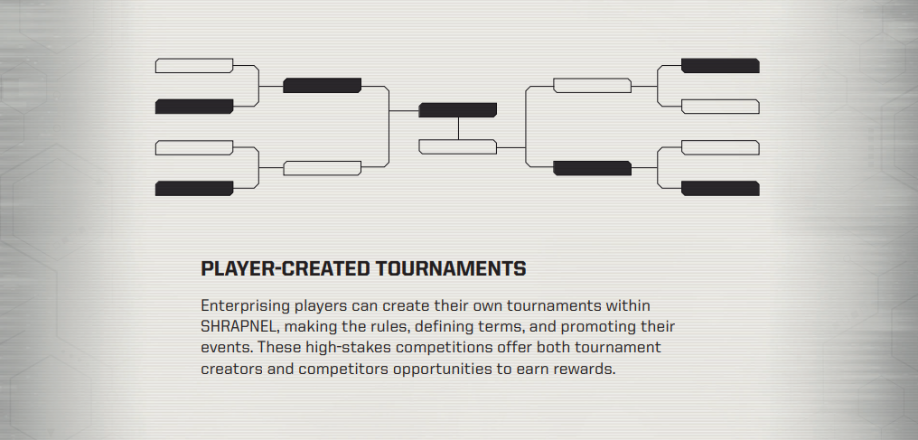
- 2025: The anticipated window for the full public release. The roadmap indicates a phased rollout, starting with a core extraction loop and expanding into full UGC integration and tournament play.
Industry Reactions and Strategic Implications
The gaming industry has watched Shrapnel with a mixture of skepticism and intrigue. Traditional platforms like Steam have historically been hesitant to host blockchain-integrated titles, citing concerns over gambling and unregulated marketplaces. However, the Epic Games Store has emerged as a key partner for Shrapnel, listing the game and providing it with a bridge to millions of mainstream PC gamers.
Industry analysts suggest that Shrapnel’s success could validate the "extraction" model as the ideal fit for blockchain technology. Because extraction shooters are inherently about the value of items and the consequences of loss, the use of NFTs provides a technological solution to a gameplay need. Instead of "fake" stakes, the assets have real-world market value, heightening the adrenaline and emotional investment of the player.
Furthermore, the involvement of Emmy Award-winning talent suggests a focus on transmedia storytelling. The team has expressed interest in expanding the Shrapnel IP into comics, short films, and potentially serialized content, mirroring the success of properties like Arcane or The Last of Us.
Broader Impact on the Gaming Landscape
Shrapnel represents a pivotal moment for the "Web2.5" movement—a bridge between traditional centralized gaming and the fully decentralized future. By prioritizing gameplay feel and graphical fidelity over blockchain jargon, Neon Machine is attempting to solve the "fun problem" that plagued early crypto games.
If Shrapnel achieves its 2025 goals, it will likely set a new standard for how digital ownership is handled in competitive environments. The project demonstrates that blockchain is not merely a tool for speculation, but a foundational layer for community-driven development and true player agency. As the boundaries between creator and player continue to blur, Shrapnel stands as a bold experiment in whether a community-owned AAA game can survive and thrive in a market dominated by multi-billion dollar corporate franchises.
The coming months will be crucial as the team moves from closed testing to public access. With the $SHRAP token already listed on major decentralized exchanges like Uniswap and the gameplay footage receiving positive feedback for its "crunchy" combat and atmosphere, Shrapnel is no longer just a concept—it is a tangible contender for the throne of the next generation of first-person shooters.