
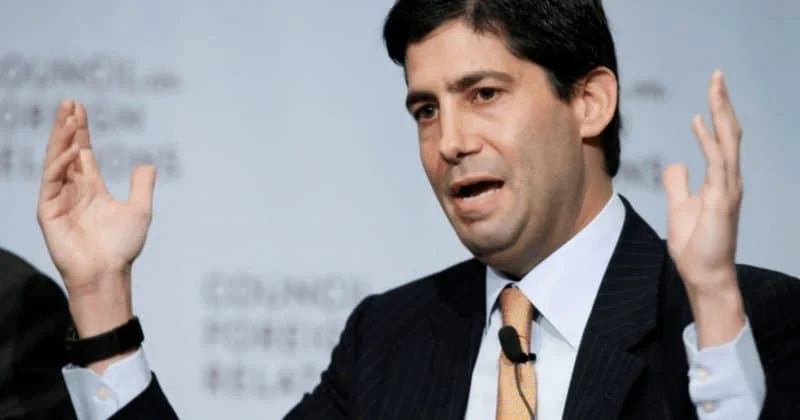
The financial disclosure of Kevin Warsh, President Donald Trump’s nominee to lead the Federal Reserve, has unveiled a sophisticated investment portfolio valued between $131 million and $209 million, signaling a significant departure from the traditional financial profiles of past central bank leaders. The filing, submitted as part of the formal nomination process, details a vast array of interests ranging from space exploration and artificial intelligence to decentralized finance and prediction markets. This disclosure has intensified the spotlight on Warsh’s potential to reshape American monetary policy through the lens of a technophile and a seasoned private-market investor.
As the Federal Reserve stands at a crossroads regarding the integration of digital assets and the management of a post-pandemic economy, Warsh’s holdings provide a roadmap of his economic worldview. The portfolio is not merely a collection of assets but a testament to his deep ties with the Silicon Valley elite and the burgeoning "hard tech" sector. With significant stakes in companies like SpaceX and exposure to controversial yet influential platforms like Polymarket, Warsh represents a new breed of central banker—one who is intimately familiar with the disruptive forces currently challenging the hegemony of traditional finance.
A Detailed Breakdown of the Warsh Portfolio
The disclosure documents reveal that a substantial portion of Warsh’s wealth is managed through institutional vehicles and private investment entities. One of the most prominent entries in the filing is his exposure to Juggernaut Fund LP, where he holds positions valued at more than $100 million. These positions are largely tied to his long-standing advisory role with the Duquesne Family Office, the investment firm led by legendary hedge fund manager Stanley Druckenmiller. This connection is particularly noteworthy, as Druckenmiller has been a vocal critic of traditional Fed policy and an early institutional proponent of Bitcoin as a store of value.
Beyond institutional funds, Warsh’s direct investments showcase a penchant for high-growth, high-risk sectors. He holds a direct stake in SpaceX, Elon Musk’s aerospace giant, which has become a cornerstone of the American "frontier tech" economy. Perhaps even more telling of his modern outlook is his exposure to Polymarket, the decentralized prediction market that gained massive traction during the 2024 election cycle. Polymarket’s presence in his portfolio suggests an openness to decentralized protocols and the "wisdom of the crowd" as a valid economic indicator.
The filing also highlights DCM Investments 10 LLC, an entity through which Warsh holds dozens of smaller, early-stage positions. While each of these is valued at under $500,000, they represent a broad cross-section of the emerging tech landscape. Among these are:
- Web3 and Crypto Infrastructure: Tenderly, an Ethereum development platform, and Bitwise, a leading crypto index fund manager.
- Artificial Intelligence: Delphi AI and 11x, startups focused on automating complex cognitive tasks.
- Fintech and Emerging Markets: Lemon Cash and Stashfin, which target financial inclusion and digital payments in Latin America and Asia.
- Biotechnology: Outpace Bio, a firm utilizing protein engineering for advanced therapies.
- Consumer Tech: Partiful and Cafe X, showing a diversified interest in how technology intersects with daily social and retail experiences.
The Evolution of a Central Banker: From the 2008 Crisis to Silicon Valley
To understand the implications of Warsh’s current financial standing, one must look at his trajectory through the halls of power. Kevin Warsh served as a member of the Federal Reserve Board of Governors from 2006 to 2011. Appointed by George W. Bush at the age of 35, he was the youngest governor in the history of the Fed. During the 2008 financial crisis, he became a key intermediary between the central bank and Wall Street, often acting as the "eyes and ears" for then-Chair Ben Bernanke.
Following his departure from the Fed, Warsh transitioned into the private sector and academia, becoming a Distinguished Visiting Fellow at Stanford University’s Hoover Institution. It was during this period that his perspective on the intersection of technology and finance began to crystallize. His proximity to venture capital titans like Marc Andreessen and Peter Thiel allowed him to witness the early stages of the blockchain revolution firsthand. His disclosure of early investments in firms like Basis—an early algorithmic stablecoin project—and Bitwise indicates that his interest in digital assets is not a recent political pivot but a decade-long engagement.
The Saylor Prediction and the Pro-Bitcoin Narrative
The nomination of Kevin Warsh has been met with significant enthusiasm from the cryptocurrency industry. Michael Saylor, the Executive Chairman of MicroStrategy and one of the world’s most prominent Bitcoin advocates, has publicly predicted that Warsh could emerge as the first truly "pro-Bitcoin" Fed chair. Saylor’s assessment is based on Warsh’s historical commentary, which suggests a more nuanced understanding of digital scarcity than his predecessors.
In previous public statements and academic writings, Warsh has compared Bitcoin to gold, characterizing it as a potential store of value in an era of fiscal expansion. Crucially, Warsh has proposed that the price of Bitcoin could serve as a "canary in the coal mine" for monetary policymakers. In his view, a rapid appreciation in Bitcoin’s price could signal that the Fed’s policy is too loose, providing a real-time market feedback loop that traditional economic data—often lagging by months—cannot offer.
However, Warsh has remained a pragmatist. He has consistently emphasized that while Bitcoin may be "digital gold," it is not currently a substitute for the US dollar as a medium of exchange or a unit of account. This balanced view—valuing the asset as a market signal while maintaining the primacy of the dollar—is likely what made him an attractive candidate for the Trump administration, which seeks to embrace crypto innovation without undermining national financial sovereignty.
Chronology of the Nomination and Disclosure
The path to Warsh’s nomination has been marked by a shift in the Trump administration’s economic priorities.
- Early 2024: Rumors began to circulate that Trump was looking for a "disruptor" to replace Jerome Powell, whose term ends in 2026. Warsh’s name was frequently mentioned alongside Scott Bessent and Howard Lutnick.
- Late 2024: Following the election, the transition team prioritized candidates with deep private-sector experience. Warsh’s ties to the tech sector and his previous Fed experience made him a frontrunner.
- April 2025: President Trump officially signaled his intent to nominate Warsh. The announcement was followed by the mandatory financial disclosure process.
- April 14, 2025: The disclosure report was made public, revealing the $131 million to $209 million net worth and the extensive list of tech holdings.
Analysis of Implications: A Paradigm Shift for the Federal Reserve
The potential confirmation of Kevin Warsh would likely herald a new era of transparency and technological integration at the Federal Reserve. His portfolio suggests several key shifts in policy direction:
1. Integration of Market Signals:
Warsh’s interest in Polymarket and Bitcoin suggests he may move the Fed away from a purely data-dependent model (based on CPI and payrolls) toward one that incorporates real-time market sentiment and decentralized data. This could lead to more proactive, rather than reactive, interest rate adjustments.
2. A New Approach to Digital Assets:
Unlike current leadership, which has viewed the crypto industry with a degree of skepticism and focused heavily on "regulation by enforcement," a Warsh-led Fed might seek to create a more formal framework for digital asset integration. This could include exploring the role of stablecoins in the payments system and potentially revisiting the debate over a US Central Bank Digital Currency (CBDC), though Warsh has historically been cautious about the privacy implications of a government-run digital dollar.
3. Support for "Hard Tech" and Innovation:
By holding stakes in SpaceX and various AI and biotech firms, Warsh signals an understanding that long-term economic growth is driven by productivity gains in the private sector. His policies might lean toward ensuring that the financial environment is conducive to capital expenditure in these high-growth areas, potentially through more flexible lending standards or a focus on capital market liquidity.
4. Navigating Conflicts of Interest:
The sheer size and diversity of Warsh’s portfolio will undoubtedly be a central theme in his confirmation hearings. Critics are likely to question how a Fed chair can remain objective while holding interests in sectors that are directly impacted by interest rate decisions and regulatory shifts. To address these concerns, Warsh will likely be required to divest from specific holdings or place his assets in a blind trust, a standard procedure for high-ranking government officials.
Reactions from the Financial and Political Spheres
The reaction to the disclosure has been divided along predictable lines. Proponents of the nomination argue that Warsh’s wealth is a sign of his success and his deep understanding of the modern economy. "We need a Fed chair who understands where the world is going, not where it was in the 1970s," said one senior Republican staffer involved in the transition. "Kevin’s portfolio shows he is invested in the future of American ingenuity."
Conversely, some progressive lawmakers have expressed concern over the "revolving door" between the Fed and high-finance advisory roles. Senator Elizabeth Warren’s office has signaled that the confirmation hearings will involve rigorous questioning regarding his ties to the Duquesne Family Office and whether his past advisory work could influence his future policy decisions.
Conclusion: The Future of the American Central Bank
Kevin Warsh’s financial disclosure is more than just a list of assets; it is a declaration of intent. It portrays a candidate who is deeply embedded in the sectors that will define the 21st-century economy. Should he be confirmed, the Federal Reserve will likely move toward a more market-oriented, tech-literate stance that recognizes the growing influence of digital assets and decentralized platforms.
For the global markets, a Warsh chairmanship would mean a Fed that is more attuned to the signals of the digital age. Whether he can balance his pro-innovation leanings with the traditional mandate of price stability and maximum employment remains to be seen. However, one thing is certain: the era of the central banker as a purely academic or bureaucratic figure is coming to an end, replaced by a leader who is as comfortable in a Silicon Valley boardroom as he is in the halls of the Eccles Building.