

Bitcoin may be approaching a more consequential upside move if current technical and on-chain trends hold, according to Charles Edwards, founder of Capriole, who argues in a new market note that a cluster of macro, sentiment, and blockchain indicators has shifted in a more constructive direction, despite a persistently volatile geopolitical backdrop. This comprehensive analysis suggests that the world’s leading cryptocurrency is on the cusp of a significant rally, driven by fundamental strengths and a changing global economic narrative.
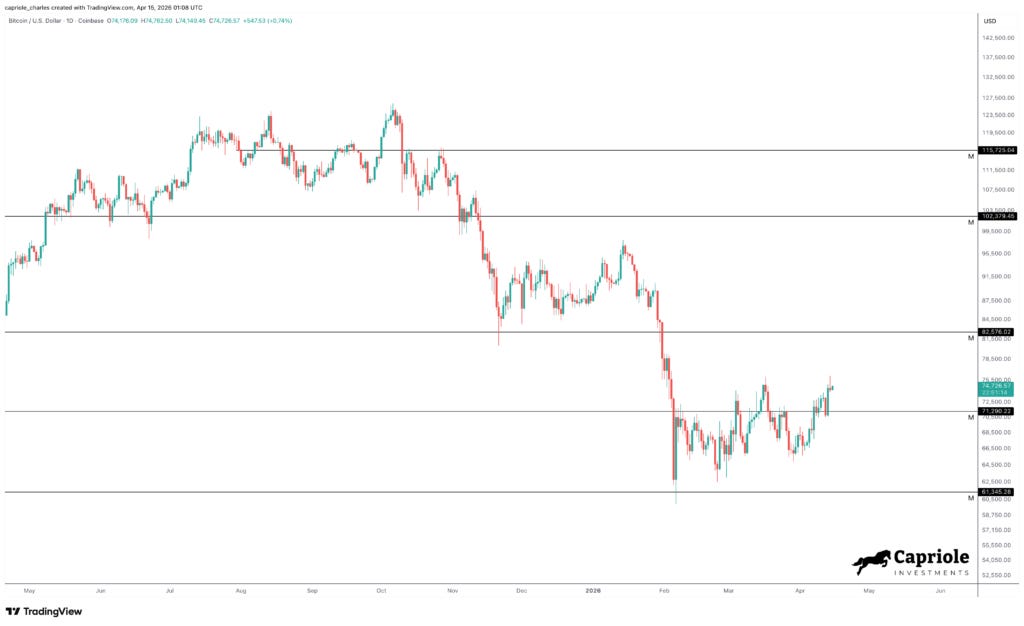
Edwards framed the current environment as unusually difficult to navigate, with global financial markets swinging erratically between heightened war fears, dramatic oil price spikes, and the rapidly evolving threat landscape presented by artificial intelligence. Despite these numerous headwinds, he asserts that the underlying signals from Bitcoin’s network and broader macroeconomic data are becoming increasingly hard to ignore. A critical threshold for validating this optimistic outlook, Edwards emphasized, is Bitcoin’s ability to sustain a monthly and weekly close above $71,500. This price point, he explained, is a pivotal level that, if maintained, would signify a definitive shift in market momentum.
Technical Analysis Signals Robust Bullish Momentum
From a purely technical perspective, the significance of the $71,500 level is profound. Edwards highlighted that a close above this price point would mark Bitcoin’s strongest technical monthly finish in a year. Such a development would not only break through previous resistance levels but also establish a solid foundation for further price appreciation. In technical analysis, a strong monthly close above a significant psychological and structural level often indicates that buying pressure has decisively overcome selling pressure, signaling a clear shift in market control to the bulls. This type of breakout typically attracts further institutional and retail interest, creating a self-reinforcing upward trend.
Examining the daily chart, Edwards described the recent price action as even more encouraging. He specifically cited an "engulfing advance," a powerful bullish candlestick pattern where a current green candle fully encompasses the body of the previous red candle. This pattern is widely interpreted by traders as a strong reversal signal, indicating that buyers have stepped in aggressively to overwhelm sellers, often leading to continued upward movement. The relative strength Bitcoin has demonstrated against other traditional markets since the onset of the Iran conflict further strengthens this technical narrative. For months, Bitcoin had largely traded like a risk asset, showing correlation with equities and other speculative investments. However, its recent outperformance, even amidst geopolitical uncertainty, suggests a decoupling. This divergence implies that investors might be increasingly viewing Bitcoin as a unique asset, potentially a hedge against broader market instability or a distinct growth opportunity, rather than merely another component of the "risk-on" portfolio. This shift in character, moving away from its previous nine-month correlation with risk assets, is a key component of Edwards’ bullish thesis, indicating a maturing asset class.
On-Chain Metrics Uncover Deep Accumulation and Network Strength

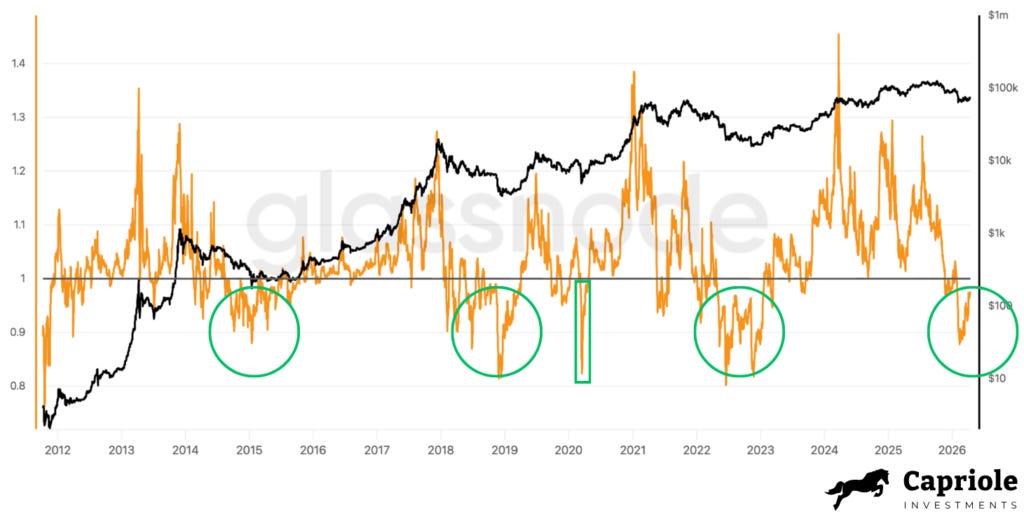
Beyond conventional price charts, Edwards’ analysis leverages a suite of on-chain metrics, which provide an unparalleled, transparent view into the fundamental health and investor behavior within the Bitcoin network. These indicators, he argues, are collectively painting a picture consistent with historical accumulation zones—periods that have consistently preceded significant price rallies in past cycles.
One crucial metric supporting this view is Normalized Dormancy, which currently registers at low levels. Dormancy measures the average age of spent transaction outputs, indicating how long coins have remained unspent before being moved. A low normalized dormancy suggests that long-term holders, often referred to as "HODLers," are not actively distributing their Bitcoin holdings, even in periods of price volatility or weakness. This behavior signals strong conviction among experienced investors who believe in Bitcoin’s long-term value proposition, thereby reducing the available supply on exchanges and making any fresh demand more impactful on price.
Edwards also pointed to a renewed phenomenon he termed "restacking" by longer-dated holders, specifically noting a significant turn in the 2-year-plus cohort. "Restacking" refers to the accumulation of Bitcoin by these highly experienced market participants who have held their assets for extended periods, enduring multiple market cycles. When this cohort begins to increase its holdings, it typically indicates a collective belief that the current price levels offer attractive entry points for long-term growth. The actions of the 2-year-plus cohort are particularly insightful, as these investors have demonstrated resilience and a deep understanding of Bitcoin’s market dynamics, making their accumulation a potent bullish signal.
Another compelling on-chain signal comes from SOPR (Spent Output Profit Ratio) readings, which are described as "deeply depressed." SOPR is an indicator that assesses whether spent bitcoins are, on average, being moved in profit or loss. A SOPR value below 1 suggests that market participants are, on average, selling their Bitcoin at a loss. Deeply depressed SOPR readings are historically associated with periods of market capitulation, where weaker hands are flushed out of the market due to despair or necessity. These phases have often marked significant market bottoms and have consistently been followed by stronger forward Bitcoin opportunities, as the supply held by high-conviction investors increases. It indicates that much of the selling pressure driven by fear or necessity has been absorbed, setting the stage for recovery.
The behavior of Bitcoin miners, who are critical to the network’s security and supply, also provides bullish cues. Edwards noted that the market remains in a "deep miner capitulation phase," referencing Hash Ribbons. Hash Ribbons are an on-chain indicator that uses moving averages of the Bitcoin hash rate to identify periods where miners are under severe stress, often forced to sell their mined Bitcoin to cover operational costs (capitulation). While "capitulation" sounds negative, it is often considered a contrarian bullish signal for price, as it signifies that less efficient miners have exited the market, leaving a more robust and profitable mining ecosystem. Concurrently, miner sell pressure is unusually subdued. Miners represent a consistent source of new Bitcoin supply, and reduced selling from this cohort further tightens the market’s available supply, contributing to potential price appreciation.
Finally, one of the most significant insights from Edwards’ analysis is the observation that institutions are once again net buyers of Bitcoin. This trend, he argued, has been a hallmark of every major Bitcoin appreciation phase over the last five years, especially when institutional demand outstrips the newly mined supply. The increasing participation of institutional investors, facilitated by products like spot Bitcoin ETFs, represents a substantial influx of capital and a strong validation of Bitcoin as a legitimate, investable asset class. Their sustained accumulation provides a powerful demand floor, absorbing supply and acting as a significant catalyst for price growth.
Collectively, these robust on-chain indicators offer a compelling, data-driven foundation for Edwards’ bullish conviction. He concludes, "Amongst this swathe of data (and more) it’s hard not to be bullish on Bitcoin above $71.5K."
Macroeconomic Landscape: Fading Fear and Emerging Optimism
The favorable technical and on-chain dynamics for Bitcoin are intrinsically linked to a discernible shift in broader traditional market sentiment and macroeconomic indicators. Edwards highlighted a significant dissipation of macro fear, even as geopolitical tensions simmer.
A key traditional market signal identified by Edwards is a recent VIX macro buy signal. The VIX, or CBOE Volatility Index, often dubbed the "fear gauge," measures the market’s expectation of future volatility in the S&P 500. Edwards observed a notable drop in volatility, with the VIX falling from above 30—a level indicative of extreme market fear and uncertainty—back towards the 20 area. A decline in the VIX typically signals a reduction in market apprehension and an increase in investor confidence, often preceding periods of market stability or upward movement. This shift suggests that the most acute phase of geopolitical panic, which had previously unsettled global markets, may be receding.
Further bolstering this sentiment turnaround, the CNN Fear & Greed Index has re-entered "buy territory." This index compiles various market indicators to gauge whether investors are primarily driven by fear or greed. Its return to a "buy" signal implies a resurgence of optimism and a greater willingness among investors to embrace risk, marking a stark contrast to the heightened caution prevalent during periods of market distress.
Crucially, Edwards also pointed to what he termed the "biggest weekly jump in US liquidity since May 2025." Liquidity in financial markets refers to the ease with which assets can be bought or sold without significantly impacting their price. A substantial increase in US liquidity implies that more capital is available within the financial system, which often translates into increased investment in risk assets like cryptocurrencies. When central banks or governments inject liquidity, it generally creates a more favorable environment for asset price appreciation, as investors seek returns in a capital-rich landscape.
Edwards interprets these macroeconomic shifts as evidence that markets are moving beyond the sharpest phase of geopolitical panic. This is particularly evident in the market’s evolving perception of the Iran conflict. Initially, the conflict triggered widespread concerns about regional instability and disruptions to global energy supplies. However, Edwards noted that markets are increasingly treating the conflict as a "contained risk" rather than a prolonged, systemic macro shock. This reassessment is supported by several factors: global oil prices have retreated below $100 per barrel after initial spikes, indicating easing supply concerns; reports of a US-Iran ceasefire have helped de-escalate immediate tensions; and, significantly for the crypto market, Bitcoin has remarkably outperformed equities by 11% since the war began. For an asset that had spent months tracking broader market downtrends and behaving largely as a risk-on indicator, this substantial change in character is a powerful testament to its newfound resilience and perceived value.
Edwards extended his analysis by suggesting that markets might now be entering a phase of "volatility fatigue." This psychological phenomenon describes a state where investors become desensitized to the daily torrent of dramatic headlines and short-term market reversals. Instead of reacting impulsively to every news event, they begin to discount transient noise and return to pricing assets based on more fundamental drivers: underlying liquidity, economic growth prospects, and intrinsic value. This shift from reactive panic to a more deliberate, analytical approach could foster a more stable and predictable environment for Bitcoin’s continued growth.
The Growing AI-Driven Security Threat to Crypto Infrastructure
Despite the overwhelmingly bullish signals for Bitcoin itself, Edwards’ market note included a significant cautionary section, addressing what he perceives as a rapidly escalating, AI-driven security threat to the broader crypto infrastructure, particularly impacting Decentralized Finance (DeFi) protocols and complex smart contract systems.
Edwards posited that increasingly capable artificial intelligence models are poised to dramatically compress the time required to discover and exploit vulnerabilities in code, shrinking what traditionally took months of human auditing and analysis down to mere minutes. This acceleration in exploit potential poses an existential risk to many current DeFi applications. AI’s ability to rapidly analyze vast amounts of code, identify subtle logical flaws, predict attack vectors, and even autonomously craft exploit payloads represents a paradigm shift in cybersecurity. While AI can also be leveraged for defensive measures, the offensive capabilities are evolving at an alarming rate.
The vulnerabilities are particularly acute in DeFi because these protocols often involve intricate interdependencies between various smart contracts, large sums of locked capital, and immutable code. A single, undiscovered flaw can lead to catastrophic losses, as evidenced by numerous high-profile hacks over the years. With AI, the speed and scale of potential attacks could make these systems far more precarious. For instance, AI could analyze a smart contract’s bytecode, simulate millions of possible interactions, identify obscure edge cases where funds could be siphoned, and then execute the attack automatically, all before human auditors could even begin to understand the vulnerability.
Edwards’ advice on this front was stark and unambiguous: "If you don’t have a really good reason to use complex DeFi protocols and smart contracts, you probably shouldn’t be as we enter this new AI realm. Think about it. Is it really worth the complexity of juicing out that extra few basis points to lend/borrow/bridge/stake/restake?" This serves as a potent warning to investors to carefully weigh the risk-reward calculus of engaging with highly complex, interconnected DeFi applications. While the allure of high yields and novel financial instruments within DeFi is strong, the rapidly diminishing window for identifying and patching vulnerabilities, coupled with the irreversible nature of blockchain transactions, presents an elevated and