
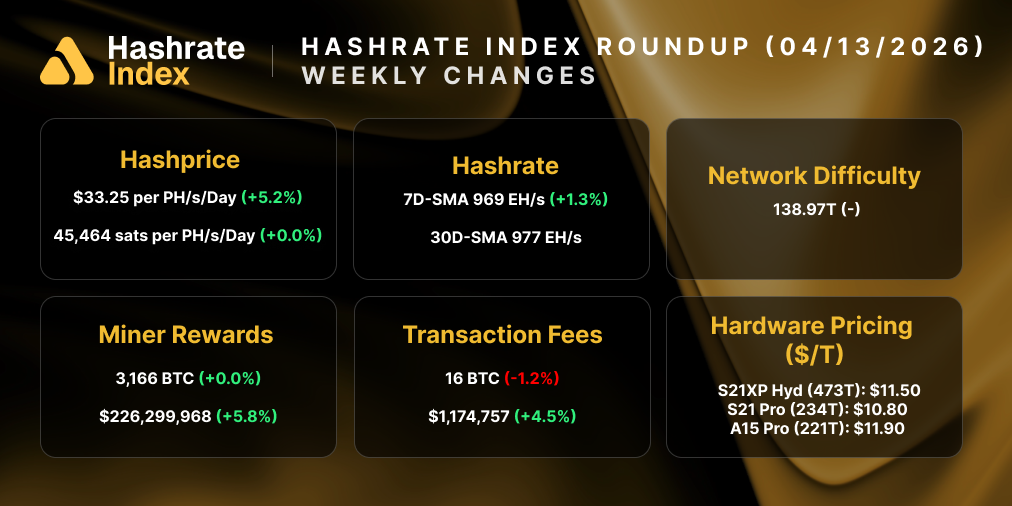
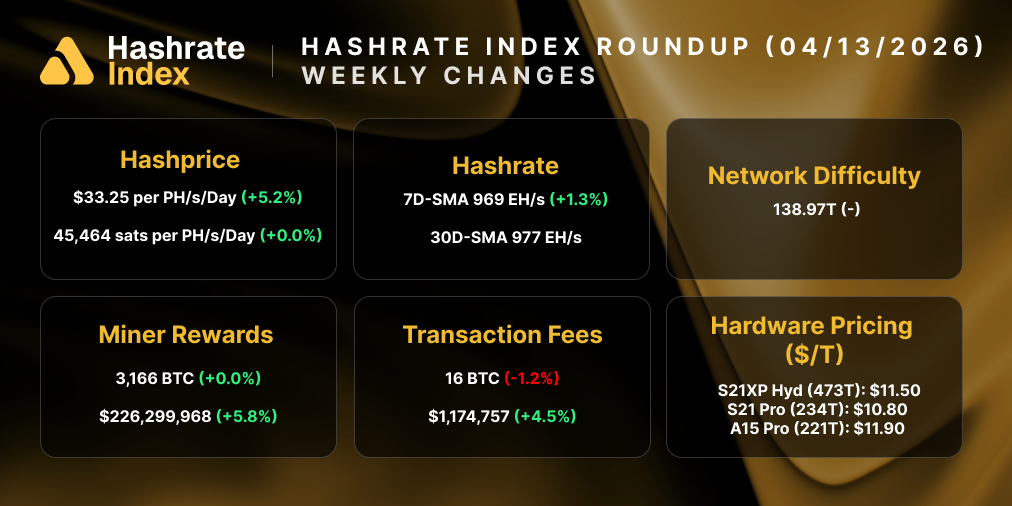
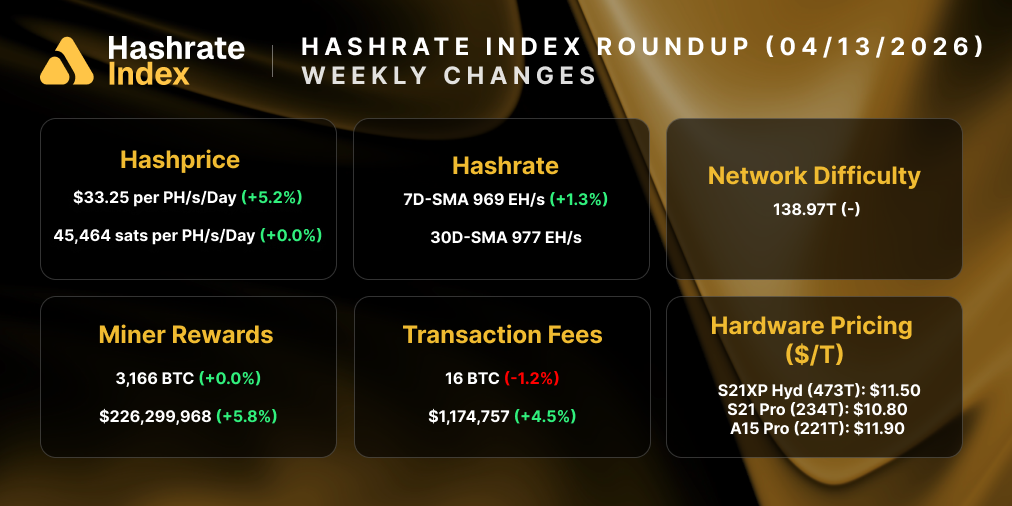
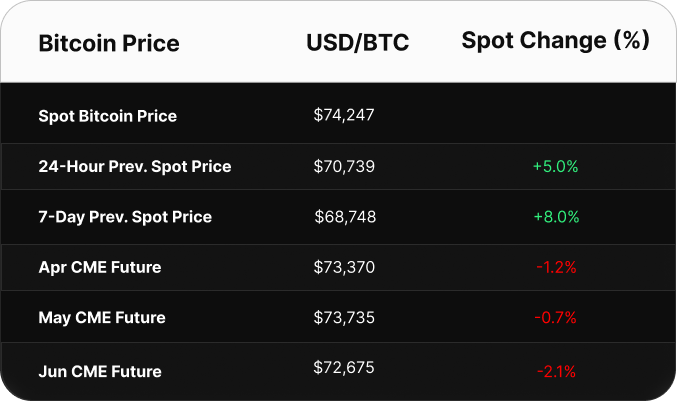
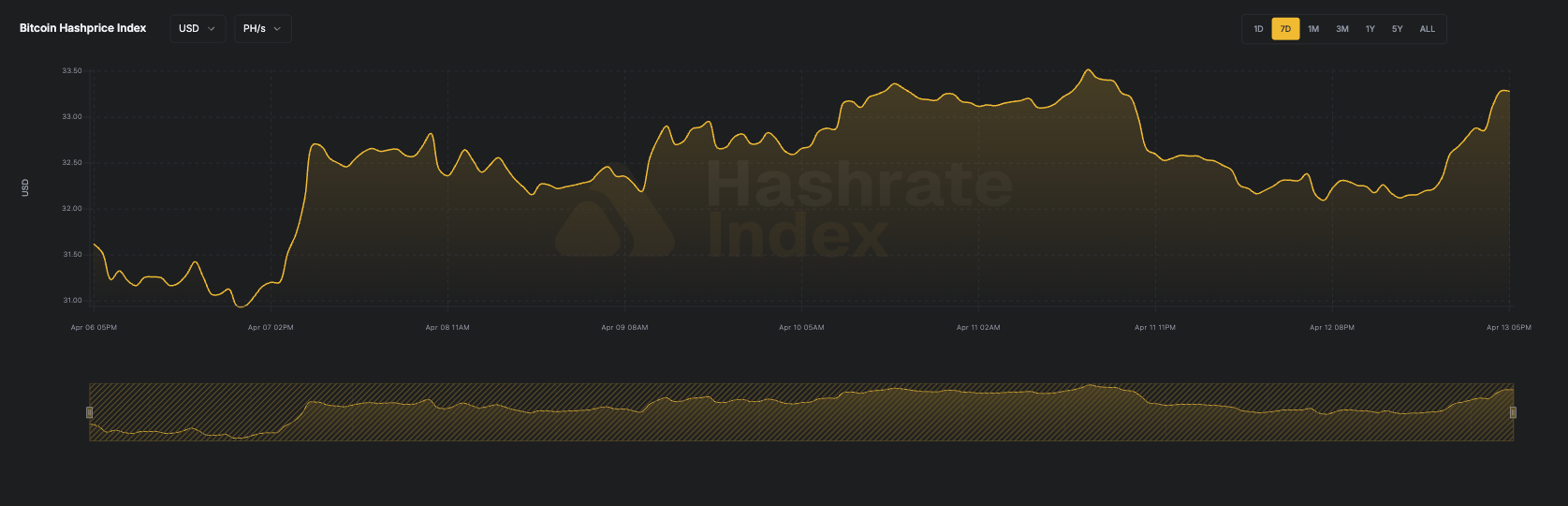
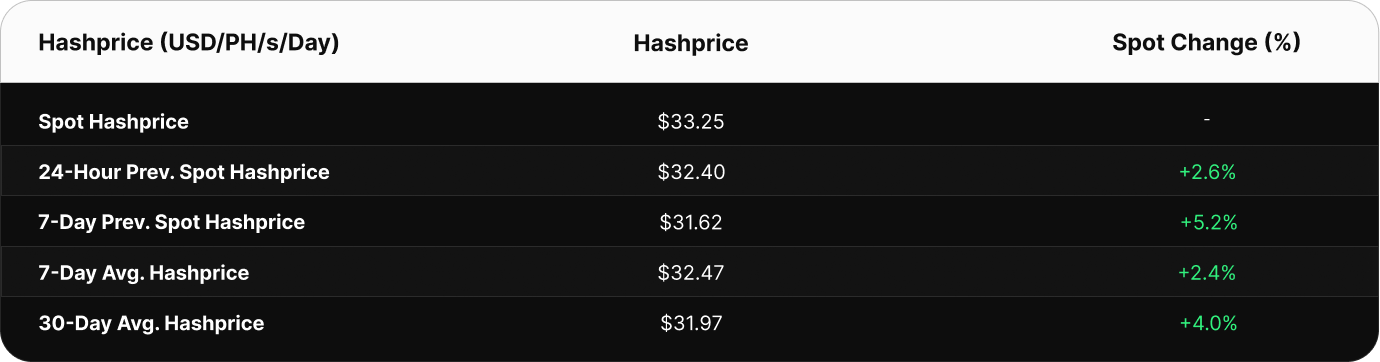
The Bitcoin mining sector demonstrated a complex interplay of rising network security and recovering revenue metrics during the week ending April 13, 2026. While the broader cryptocurrency market has faced a challenging start to the year, the past seven days provided a reprieve for industrial-scale miners as Bitcoin’s spot price surged by 8.0%, climbing from approximately $68,748 to $74,247. This price appreciation directly bolstered the USD hashprice—a critical measure of mining profitability—which rose 5.2% to finish the week at $33.25 per petahash per second per day (PH/s/Day). Despite this weekly recovery, the industry continues to navigate a high-difficulty environment, with the network hashrate maintaining its aggressive trajectory toward the psychological milestone of one zettahash per second (ZH/s).
Market Volatility and Revenue Performance
The 8.0% increase in Bitcoin’s market value served as the primary catalyst for the improvement in mining economics this week. However, when viewed through a wider lens, the year-to-date (YTD) performance for Bitcoin remains down by 15.1%. This overarching downward trend since the beginning of 2026 has kept many high-cost operators under significant financial pressure.
During the observation period, miners collectively secured approximately 3,166 BTC in total block rewards, representing a gross revenue of roughly $226 million. A granular look at these earnings reveals a continued reliance on the block subsidy rather than transaction fees. Fees accounted for a mere 0.58% of total rewards, totaling 16 BTC (approximately $1.2 million). On a per-block basis, transaction fees averaged 0.0163 BTC, a slight 1% decline from the previous week’s average of 0.0165 BTC. This low-fee environment suggests a period of relatively low on-chain congestion, contrasting sharply with previous cycles where inscriptions or high-volume decentralized finance activity on the Bitcoin network spiked miner revenues.
The Push Toward the Zettahash Era
Network hashrate, the aggregate computing power dedicated to securing the Bitcoin blockchain, continued its upward climb. The 7-day simple moving average (SMA) rose by 1.3%, moving from 957 EH/s to 969 EH/s. The 30-day SMA currently sits slightly higher at 977 EH/s, indicating that while there was a minor weekly fluctuation, the long-term trend remains firmly bullish.
The industry is now less than 4% away from reaching 1,000 EH/s, or one zettahash. This growth is largely attributed to the ongoing deployment of next-generation hardware, such as the Bitmain Antminer S21 series, and the energization of massive data center projects in regions with stranded energy or subsidized industrial power. As hashrate increases, the competition for the fixed supply of newly minted Bitcoin intensifies, effectively diluting the "hash share" of older, less efficient machines.
Difficulty Adjustments and Operational Margins
The Bitcoin network’s self-correcting mechanism, the difficulty adjustment, remains a pivotal factor in miner sustainability. The most recent adjustment occurred on April 3, resulting in a 3.87% increase to a record difficulty of 138.97T. This increase reflects the massive influx of hashrate over the preceding two weeks.
However, current data suggests a reprieve is on the horizon. With block times averaging 10 minutes and 22 seconds over the last 24 hours—slightly slower than the 10-minute target—the network is currently projected to decrease difficulty by approximately 3.66% during the next adjustment, expected on April 17.
For many operators, this projected decrease is essential. At a hashprice of $33 per PH/s/Day, profit margins are razor-thin. Analysts note that for miners paying more than $0.06 to $0.07 per kilowatt-hour (kWh) for electricity, the current hashprice sits dangerously close to or even below the operational breakeven point, especially for those running older generation hardware like the Antminer S19 series.
Hardware Efficiency and the Role of Specialized Firmware
As margins compress, the market for mining hardware has reached a point of relative stabilization. The Bitmain S21XP, currently considered one of the most efficient machines on the market, is trading at approximately $25.70 per terahash (TH). The lack of significant price movement in hardware suggests that buyers are cautious, awaiting clearer signals of a sustained Bitcoin price rally before committing to large-scale capital expenditures.
In response to these tight margins, there is a growing trend toward the use of custom firmware to optimize existing fleets. Products such as Luxor’s LuxOS have become integral for operators looking to "undervolt" their machines—reducing power consumption while maintaining stable hashrate—or "overclock" them during periods of low energy costs to maximize revenue. By improving the joules-per-terahash (J/TH) efficiency of the S19 and S21 series, firmware allows miners to lower their breakeven hashprice, effectively extending the lifespan of their hardware in a hyper-competitive environment.
The Transaction Fee Landscape
The stagnation of transaction fees remains a point of concern for the long-term security budget of the network. The 7-day average for fees stands at 0.0386 BTC, while the 30-day average is 0.0337 BTC. While the 14-day and 30-day averages show modest increases of 12.27% and 14.54% respectively, the absolute values remain low compared to the peaks seen in 2024 and 2025.
Industry experts suggest that the current low-fee environment is a result of improved Layer 2 scaling adoption and a temporary lull in speculative on-chain activity. For miners, this means that nearly 99% of their revenue is currently derived from the block subsidy. As the network approaches future halving events, the necessity for a robust fee market becomes increasingly critical to compensate for the diminishing block reward.
Future Outlook: Forward Markets and Strategic Hedging
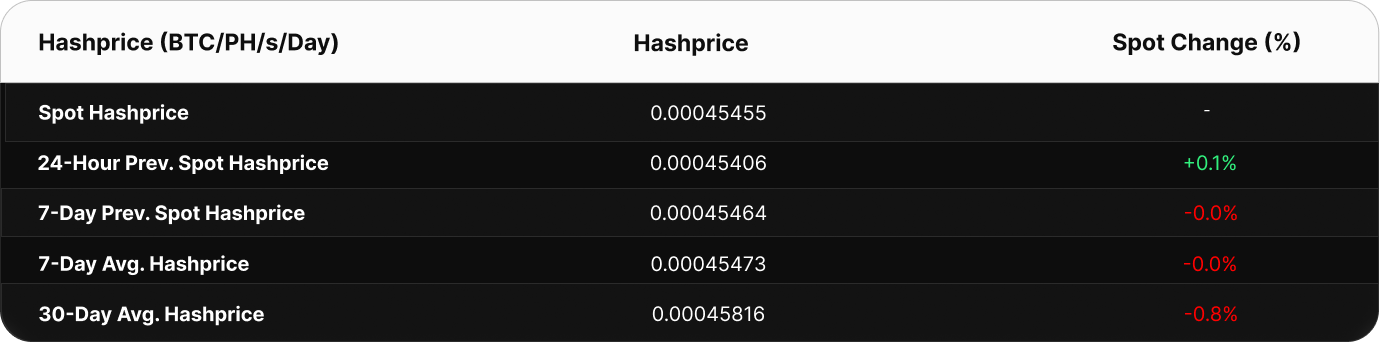
Looking ahead, the derivatives market provides insight into institutional expectations for the mining sector. The Luxor Hashrate Forward Market is currently pricing an average hashprice of $32.10 (or 0.00044 BTC) over the next six months. This "contango" or "backwardation" in the forward curve allows miners to hedge their production, locking in a guaranteed revenue stream to protect against potential drops in Bitcoin’s price or further surges in network difficulty.
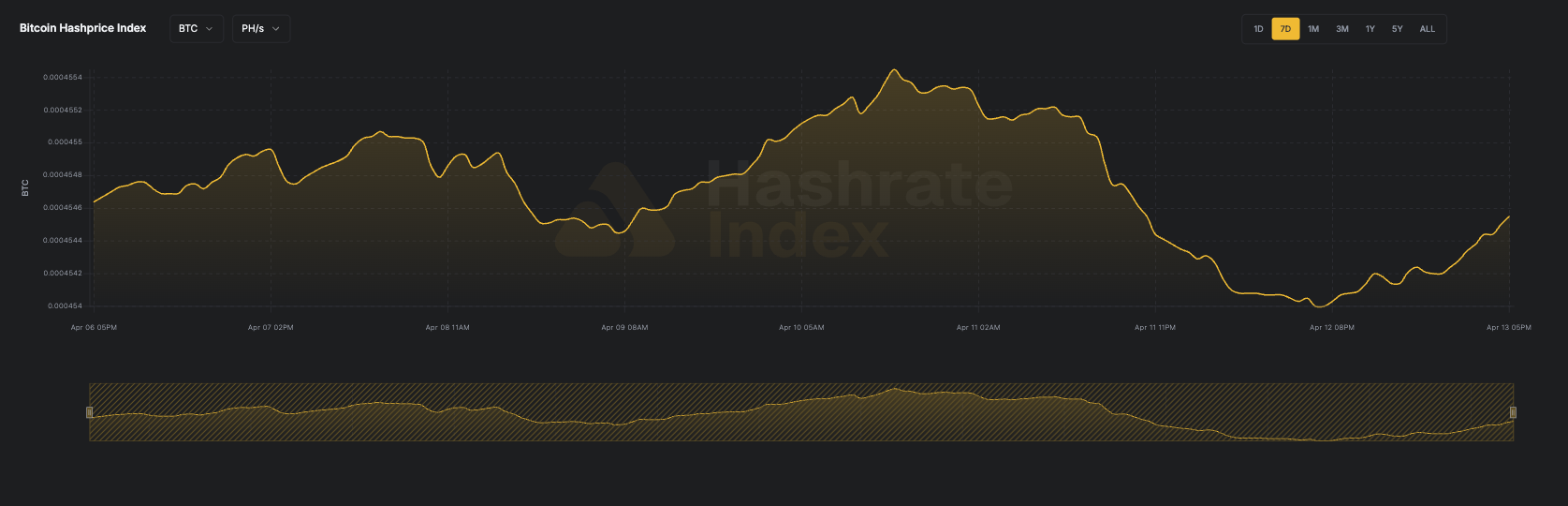
The forward curve for April 2026 through September 2026 indicates a gradual decline in USD-denominated hashprice expectations, falling from the high $30s toward the $32 range. This suggests that the market expects hashrate growth to continue outpacing Bitcoin price appreciation in the near term, further squeezing margins for inefficient operators.
Broader Impact and Industry Implications
The current state of the Bitcoin mining industry in April 2026 reflects a maturing sector defined by institutionalization and technological optimization. The resilience of the hashrate despite a 15% YTD decline in Bitcoin’s price demonstrates the long-term conviction of large-scale miners and their ability to access capital even in "risk-off" market conditions.
Several key implications emerge from this week’s data:
- Consolidation Risk: Small-scale and retail miners are increasingly being priced out. The dominance of the S21XP and the necessity for custom firmware optimization favor large-scale operations with the technical expertise and economies of scale to survive $30-range hashprices.
- Energy Grid Integration: Miners are increasingly acting as "load balancers" for energy grids. The ability to curtail power during peak demand or utilize firmware to adjust consumption is becoming a secondary revenue stream through demand-response programs, particularly in regions like Texas and Northern Europe.
- The Zettahash Milestone: Crossing the 1,000 EH/s mark will be a historic moment for Bitcoin, signaling a level of computational security that was once considered theoretical. However, it also serves as a warning that the "arms race" for hardware efficiency shows no signs of slowing down.
As the industry moves toward the next difficulty adjustment on April 17, all eyes will be on Bitcoin’s ability to maintain the $74,000 support level. A sustained move above $80,000 would provide the necessary "breathing room" for the mining fleet to expand further, while a retreat toward the $60,000 range could trigger a significant "miner capitulation" event, where older machines are forced offline, leading to a temporary drop in hashrate and a subsequent downward difficulty adjustment. For now, the mantra for the global mining community remains one of cautious optimization and operational discipline.