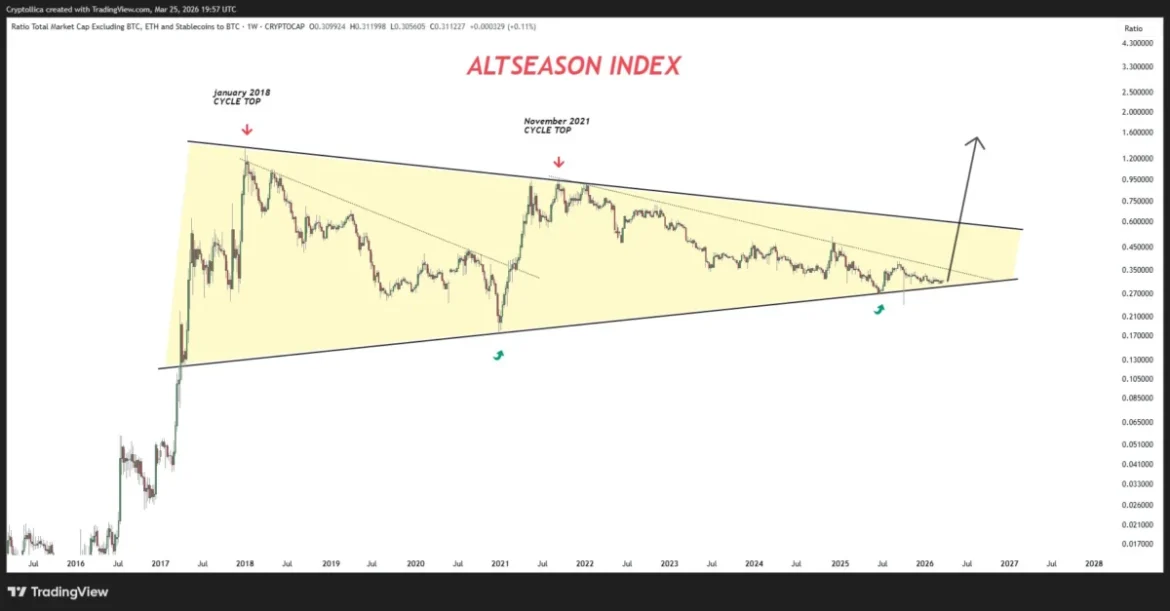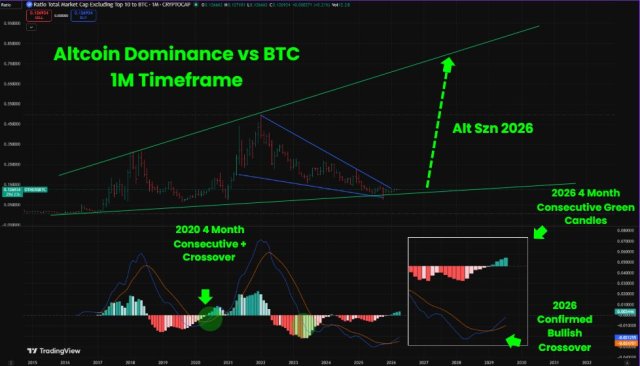

The digital asset market is currently navigating a period of significant transition, characterized by a cooling of the initial 2024 fervor and a strategic reassessment of asset valuations. Amidst this backdrop of volatility, Jamie Coutts, the Chief Crypto Analyst at Real Vision, has issued a comprehensive outlook suggesting that the market is poised for one final, significant rally for altcoins within the current cycle. This projection comes at a critical juncture where recent price corrections have erased substantial gains, leading to a temporary dampening of bullish sentiment across the broader cryptocurrency landscape. Coutts’ analysis hinges on a fundamental shift in market dynamics, moving away from pure speculation toward a valuation model rooted in network activity, utility, and institutional-grade liquidity.
The Shift Toward Utility-Driven Market Cycles
For much of the past decade, "altcoin seasons" were often defined by a tide that lifted all boats, where speculative fervor drove low-cap assets to astronomical valuations regardless of their underlying technology. However, the current market environment suggests a maturation process is underway. Coutts posits that the next major move in the altcoin space will be a "breadth thrust," but one that is selectively led by high-utility assets. These "quality altcoins" are defined by their ability to generate consistent network activity and provide tangible value to users, particularly within the decentralized finance (DeFi) and infrastructure sectors.
The rationale behind this prediction is the observed decoupling of assets based on fundamental metrics. While the broader market has struggled under tightening macroeconomic conditions, specific ecosystems have continued to see growth in active addresses and transaction volumes. Coutts suggests that by June 2025, the market will witness a definitive pickup in these high-quality names. The expectation is that as adoption grows, the intrinsic value of these networks will eventually be reflected in their market pricing, creating a recovery that could see some assets notch gains in excess of 50% from their current depressed levels.
Analyzing the Hierarchy of Network Dominance
A central pillar of the argument for a quality-led rally is the current distribution of Total Value Locked (TVL) across major blockchain networks. TVL serves as a primary indicator of a network’s health and the level of trust and utility it provides to its users. Currently, the landscape is heavily dominated by a few key players, creating a concentrated environment where "quality" is easily identifiable through data.
Ethereum remains the undisputed leader in this category, commanding approximately 55% of the total value locked across all altcoin networks. This dominance is bolstered by its extensive Layer 2 ecosystem and its status as the primary hub for institutional DeFi experimentation. Following Ethereum, the market sees a significant drop-off to other major contenders: Solana holds 6.89%, BNB Chain accounts for 5.69%, and Tron maintains a 5.2% share.
The concentration of liquidity in these top-tier assets suggests that any future rally will likely begin with these ecosystems. As trading volumes increase within these networks, the secondary effect is often a surge in the native tokens associated with those platforms. Analysts point out that for an altcoin season to be sustainable in the current environment, it must be supported by these fundamental layers rather than just retail-driven momentum.
Institutional Liquidity and the New Definition of Altcoin Season
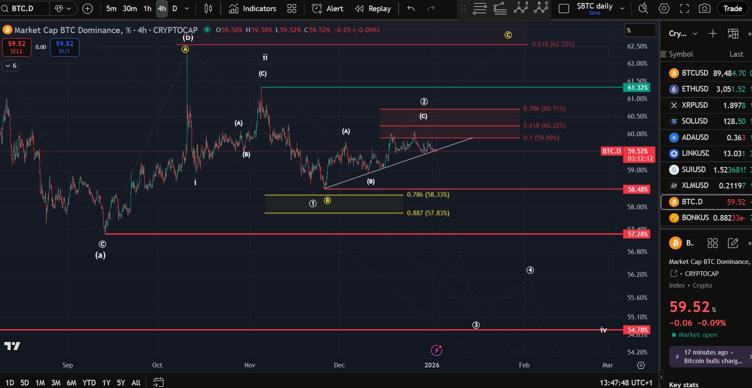
The concept of an "altcoin season" is traditionally associated with a decline in Bitcoin dominance (BTC.D). When Bitcoin’s market share falls, it usually indicates that capital is rotating into riskier, high-reward assets. However, Ki Young Ju, the CEO of CryptoQuant, has introduced a more nuanced perspective that aligns with Coutts’ findings. Ju suggests that the current altcoin season is already underway but is manifesting differently than in previous cycles.
Instead of a universal surge across thousands of tokens, liquidity is becoming increasingly siloed within assets that attract institutional demand. This "selective altseason" is driven by fresh liquidity entering the market through regulated channels and institutional-grade trading platforms. Consequently, assets that lack a clear value proposition or institutional interest may continue to trade sideways or decline, even as "quality" names reach new heights. This creates a bifurcated market where the gap between high-utility networks and speculative "ghost chains" continues to widen.

Macroeconomic Pressures and the Bitcoin Correlation
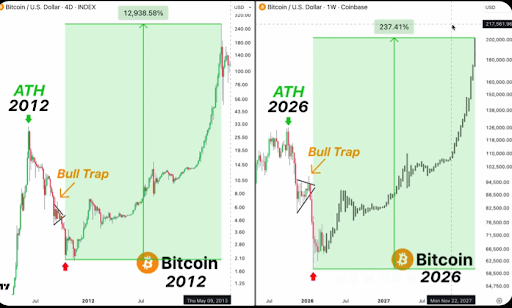
The path to an altcoin recovery is not without its obstacles. The broader crypto market has faced significant headwinds throughout 2024 due to tightening macroeconomic factors, including persistent inflation concerns and the Federal Reserve’s stance on interest rates. These factors have contributed to Bitcoin’s price volatility, with the leading cryptocurrency currently sitting more than 22% below its projected cycle highs and recent peaks.
Bitcoin’s performance remains the primary barometer for market sentiment. Historically, altcoins follow Bitcoin’s lead but with higher beta—meaning they experience more dramatic swings in both directions. Coutts explains that altcoins are expected to benefit from a similar rally to what is anticipated for Bitcoin in mid-2025. However, the current "dip" has served as a flushing mechanism, removing over-leveraged positions and resetting the stage for a more organic growth phase. For investors, this period of consolidation is viewed by analysts as a necessary step to establish a firm floor before the next leg up.
Chronology of the 2024 Market Cycle
To understand the current prediction, one must look at the timeline of events that led to the present market state:
- Q1 2024 – The ETF Catalyst: The approval and launch of spot Bitcoin ETFs in the United States led to a massive influx of capital, pushing Bitcoin to new all-time highs and creating a "halo effect" for major altcoins like Solana and Ethereum.
- Q2 2024 – The Consolidation Phase: Following the initial surge, the market entered a period of "exhaustion." Institutional inflows slowed, and the excitement surrounding the Bitcoin halving was met with a "sell the news" reaction. Altcoins, particularly those without strong fundamentals, saw significant retracements.
- Q3 2024 – The Search for Value: As price action remained sideways, the focus shifted to network metrics. Analysts began highlighting the divergence between token prices and actual network usage, setting the stage for Coutts’ prediction of a "final rally."
- Q4 2024 and Beyond: The market is currently navigating a period of high uncertainty, with traders exercising caution. The projected recovery in early to mid-2025 is seen as the culmination of this cycle’s maturation, where the "wheat is separated from the chaff."
Strategic Divergence: Quality Names vs. Speculative Assets
The emphasis on "quality names" reflects a broader trend in the digital asset industry toward professionalization. Assets like Polygon (MATIC), Cardano (ADA), and Solana (SOL) are often cited in this category due to their ongoing development and ecosystem expansion. Polygon, for instance, has focused heavily on its ZK-rollup technology and institutional partnerships, while Solana has captured a significant portion of the retail and meme coin market through its high-speed, low-cost architecture.
Cardano, despite criticism regarding its slower development pace, continues to see steady network activity and a dedicated community, which analysts like Coutts believe could contribute to its inclusion in a breadth thrust. The common thread among these assets is that they are not merely tokens but represent functioning digital economies.
However, the cautionary note remains: volatility is inherent to this asset class. While the metrics back a rebound, the influence of global liquidity and geopolitical events cannot be ignored. The "breadth thrust" described by Coutts may not be a long-term sustained rally of several years but rather a final, powerful surge that marks the peak of the current four-year cycle.
Broader Impact and Market Implications
The implications of a fundamental-driven altcoin rally are profound for both retail and institutional participants. For retail investors, the "buy everything" strategy of previous years is increasingly seen as a recipe for underperformance. The need for rigorous due diligence and a focus on network health has never been higher.
For the broader financial industry, a rally led by high-utility assets would validate the long-term thesis of blockchain technology. If networks like Ethereum and Solana can sustain price growth based on transaction fees and TVL rather than hype, it provides a stronger case for the integration of blockchain into traditional financial systems.
In conclusion, the crypto market stands at a crossroads. The predictions from Jamie Coutts and the data provided by platforms like CryptoQuant suggest that while the easy gains of the speculative era may be over, a more sophisticated and potentially lucrative phase is beginning. This phase will likely reward networks that have built real-world utility and can attract sustained liquidity. As the market looks toward 2025, the focus remains firmly on which altcoins can prove their value in a landscape that is increasingly less tolerant of empty promises and more focused on measurable network success.